
Lenel OnGuard Access Control System Review: Upgrade, Repair, or Migrate?
Many large organizations still rely on LenelS2 OnGuard every day. That does not mean the system is easy to own.
Legacy Lenel access control systems can create real problems: aging servers, licensing issues, end-of-life hardware, difficult upgrades, support bottlenecks, and unclear migration options.
This Lenel OnGuard access control system review is written for existing end users who already have Lenel installed and need a practical second opinion before approving another repair, renewal, upgrade, or migration proposal.
Umbrella Security helps existing Lenel users decide what comes next: repair it, stabilize it, upgrade it, integrate it, or migrate to a better-fit access control platform.
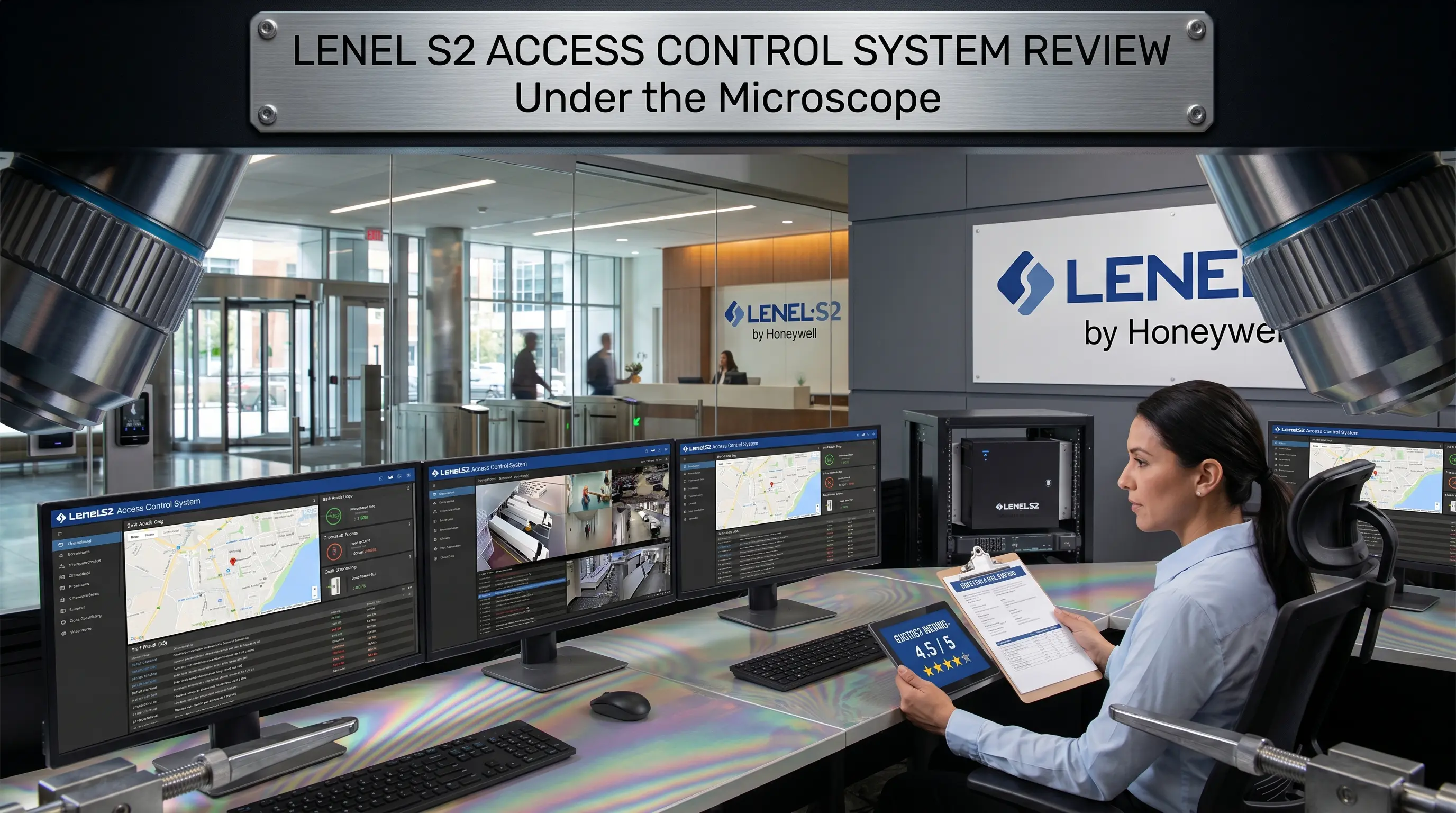
Quick Verdict: Is LenelS2 OnGuard Still a Good Access Control System?
LenelS2 OnGuard can still be a strong enterprise access control system when the environment justifies it. It is built for complex access control needs, large user populations, multi-site deployments, and integration-heavy security operations.
But that does not mean every organization should keep investing in an aging Lenel system. Legacy OnGuard deployments can become expensive, support-heavy, and difficult to upgrade. In some cases, the right path is to stabilize the system and keep it running. In others, the best move is a planned upgrade. And in many cases, the better long-term answer is a phased migration.
Umbrella’s Practical Take

What Is the Lenel OnGuard Access Control System?
The Lenel OnGuard access control system, now commonly referred to as LenelS2 OnGuard, is an enterprise physical access control platform used to manage doors, credentials, users, schedules, alarms, events, and integrations.
In larger environments, OnGuard may be tied into card readers, door controllers, Mercury access control hardware, video surveillance systems, visitor management, intrusion systems, elevators, identity systems, badging workflows, and multi-site security operations.
LenelS2 describes OnGuard as a physical access control system that unifies access control and video monitoring for a wide range of industries.
Why Many Lenel End Users Start Looking for Help
Most organizations do not search for Lenel OnGuard support, Lenel OnGuard upgrade, or Lenel OnGuard alternatives because everything is going smoothly.
They search because the system has become a problem.
Daily administration is harder than it should be.
- Slow or difficult user changes
- Painful reporting
- Old workflows that no longer match the facility
- Training new staff takes too long
The system still works, but ownership risk is growing.
- Old servers or software versions
- End-of-life controllers or readers
- Untested backups
- Unclear recovery plan
The next renewal or upgrade quote raises questions.
- Licensing confusion
- Unexpected software costs
- Expensive integration work
- No clear comparison to migration
The organization feels trapped by support history.
- Dealer dependency
- Incomplete documentation
- Unknown passwords or programming history
- Multiple vendors pointing at each other
Common Problems With Legacy Lenel OnGuard Systems
Legacy Lenel systems tend to create problems in layers. One issue may look like a software problem, but the root cause may involve licensing, server health, controller age, integration design, backup procedures, or support history.
End-of-Life Hardware and Software Issues
End-of-life risk is one of the biggest concerns with older Lenel OnGuard deployments. A system may still unlock doors while sitting on aging infrastructure that is increasingly difficult to support.
- Unsupported OnGuard software versions
- Aging server operating systems
- Old database environments
- Controllers that may not support desired upgrades
- Readers that do not support modern credential options
- Legacy integrations that are fragile or poorly documented
- Backup procedures that have not been tested
Lenel Access Control Licensing Issues
Licensing is one of the most common frustrations with enterprise access control platforms. A Lenel end user may not clearly understand which licenses are active, what renewals cover, what modules are required, and whether an upgrade changes the cost model.
Honeywell describes a Software Upgrade and Support Plan for OnGuard systems. For some organizations, that support path may be useful. For others, it should be compared against the cost of stabilization, modernization, or migration.
Server, Backup, and Database Problems
Many OnGuard problems are really infrastructure problems. The access control software may be blamed when the actual issue is the server, database, backup, network, or operating environment.
Support and Dealer Dependency
The Lenel experience often depends heavily on the dealer, integrator, documentation, and age of the system. Some organizations have strong support relationships. Others inherit systems with unknown programming history, old drawings, missing passwords, abandoned service relationships, or undocumented integrations.
Integration Problems With Cameras, Alarms, Elevators, and Visitor Systems
Lenel OnGuard is often installed in environments where access control is one part of a larger security system. That can be a strength, but it can also become a problem when integrations age, break, or become difficult to support.
The real issue may not be “Lenel vs. another platform.”
The first question is whether the current system is documented, supportable, secure, and aligned with how the facility operates today. Umbrella helps separate product limitations from dealer issues, infrastructure problems, bad programming, licensing gaps, and hardware lifecycle risk.
Strengths and Limitations of LenelS2 OnGuard
This page is not a takedown. LenelS2 OnGuard became widely used for a reason. It has real strengths. The problem is that those strengths do not automatically make every legacy deployment worth continued investment.
A useful Lenel OnGuard access control system review should not simply list product features. It should help the owner understand whether the existing deployment is still supportable, secure, cost-effective, and aligned with how the facility operates today.
| Strength | Why It Still Matters |
|---|---|
| Enterprise scale | OnGuard can support large, complex environments with many doors, users, access levels, and sites. |
| Mature ecosystem | Lenel has a long history in enterprise access control, which creates a large installed base and familiar support paths. |
| Integration depth | The platform is often used where access control must interact with video, visitor management, identity, elevators, intrusion, and other systems. |
| Mercury hardware ecosystem | Many Lenel environments involve Mercury hardware, which may affect upgrade or migration options. |
| Advanced workflows | OnGuard can support more complex access control workflows than many lightweight systems. |
| Limitation | Why It Matters to Existing Users |
|---|---|
| Licensing complexity | Owners may struggle to understand what they have, what they need, and what renewals really cover. |
| End-of-life exposure | Old servers, controllers, readers, or software versions can create support and security risks. |
| Administrative friction | Older deployments may feel slow, difficult, or unintuitive for modern facilities teams. |
| Upgrade cost | Larger systems require careful budgeting, staging, downtime planning, and integration testing. |
| Support dependency | The end-user experience often depends heavily on the dealer, documentation, and system history. |
When a Lenel OnGuard System Should Be Repaired or Stabilized
Not every Lenel system should be ripped out. In many cases, the right first move is to stabilize the existing system.
Repair or stabilization may make sense when:
- The system is still operational.
- The door hardware is in acceptable condition.
- Existing controllers are still supportable.
- The organization has complex integrations.
- A full replacement would disrupt operations.
- The budget does not support migration yet.
A stabilization project may include:
- System documentation
- Server and backup review
- Licensing review
- Controller and panel health check
- Reader and credential assessment
- User and access level cleanup
When a Lenel OnGuard Upgrade Makes Sense
A Lenel OnGuard upgrade may be the right path when the platform still fits the organization, but the current version or infrastructure is creating risk.
Honeywell describes OnGuard 8.3 as a full release of the OnGuard enterprise security management platform, with movement toward a browser-based environment, improved controller management, native Mercury M-Series controller support, and tighter Milestone XProtect integration.
Before approving an upgrade, ask:
- What version are we on today?
- What version are we moving to?
- What licenses are required?
- What servers or databases need to change?
- Which controllers are supported?
- Which readers or credentials are affected?
- Which integrations must be tested?
- How long will the system be down?
- What is the rollback plan?
- What operational improvement do we gain?
- What would migration cost by comparison?
- Who supports the system after the upgrade?
An upgrade without a clear business case can become another expensive stopgap.
When to Migrate or Replace Lenel Access Control
A LenelS2 OnGuard migration may be the better path when the system no longer fits the organization’s needs.
Migration may make sense when:
- Licensing and support costs no longer make sense.
- The system is too complex for daily operations.
- The current dealer or support path is not working.
- End-of-life hardware creates operational risk.
- New doors or locations are difficult to add.
- Users are frustrated with administration.
- The business wants cloud or hybrid administration.
- Leadership wants a cleaner long-term operating model.

Common Migration Paths
If the main question is architecture, review Umbrella’s guide to cloud vs. on-premise access control before choosing a replacement path.
Lenel OnGuard Alternatives, Cost, and Mercury Hardware Considerations
Lenel OnGuard Alternatives: What Should Businesses Compare?
A search for Lenel OnGuard alternatives usually means one of two things: the organization is frustrated and wants out, or the organization has a major renewal or upgrade decision and wants leverage.
Do not compare platforms only by feature lists. Compare how the business will actually own and operate the system.
- Door count and site count
- Credential types and user workflows
- Cloud vs. on-premise architecture
- Mobile and browser administration
- Licensing model
- Video, alarm, elevator, and visitor management integrations
- Existing controller and reader infrastructure
- Support availability
- Five-year and ten-year cost
If your organization wants a more modern cloud or hybrid direction, review Umbrella’s guide to cloud access control systems for businesses.
Mercury Access Control Hardware and Lenel Migration Planning
Many Lenel environments include Mercury access control hardware or Mercury-based controller architecture. Mercury positions itself around open-architecture access control hardware, which can affect whether some hardware can be preserved during a migration.
Lenel Access Control Cost: What Drives the Real Number?
Lenel access control cost depends on more than software licensing. For existing users, the real cost is usually a combination of licensing, software support, server upgrades, database work, controller replacement, reader replacement, credential replacement, integration testing, IT labor, dealer support, downtime planning, staff retraining, ongoing service, and future expansion.
| Cost Area | Question to Ask |
|---|---|
| Licensing | What licenses do we own, what do we need, and what renewals are required? |
| Server infrastructure | Does the current server environment need replacement or modernization? |
| Hardware | Which controllers, readers, credentials, and doors are still supportable? |
| Integrations | Which connected systems must be tested, rebuilt, or retired? |
| Support | Who supports the system after the upgrade or migration? |
| Risk | What happens if the current system fails before modernization? |
Cybersecurity and Administrator Access Matter
Legacy access control systems should be reviewed through a cybersecurity lens. The concern is not only whether the doors unlock. The concern is whether the system is governed properly.
Review administrator security
- Administrator accounts
- Password policies
- Multifactor authentication
- Remote access methods
- Vendor access
- Audit trails
Review system security
- Server patching
- Database access
- Backup procedures
- User offboarding
- Integration security
- Controller and reader communication
CISA explains multifactor authentication as requiring two or more credentials to verify identity. For access control systems, administrator security matters because admin accounts can affect physical access, credentials, schedules, doors, and event records.
Reader communication should also be reviewed. The Security Industry Association describes OSDP as an access control communications standard that improves interoperability and security among access control devices.
How Umbrella Security Helps Lenel End Users
Umbrella Security helps organizations make informed decisions about existing LenelS2 OnGuard systems. The goal is not to force every customer into replacement. The goal is to understand the system and provide a practical path forward.

Our assessment can include:
- Existing OnGuard version review
- Licensing and support review
- Server and database review
- Backup and recovery review
- Controller and reader inventory
- Door hardware condition review
- Credential technology review
- Integration review
- Admin workflow review
- User and access level cleanup recommendations
- Cybersecurity and MFA review
- Upgrade feasibility
- Migration feasibility
- Phased replacement planning
What You Get
Fix what is broken.
Address immediate operational problems so the system can continue protecting the facility.
Reduce fragility.
Improve documentation, backups, licensing clarity, system health, and support readiness.
Modernize what is worth keeping.
Plan version, server, licensing, controller, and integration upgrades when Lenel still fits.
Move in controlled phases.
Transition sites, buildings, doors, or workflows without blindly ripping out the system.
Exit when the cost no longer makes sense.
Replace legacy software, hardware, or support models that create too much risk.
Give leadership a clear path.
Translate technical constraints into a practical business decision.
Frequently Asked Questions
Is LenelS2 OnGuard still a good access control system?
LenelS2 OnGuard can still be a strong enterprise access control system for large, complex, integration-heavy environments. Older Lenel deployments, however, can become difficult to support because of aging servers, licensing complexity, end-of-life hardware, upgrade requirements, and administration challenges.
What are common Lenel OnGuard problems?
Common Lenel OnGuard problems include outdated software versions, aging servers, licensing confusion, support delays, database or backup concerns, difficult administration, integration problems, end-of-life hardware, and expensive upgrade paths.
Should we upgrade or replace our Lenel OnGuard system?
It depends on the condition of the current system. If the platform still fits the organization and the hardware is supportable, an upgrade may make sense. If licensing, support, hardware lifecycle, usability, and expansion problems are becoming too costly, migration or replacement may be the better path.
What does a Lenel OnGuard upgrade involve?
A Lenel OnGuard upgrade may involve software licensing, server upgrades, database work, controller compatibility review, integration testing, backup validation, client workstation updates, staff training, and downtime planning.
What does Lenel OnGuard migration mean?
Lenel OnGuard migration means moving from an existing Lenel system to another access control platform or architecture. Migration may be phased by building, site, door group, or business unit. It may involve reusing some hardware where practical or replacing old controllers, readers, credentials, and integrations.
Can Mercury access control hardware be reused during a Lenel migration?
Sometimes. Many Lenel environments involve Mercury access control hardware, and Mercury’s open-architecture approach can create migration options. Every controller, reader, firmware version, door condition, and integration should be reviewed before assuming hardware can be reused.
How much does Lenel access control cost?
Lenel access control cost depends on licensing, software support, server infrastructure, controllers, readers, credentials, integrations, IT labor, upgrade requirements, and ongoing service. Existing users should compare the full lifecycle cost of keeping, upgrading, or replacing the system.
Who should consider Lenel OnGuard alternatives?
Organizations should consider Lenel OnGuard alternatives when licensing costs, support problems, end-of-life hardware, administrative friction, integration issues, or upgrade requirements no longer make sense for the business.
Can Umbrella repair an existing Lenel system?
Umbrella can help evaluate existing Lenel access control systems and identify repair, stabilization, upgrade, or migration options. The first step is a system assessment to understand the software version, licensing, server environment, controllers, readers, integrations, and operational pain points.
Before You Spend More on Lenel, Get a Clear Plan.
The purpose of this Lenel OnGuard access control system review is to help your team make a better decision before spending more money on a legacy system that may need repair, stabilization, upgrade, or replacement.
LenelS2 OnGuard is a serious enterprise access control platform with a large installed base. For some organizations, it is still the right system. For many others, the system has become difficult to own because of licensing issues, end-of-life concerns, aging servers, support bottlenecks, integration problems, and upgrade uncertainty.
You do not have to guess whether to keep investing in Lenel. Umbrella Security can review your current system, identify the real constraints, and give you a practical plan to repair, stabilize, upgrade, migrate, or replace your access control environment.