
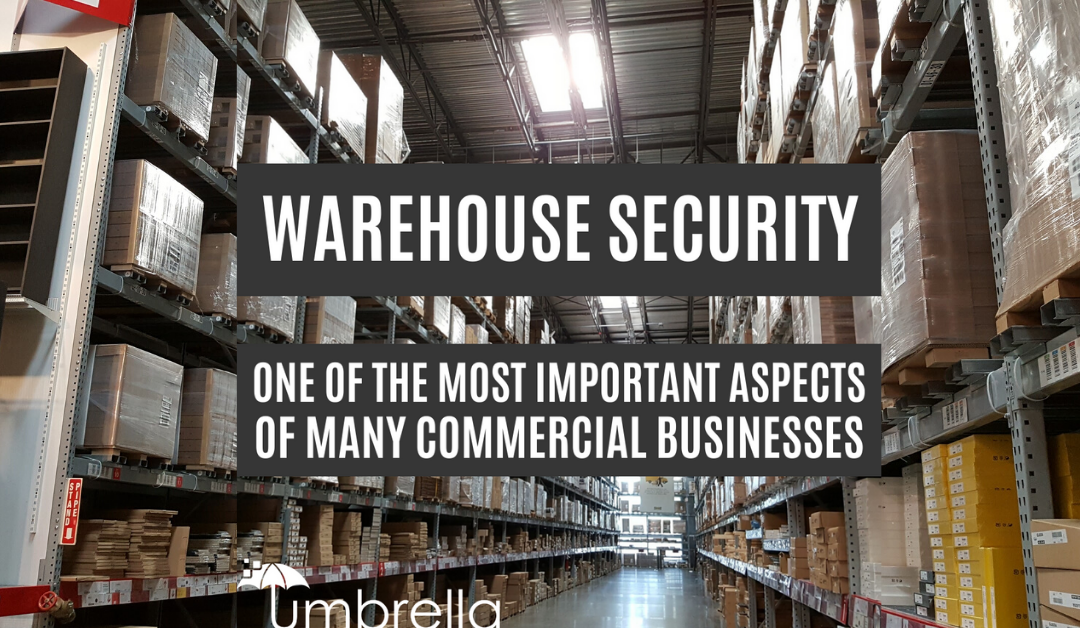
Warehouse security is a business-critical investment, not a compliance checkbox. The combination of high-value inventory, large footprints, multiple entry points, extended operating hours, and frequent contractor and driver access creates a security environment more complex than most commercial facilities. A breach — whether through theft, vandalism, cargo diversion, or unauthorized access — directly hits the bottom line and can disrupt operations across an entire supply chain.
This guide covers the specific security systems that address warehouse risks most effectively, how they work together, and what a properly designed warehouse security program looks like from the ground up.
Why Warehouse Security Is Important for Business
The financial case for warehouse security is straightforward. The FBI estimates that cargo theft costs U.S. businesses billions of dollars annually — and that figure captures only reported incidents. Internal theft, which is harder to detect and less likely to be reported, accounts for a significant portion of inventory shrinkage across warehousing and logistics operations.
Beyond theft, warehouses face risks that other commercial facilities don’t to the same degree:
- High-value, portable inventory — Products in transit are often more valuable per square foot than in retail settings, and easier to move without detection
- Complex access patterns — Drivers, carriers, temporary workers, vendors, and contractors create a constant flow of people who require access management
- Extended and overnight operations — Many warehouses operate 24/7 or have significant after-hours activity, increasing exposure during periods of reduced oversight
- Large physical footprints — Loading docks, parking areas, perimeter fencing, and multiple building access points all require coverage
- Supply chain liability — A security failure can affect not just your business but your customers and partners downstream
Commercial Security Camera Systems for Warehouses
Video surveillance is the foundation of warehouse security — providing real-time visibility, deterrence, and the evidence record needed for investigations and insurance claims. A properly designed commercial security camera system for a warehouse addresses several distinct coverage zones:
Loading Docks and Receiving Areas
Loading docks are the highest-risk area in most warehouses — the point where inventory transfers hands, where discrepancies between manifests and actual shipments occur, and where cargo theft most frequently happens. Camera coverage should capture vehicle license plates, driver identity, and all cargo handling activity. License plate recognition cameras at dock entrances create an automatic record of every vehicle that visits the facility.
Interior Storage and Aisle Coverage
Wide-angle and fisheye cameras positioned at aisle intersections and above high-value storage areas provide visibility into picking, packing, and movement activity. For large warehouses, PTZ cameras that can cover wide floor areas and zoom in on specific activity are effective for active monitoring.
Perimeter and Parking
Exterior cameras covering fencing, parking lots, and access roads need sufficient IR range for overnight coverage — typically 100–200ft minimum for outdoor warehouse environments. Motion-triggered alerts on perimeter cameras reduce overnight monitoring burden while ensuring incidents are captured.
Entry and Exit Points
Every door used for personnel or vehicle access requires camera coverage with sufficient resolution to identify individuals. Cameras positioned to capture faces at entry — not the backs of heads — ensure footage is actually useful for investigations.
Access Control Systems for Warehouses
Controlling who can access which areas of the warehouse — and when — is essential for both security and operational integrity. Commercial access control systems address warehouse-specific challenges including:
Zone-Based Access Control
Not all warehouse employees need access to all areas. High-value inventory storage, server rooms, cash handling areas, and management offices warrant restricted access separate from general warehouse floor access. Role-based permissions ensure employees can access the areas required for their job function — nothing more.
Time-Based Restrictions
After-hours access should be restricted and logged. Employees accessing the facility outside of scheduled shifts without authorization is a significant internal theft indicator. Time-based access rules automatically restrict access during off-hours, with any after-hours access triggering an alert to management.
Contractor and Driver Access Management
Third-party access is one of the hardest parts of warehouse security to manage. A visitor management system integrated with access control allows temporary credentials to be issued with automatic expiration — a carrier driver gets dock access for the duration of their delivery window, then the credential expires without requiring manual revocation.
Audit Trails
Every access event is logged with timestamp and employee identity. When inventory discrepancies occur, access logs narrow down who was in a given area during the relevant time window — dramatically accelerating investigations and deterring internal theft when employees know the system is tracking movement.
Intrusion Detection and Alarm Systems
Monitored commercial alarm systems provide a critical layer of protection during closed hours. For warehouses, intrusion detection should cover:
- All exterior doors and loading dock doors with contact sensors
- Motion detection in high-value storage zones during off-hours
- Glass break detection on windows and skylights
- Perimeter beam sensors on fence lines for large outdoor facilities
- Panic or duress buttons at security desks and management offices
Integration between alarms and cameras is essential — an alarm trigger should automatically pull up the nearest camera feed for the monitoring center, pairing the alert with video context for faster, more informed response.
Perimeter Security
For warehouse facilities with significant outdoor footprints, perimeter security establishes the first line of defense. This includes fencing with monitored gates, exterior lighting calibrated to support camera coverage, and in higher-security applications, perimeter beam or motion detection systems that alert on intrusion before anyone reaches the building.
Vehicle barriers at loading dock approaches prevent unauthorized vehicle access and protect dock personnel from accidental or intentional vehicle intrusion — an often-overlooked physical security element in busy receiving operations.
Manufacturing and Industrial Security Considerations
For manufacturing facilities that include warehouse operations, security requirements expand to cover production floor access, equipment protection, and in some cases hazardous material storage. Our approach to manufacturing security systems addresses the specific operational and compliance requirements of industrial environments, including integration with safety systems and production floor monitoring.
Building a Layered Warehouse Security Program
The most effective warehouse security programs don’t rely on any single system — they layer multiple controls so a failure or bypass of one is caught by another. A properly layered approach combines:
- Perimeter fencing and lighting as the outer deterrent layer
- Camera coverage of all entry points, loading docks, and high-risk interior zones
- Electronic access control with role-based, time-restricted permissions
- Monitored intrusion alarm system covering all entry points and high-value areas
- Visitor and contractor management for third-party access
- Integration between systems for coordinated detection and response
The right starting point is a professional warehouse security assessment that maps your specific facility, identifies coverage gaps, and prioritizes improvements based on your actual risk profile and inventory value. Umbrella Security Systems designs and installs commercial security systems for warehouses and industrial facilities throughout the Chicago area. Contact us to schedule an assessment.
Frequently Asked Questions
What security systems does a warehouse need?
A complete warehouse security program typically includes commercial security cameras covering loading docks, storage areas, and perimeter; electronic access control with role-based permissions and audit logging; a monitored intrusion alarm system; and visitor or contractor management for third-party access. For larger facilities, perimeter detection and license plate recognition at vehicle entry points are valuable additions. The right combination depends on facility size, inventory value, operating hours, and how much third-party traffic the facility handles.
How do you prevent internal theft in a warehouse?
The most effective internal theft deterrents combine visibility and accountability. Camera coverage of all inventory handling areas creates a record of activity. Access control with audit logging tracks who was in which area and when. Time-based restrictions alert management to after-hours access. The combination means employees know that their movements are logged and that discrepancies can be traced — which deters opportunistic theft more effectively than any single control alone.
Do warehouse cameras need night vision?
Yes, for any exterior coverage and for interior areas that aren’t fully lit during overnight operations. Loading docks, parking lots, and perimeter areas need cameras with sufficient IR range for the coverage distance — typically 100ft minimum for dock areas, 150–200ft for large parking lots. Interior areas with overnight activity benefit from low-light cameras even with ambient lighting, since light levels in active warehouse environments vary significantly.
How is warehouse security different from standard commercial security?
Warehouses have several characteristics that create distinct security requirements: larger footprints requiring more camera coverage, high-volume third-party access from carriers and contractors, frequent after-hours activity, high-value portable inventory, and loading dock operations where cargo transfer creates specific theft opportunities. A warehouse security system needs to address all of these rather than applying a standard commercial office building approach to an industrial environment.