
Chicago Commercial Security
Trusted Commercial Security Camera Installation Chicago Businesses Rely On
Commercial security camera installation Chicago businesses can rely on starts with more than mounting cameras — it requires evidence-focused placement, clean infrastructure planning, and long-term service support across Northern Illinois.
Contact Us
"*" indicates required fields
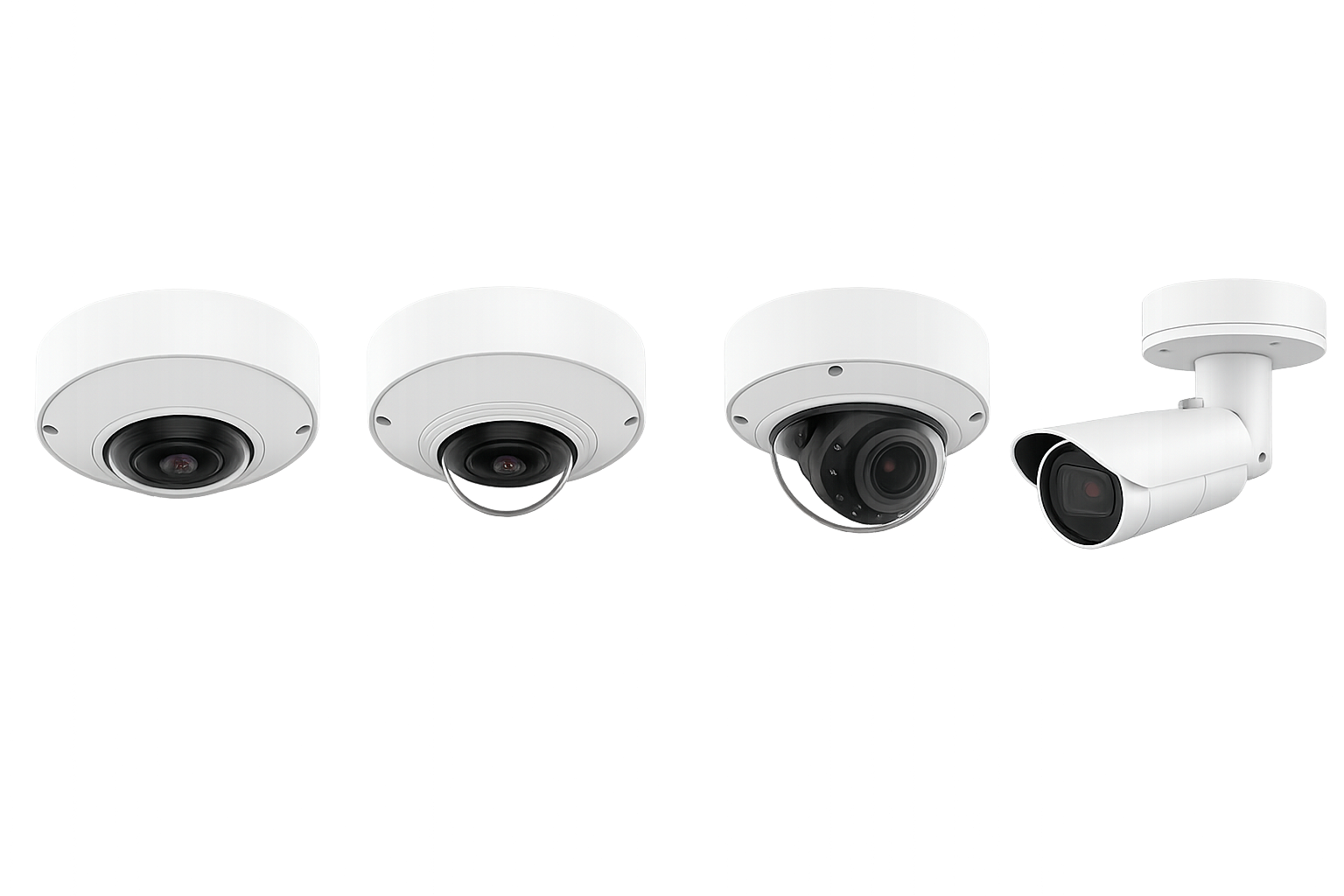
Evidence Quality Tool
See Why Camera Placement Matters During Installation
Toggle between detection, observation, and identification. The difference is not just camera resolution. It is distance, field of view, focal length, lighting, and whether the installation is planned around usable evidence.
Detect a Person

Detect a Vehicle

This is where many commercial camera installs fail: footage exists, but cannot support a practical investigation.
Most commercial systems default to broad detection-level coverage. Proper installation is what changes that.

Why Buyers Stay Engaged
Installation Experience That Feels More Dialed-In
From the first walkthrough to long-term support, the installation experience should feel organized, evidence-focused, and aligned with how your facility actually operates.
Why Camera Placement Matters
Why Commercial Security Camera Installation Chicago Depends on Placement, Not Just Megapixels
A better sensor does not solve a weak installation plan. For commercial security camera installation Chicago facilities depend on, what matters is how much detail reaches the target zone, how wide the scene becomes, how far the subject is from the camera, and whether the camera is actually positioned for faces or plates where they matter most.
For broader camera-system architecture and platform guidance, visit the commercial security camera systems page.
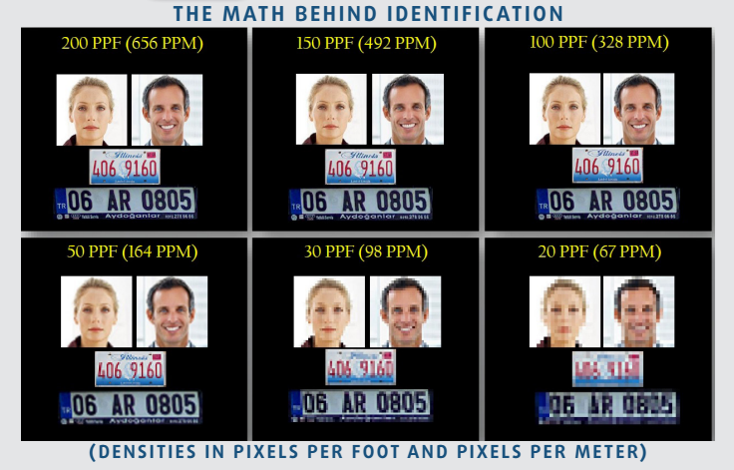
Common Failure Point
Why Most Commercial Camera Installations Fail
Most commercial camera installations fail because the deployment is driven by equipment count instead of evidence intent. Broad overview coverage gets installed where a tighter target zone should have been planned, critical entrances are left too wide, and infrastructure decisions get made before the operational risks are actually mapped.

Contact Us
"*" indicates required fields
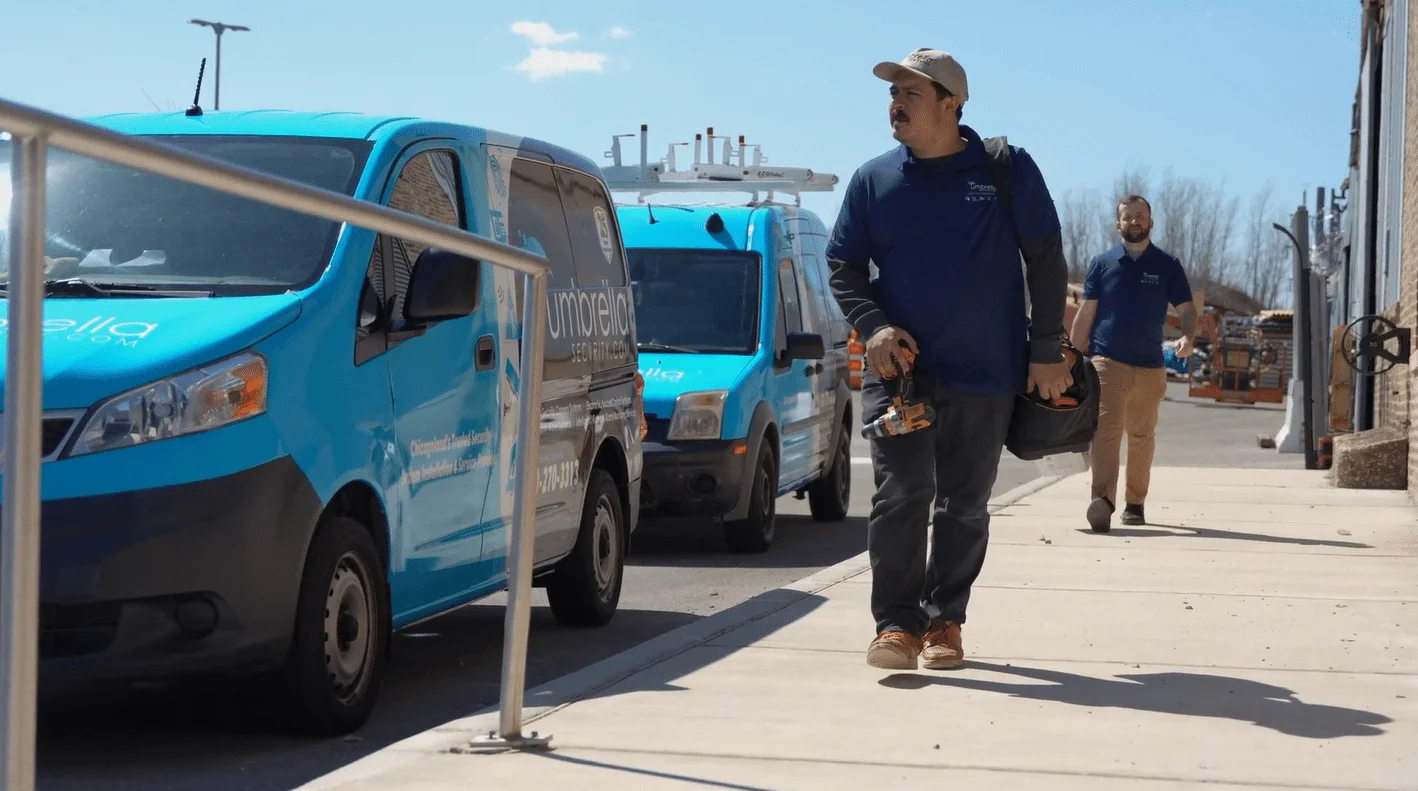
On-Site Assessment
Commercial Risk Assessment and Installation Planning
Before a camera is mounted, the facility should be reviewed through an operational lens. We look at how people move, where assets are exposed, what infrastructure is available, and where stronger evidence would materially reduce uncertainty after an incident.
Operational Flow
Entry patterns, employee movement, visitor routes, dock activity, and shift changes affect where cameras should actually go.
Target-Zone Planning
We identify where faces, vehicles, loading activity, and investigative detail matter most instead of treating every area the same.
Lighting & Environment
Backlighting, nighttime conditions, reflections, weather exposure, and indoor-outdoor transitions all influence performance.
Infrastructure Readiness
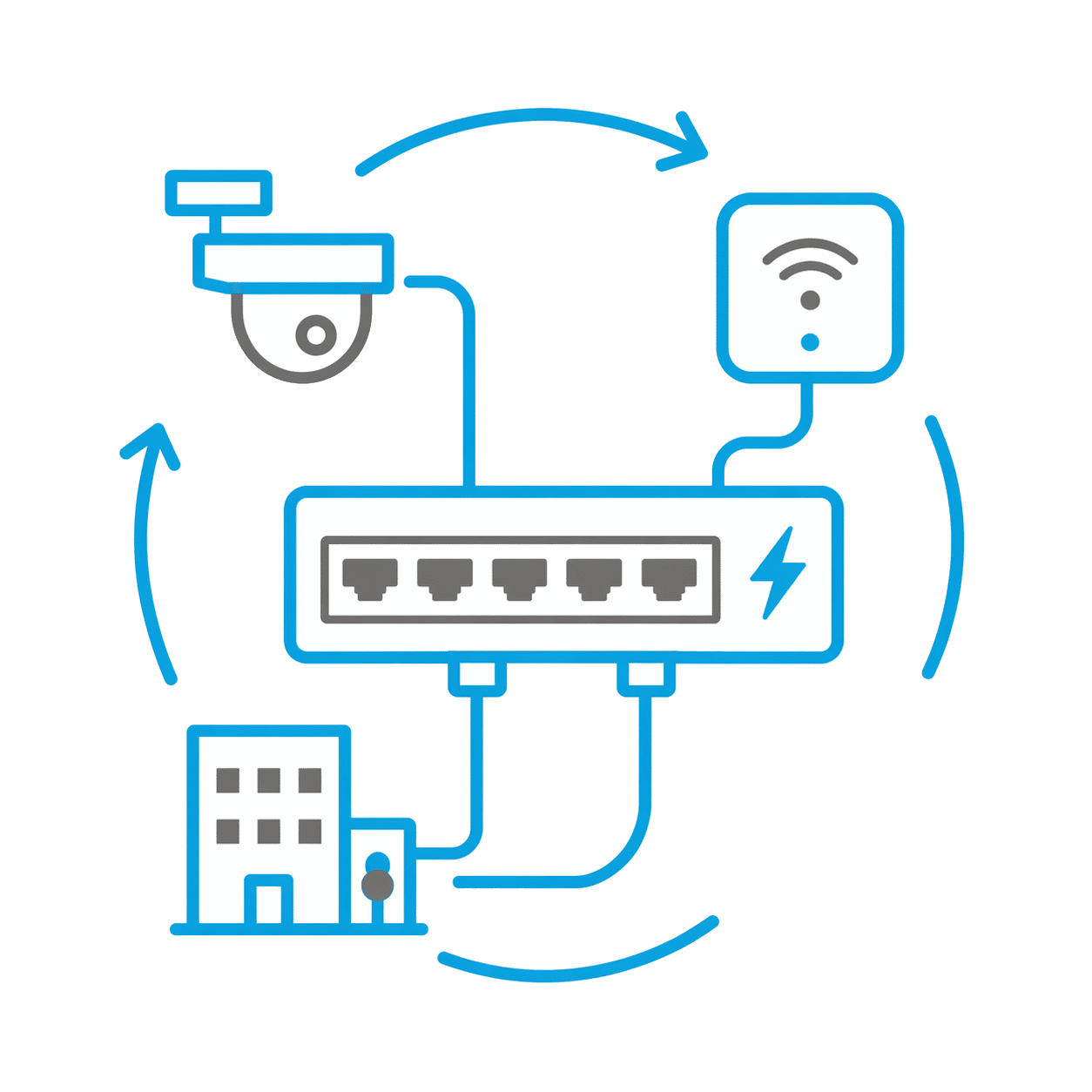
Switching, PoE, cable paths, power availability, and service access need to be accounted for before install crews arrive.
Integration Fit
Camera installation often needs to coordinate with access control installation, commercial intrusion alarm installation, and future monitoring workflows from day one.
Long-Term Supportability
Good deployments also think about maintenance, expansion, mounting access, and how the system will be supported after go-live.
Umbrella Difference
Why Businesses Get Frustrated with Security Integrators
Many commercial buyers do not start over because they want a new camera brand. They start over because service is slow, problems repeat, systems do not talk to each other, and the original installation was not planned around the way the facility actually works.
Slow service response
Why it matters: open security gaps increase risk exposure. Umbrella approach: responsive local service, clearer coordination, and a support model built to reduce downtime.
Repeat visits for simple issues
Why it matters: unresolved problems waste time and disrupt operations. Umbrella approach: better diagnostics, cleaner documentation, and a first-visit resolution mindset whenever practical.
Fragmented cameras, access control, and alarms
Why it matters: disconnected systems slow down investigation and response. Umbrella approach: integrated video, door events, alarms, network planning, and service visibility.
Outdated technology that limits growth
Why it matters: legacy platforms create upgrade friction and long-term cost. Umbrella approach: scalable system planning that protects future expansion and avoids unnecessary lock-in.
Poor planning and inconsistent execution
Why it matters: weak planning creates blind spots, rework, and frustration. Umbrella approach: structured design, field coordination, and an engineering-first installation process.
Professional Deployment
Commercial Camera Installation Done in the Right Order
The installation process should reduce risk, not add confusion. Umbrella plans, installs, configures, tests, and supports the deployment so the system is ready for daily use.

1. Consultation & Assessment
We evaluate the facility, risks, operational flow, existing infrastructure, and where better footage matters.

2. Deployment Planning
We turn the assessment into a practical installation plan for cameras, cabling, network readiness, target zones, and user needs.
3. Installation & Commissioning
Our team installs, configures, tests, and commissions the system, then supports future service, expansion, and upgrades.
Operational Fit
Built Around How Your Facility Actually Works
A strong commercial camera installation should reflect the real operating environment, not a generic drawing. That means thinking through where work happens, where incidents are most likely, and which areas need overview coverage versus tighter evidence-focused placement.
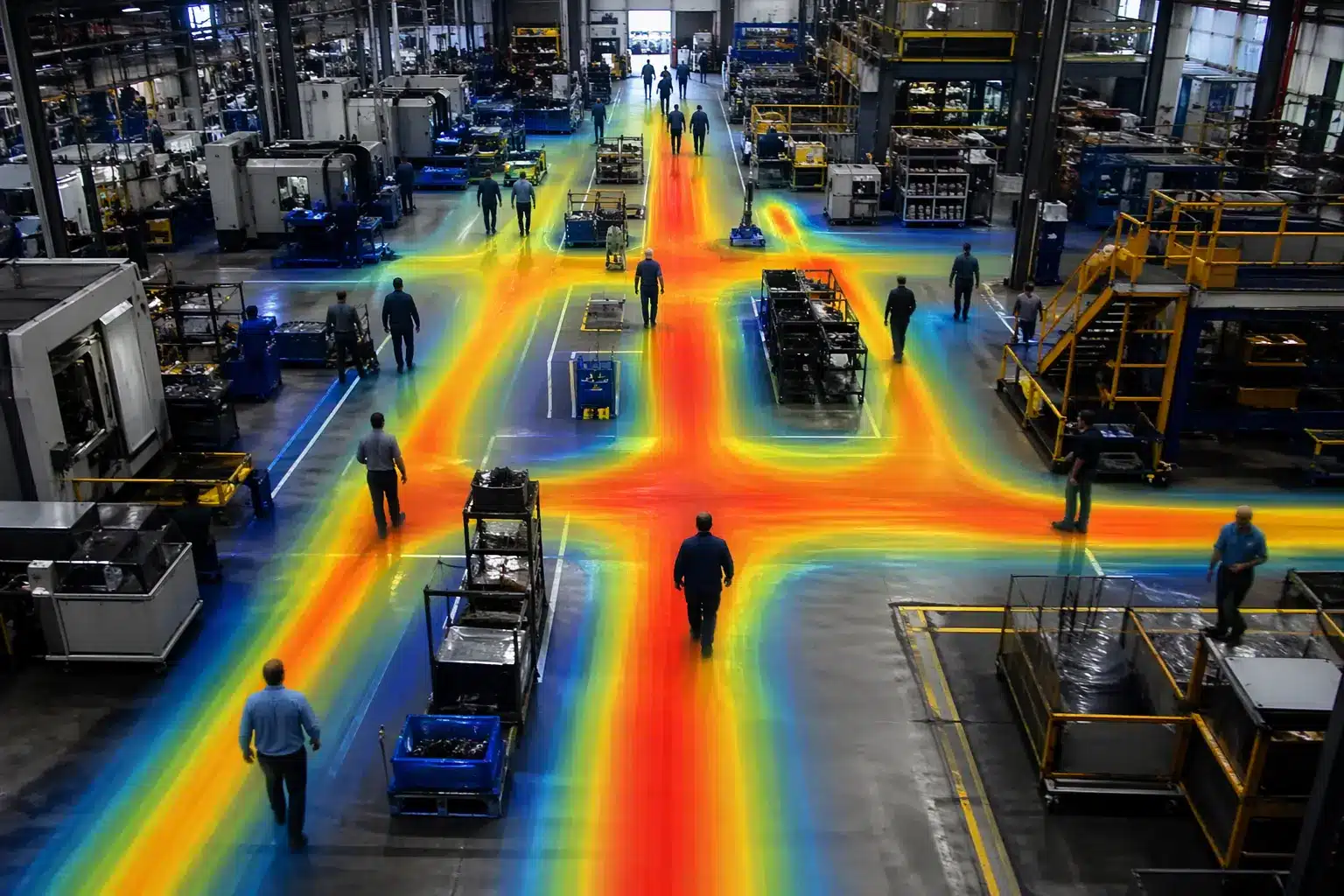
Employee Movement & Shift Transitions
Manufacturing floors, cross-traffic corridors, and shift changes create patterns that often define where overview visibility and tighter evidence zones should be combined.
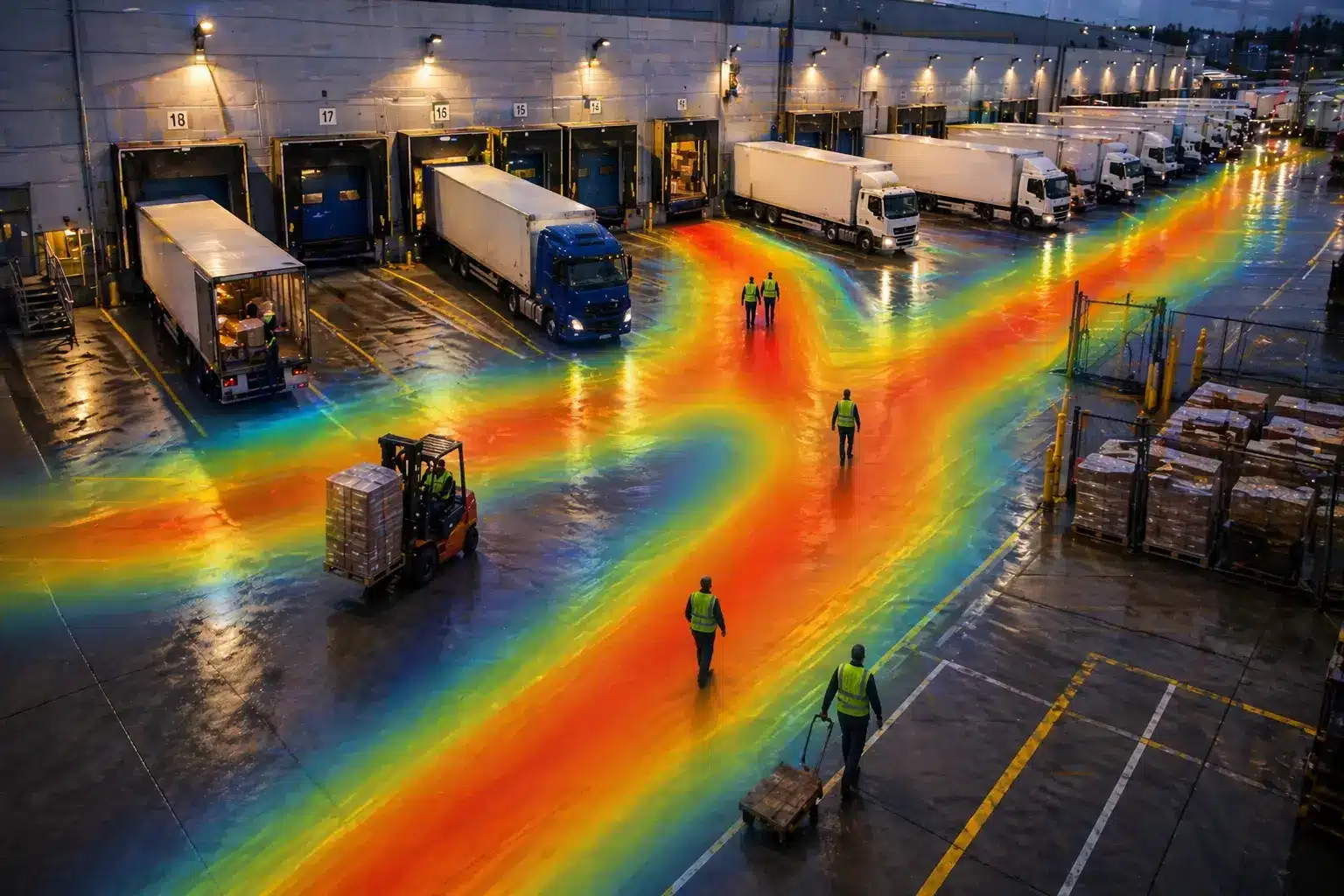
Loading Docks & Delivery Activity
Docks create recurring operational risk: truck movement, inventory handling, contractor access, and blind spots near the most active parts of the building.
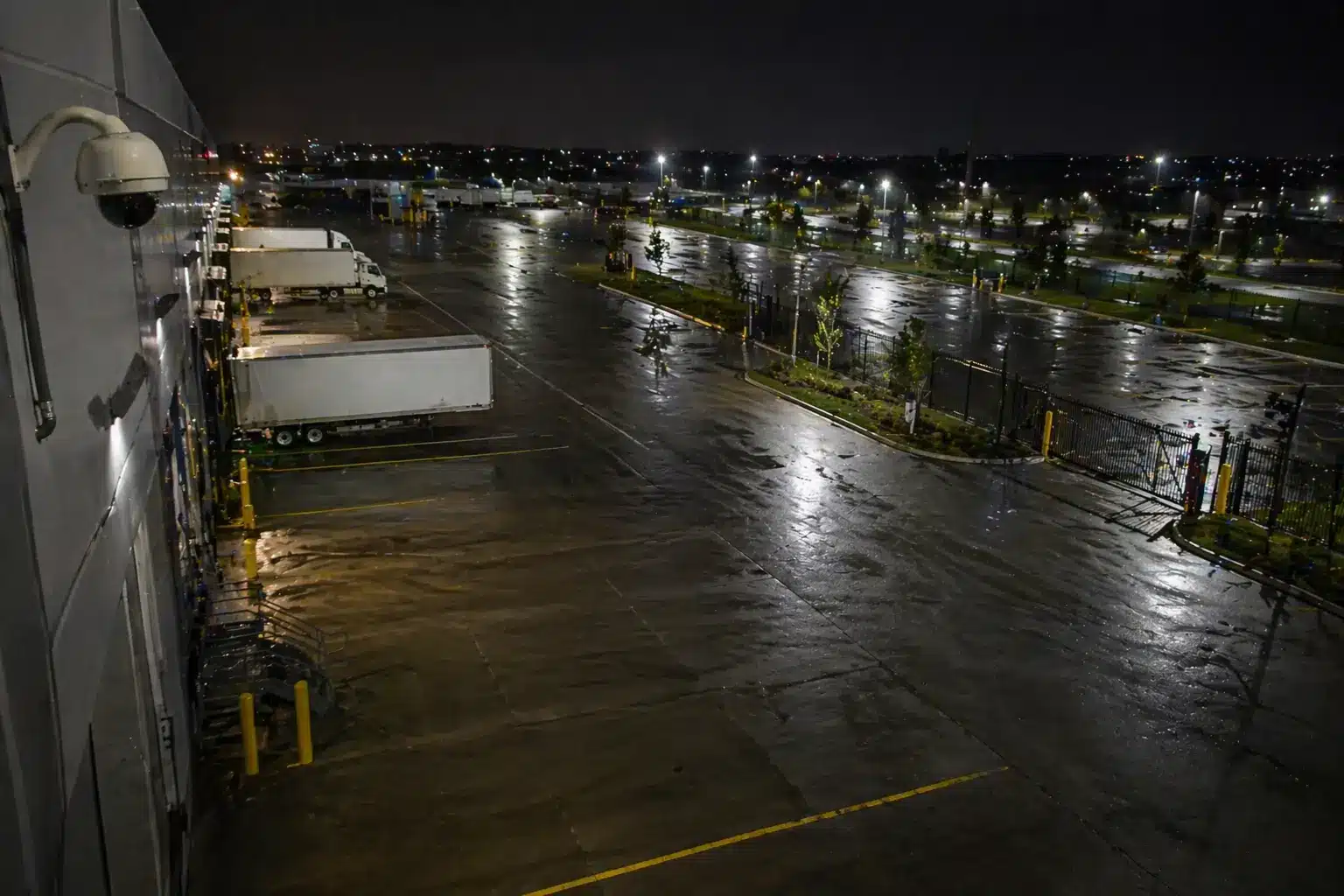
Perimeter Access & After-Hours Visibility
Exterior access points, gates, employee entrances, and secondary doors often need different coverage rules after hours than they do during normal operations.
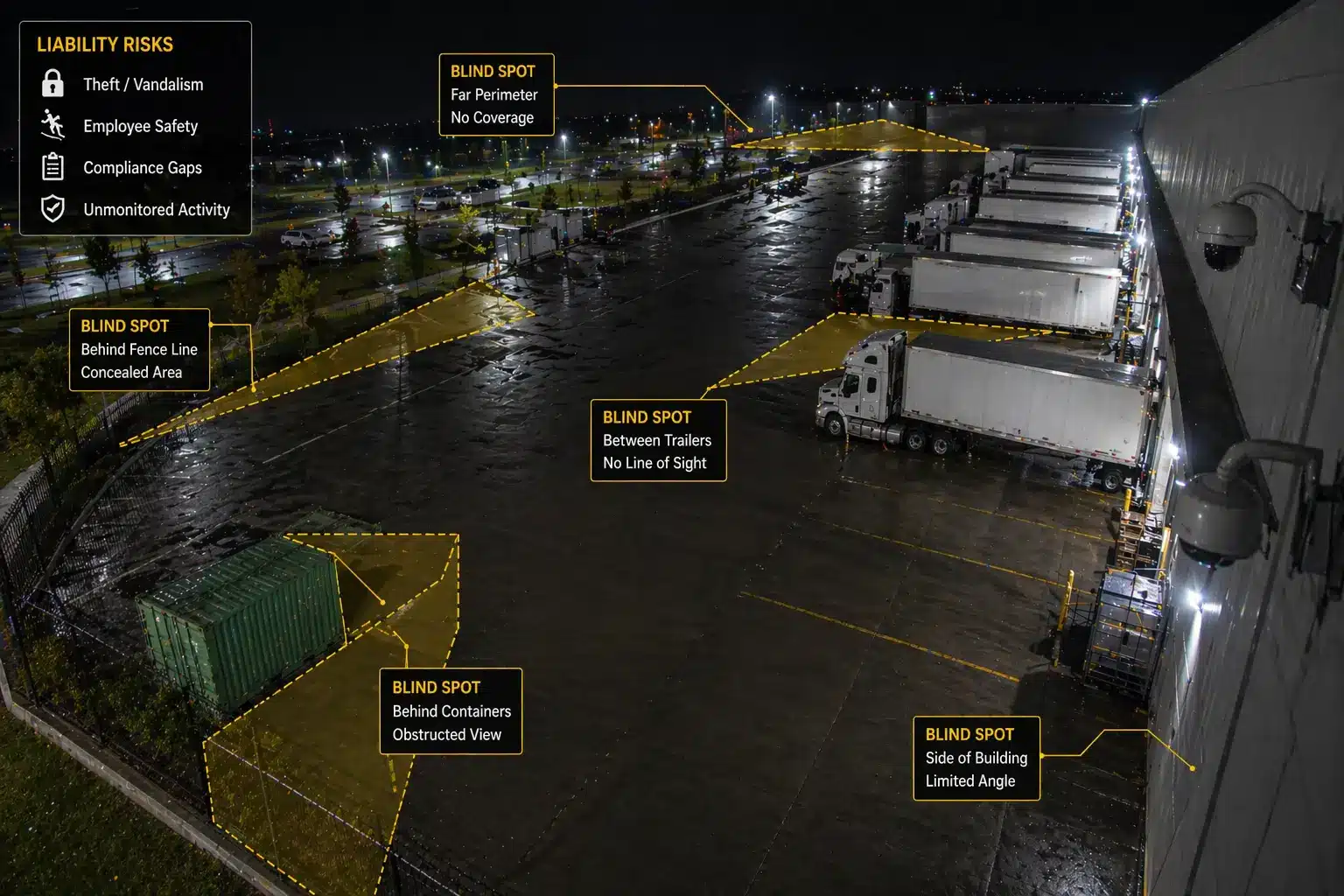
Blind Spots & Liability Exposure
Not every gap looks obvious on a floor plan. Service corridors, side yards, corners, and areas near stored material can quietly become problem zones without deliberate planning.
Umbrella plans commercial camera installations around the way the facility actually operates — including loading docks, production flow, perimeter access, after-hours movement, employee traffic, and the areas where stronger video evidence can reduce uncertainty after an incident.

Monitoring Ready
Remote Video Monitoring and Video Verification
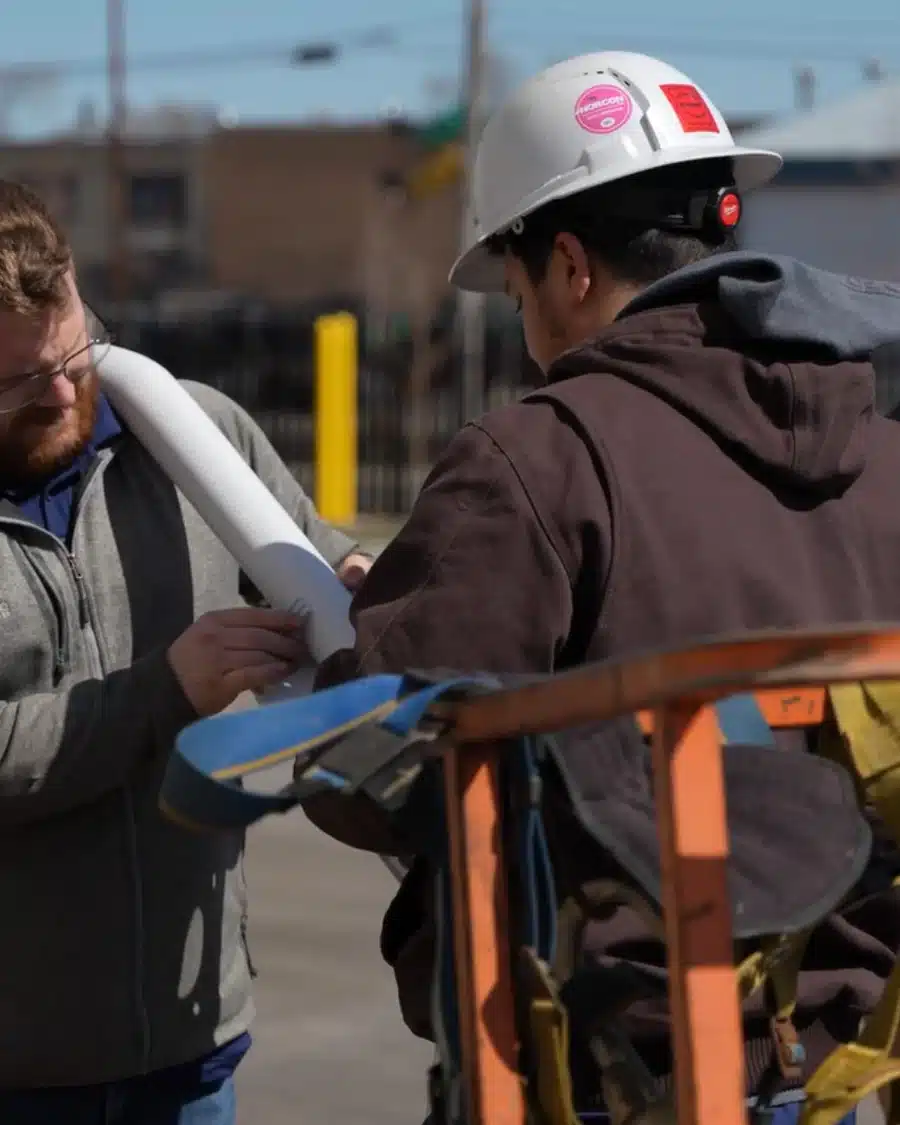
For some facilities, recording footage is not enough. Incidents need to be identified and acted on while they are happening, not just reviewed later.
- Real-time monitoring of critical areas
- Alarm and event verification
- Faster response to active issues
- Reduced false alarms and unnecessary dispatches
- Additional oversight beyond on-site staffing alone
Implementation Lens
Monitoring depends on placement, alerts, network health, and verification workflows.If monitoring may be part of the future plan, the installation should account for it early. That means critical zones, camera angles, lighting, analytics, and response paths should be planned before the first camera is mounted.
System Coordination
Integrated Security Infrastructure Without Install-Day Surprises
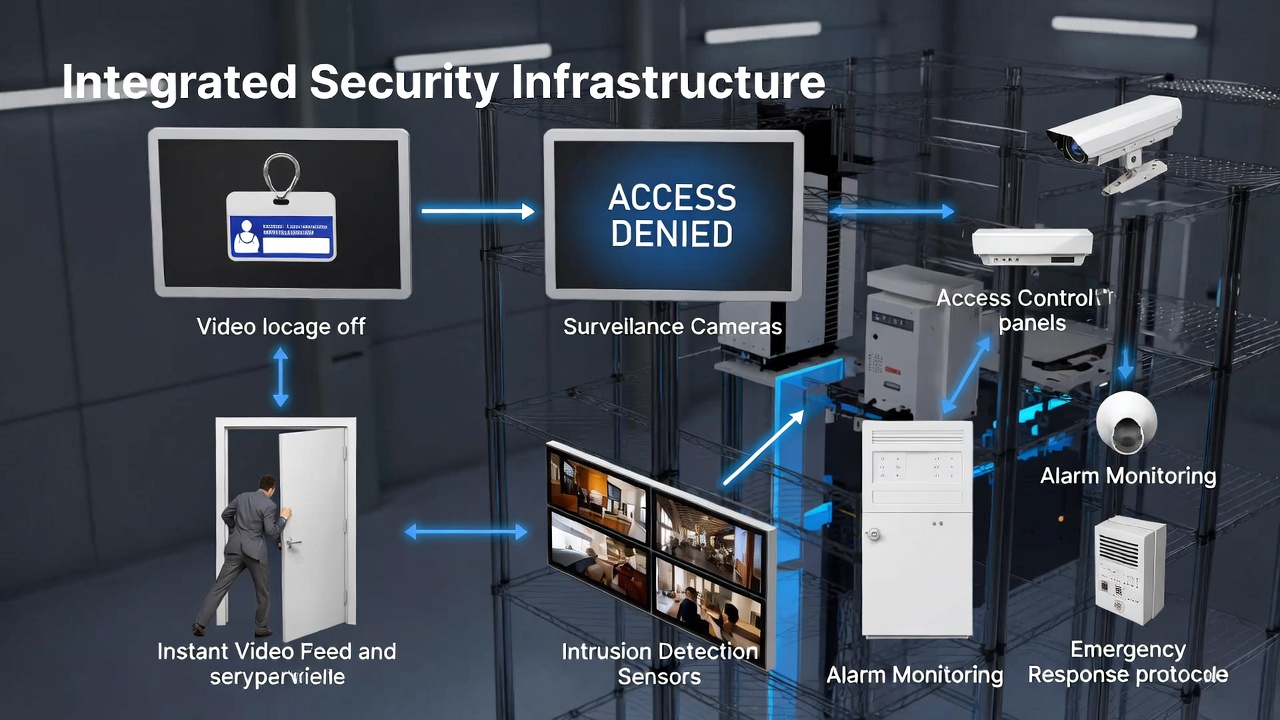
Commercial facilities rarely operate with one isolated security layer. Camera installations need to coordinate with network infrastructure, access control installation, intrusion alarm systems, and the day-to-day environment so the deployment works cleanly from the start.
Primary Coordination Goal
Get video surveillance, access control, alarms, switching, and cable paths working together before installation day becomes a scramble.
What Usually Creates Friction
Late infrastructure discovery, missing switch capacity, power assumptions, cable-route issues, and unclear integration ownership across vendors.
Deployment Readiness
Installation planning should confirm network capacity, device coordination, cable paths, power, and service access before crews are on site.
For broader architecture and system-design guidance, visit the commercial security camera systems page. For door-event coordination, see access control installation and access control system solutions.

Application Fit
Commercial Video Surveillance Capabilities That Depend on Good Installation
These capabilities perform best when the installation accounts for camera placement, storage, network health, lighting, and operational intent from the beginning.

Video Storage
Retention planning should support compliance, investigations, and practical access to footage when teams need it fast.

Business Operations
Well-positioned cameras can support operations, accountability, safety review, and day-to-day management beyond security alone.

Monitoring Ready
Monitoring workflows depend on cleaner coverage, reliable alert zones, and camera placement that supports real-time verification.

Serviceable Deployment
Mounting access, cable paths, network planning, and growth considerations all affect how serviceable the finished system will be.
Chicago Industry Fit
Commercial Camera Installation for Facilities with Real Operational Risk
Different facilities create different installation requirements. The stronger page experience here is showing that the deployment strategy changes with the operating environment, not just with the hardware brand.
Manufacturing
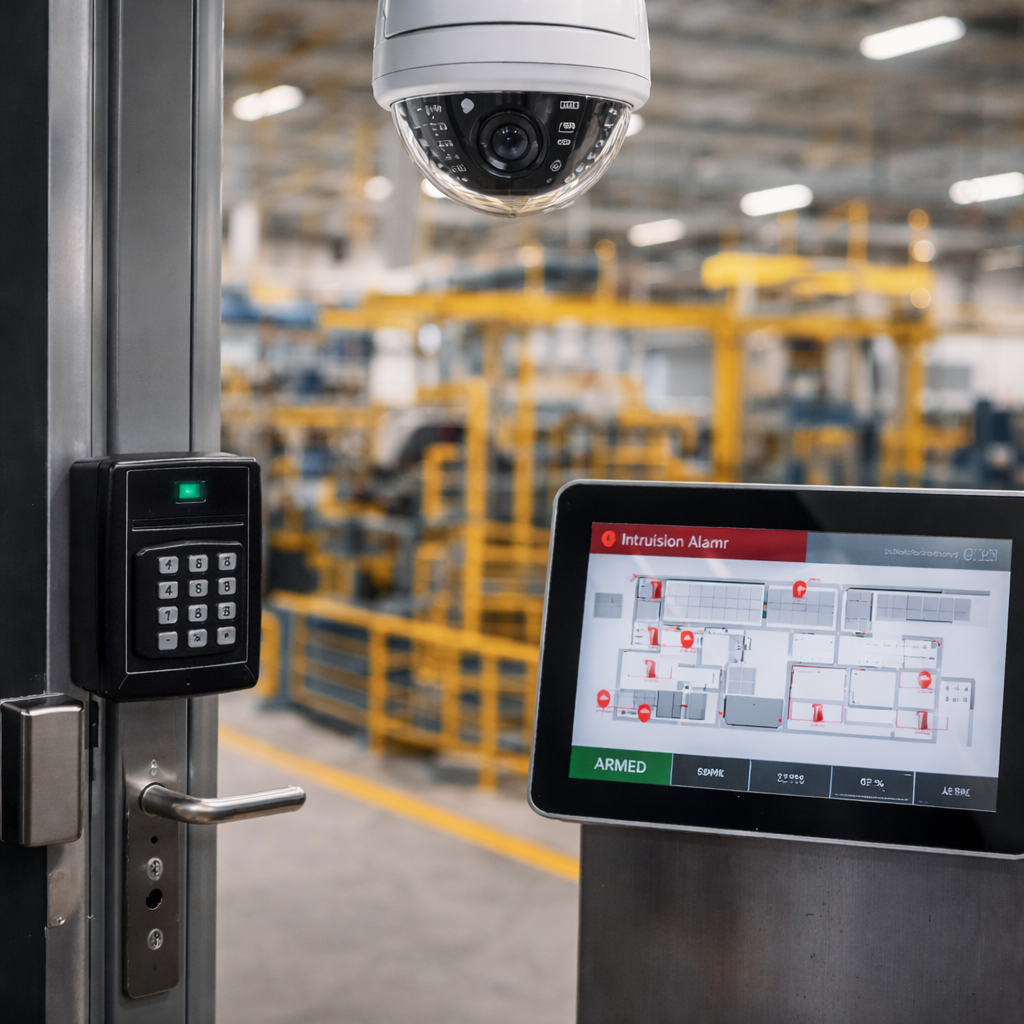
Production floors, contractor access, high-value equipment, and perimeter movement all shape where overview coverage and tighter evidence zones should land.

Warehouse & Distribution
Loading docks, inventory transfer, employee movement, trailer areas, and yard activity create different camera requirements across one property.

Commercial Buildings
Tenant access, shared lobbies, parking, after-hours activity, and visitor management call for more intentional deployment than generic hallway coverage.
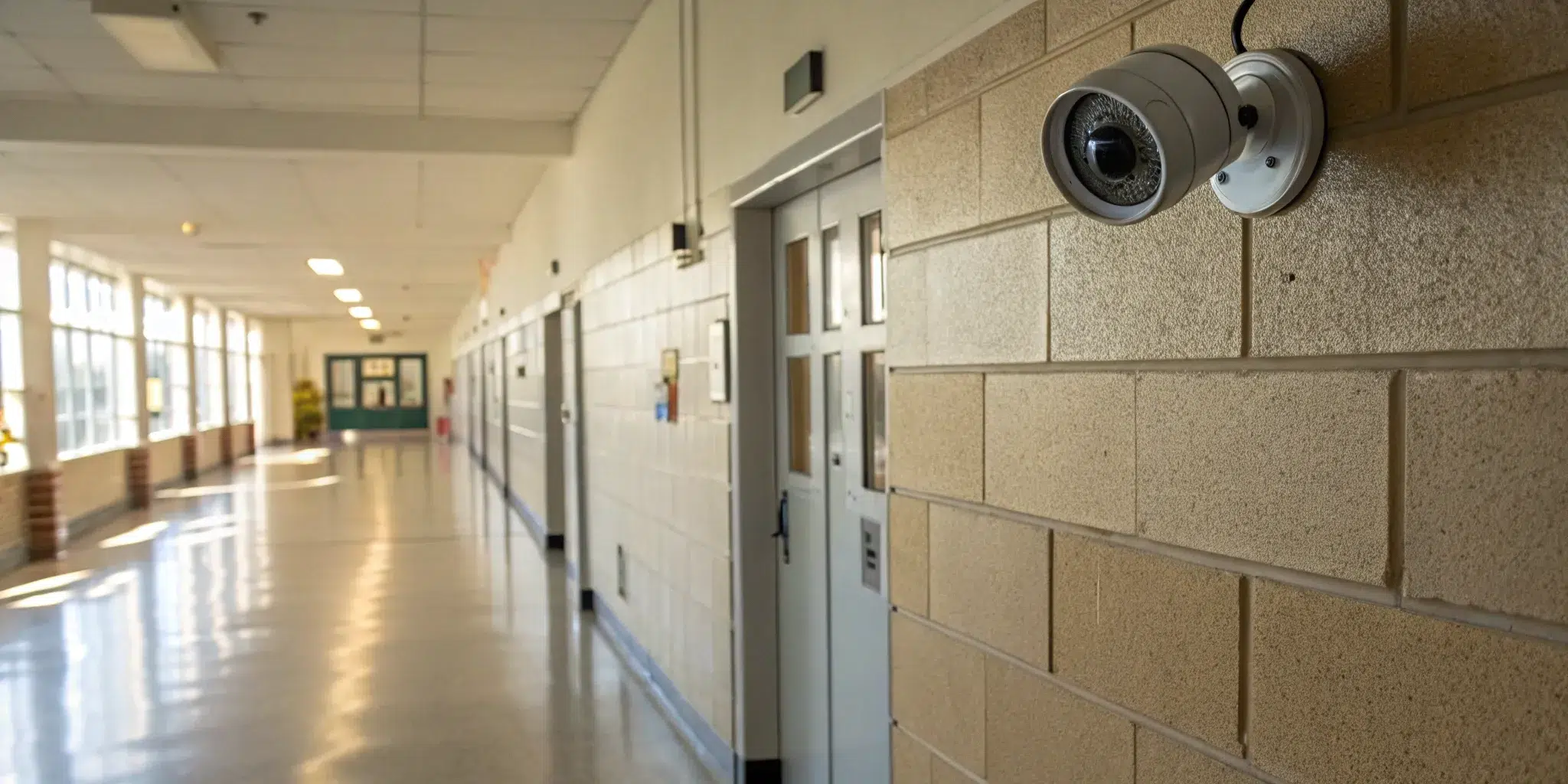
Schools & Campuses
Entry visibility, visitor flow, after-hours awareness, and coordination with broader campus safety workflows all influence installation planning.
Chicago & Northern Illinois
Commercial Security Camera Installation Across Chicago & Northern Illinois
Our commercial security camera installation Chicago and Northern Illinois team supports facilities across the city, suburbs, and regional industrial corridors with on-site camera installation, system upgrades, expansion work, integrated security planning, and long-term service. A warehouse in Elk Grove Village, a manufacturing site near Joliet, a school campus in the suburbs, and a commercial building in Chicago all need different coverage decisions.
Commercial buildings, schools, retail corridors, healthcare properties, office environments, and shared facilities where camera placement, visitor flow, and after-hours visibility matter.
Naperville, Aurora, Schaumburg, Elk Grove Village, Oak Brook, Elgin, Northbrook, Arlington Heights, and surrounding commercial markets.
Warehouses, manufacturing facilities, loading docks, yard gates, employee entrances, production floors, and multi-building operations across Northern Illinois.
Before new construction, during a camera upgrade, after service frustration, when replacing legacy equipment, or when blind spots and evidence quality are becoming a business risk.
Local Case Studies
Commercial Security Projects Built Around Real Operational Risk
These projects show how Umbrella supports commercial facilities that need more than basic camera installation — including access control, alarm coordination, video monitoring, multi-building visibility, and operational risk reduction.

Manufacturing Security Upgrade
Elevate Your Security Standards
Elegant Packaging, a luxury rigid box manufacturer in Cicero, Illinois, partnered with Umbrella Security to modernize and unify its facility protection strategy. With a growing workforce and high-value production environment, the company needed stronger access control, improved surveillance visibility, and reliable alarm integration.
Umbrella deployed a centralized solution combining commercial-grade access control, high-definition video surveillance, and intrusion detection to improve operational oversight, reduce risk exposure, and strengthen facility security.
Integrated Security Case Study
Neilson-Massey Vanillas: Multi-Building Security and Environmental Visibility
Umbrella helped Neilson-Massey Vanillas upgrade from outdated systems to an integrated security solution across multiple locations. For this operation, security is about more than cameras: the project included access control, video monitoring, alarm protection, humidity sensors, and mobile app access for better building visibility and control.
For a vanilla extract operation, humidity changes can create real financial risk. Environmental sensors help monitor conditions around extraction beans and alert the team when action may be needed to protect high-value inventory. The system also improved emergency visibility by helping the team understand who may be in the building during an evacuation event.
Testimonials
Commercial Project Credibility
Finzer Roller, Itasca IL
“Their dedication to finding the best solution at a respectable cost all while being honest and forthcoming won them our business.”
- Eric Finzer, Owner
Granholm & Gynac Lawfirm, Joliet IL
“Our new security system is both high-tech and user-friendly... thorough, knowledgeable, and professional.”
- Adam Gynac, Managing Partner
Vintage Vault, Chicago IL
“Their team is very responsive and communication is great. Thomas really cares about the customers and it shows.”
- Client TestimonialPlanning Credibility
Installation Planning Backed by Real Security Design Experience
Installation quality is shaped before the hardware ever goes on the wall. Camera placement, infrastructure planning, commissioning discipline, and long-term serviceability all affect whether the system performs when it matters.
FAQ
What to Expect from Commercial Security Camera Installation
How long does commercial security camera installation take?
Small offices may require several days. Large industrial facilities may require phased deployment over several weeks. The timeline depends on the number of cameras, cabling requirements, lift work, network readiness, and commissioning scope.
Can cameras integrate with my existing access control system?
In many cases, yes. Compatibility is assessed during the on-site evaluation. We look at current access control, alarm workflows, network infrastructure, and whether event-based video verification is realistic.
How long is video footage stored?
Retention depends on compliance needs, camera count, resolution, frame rate, motion activity, and storage design. Many commercial environments target around 30 days, but the right answer is site-specific.
Do you provide maintenance and ongoing support?
Yes. Ongoing service agreements, system health checks, troubleshooting, upgrades, and expansion planning are part of the long-term service offering.
Can you upgrade an existing camera installation?
Yes. Many projects involve improving an existing installation by repositioning cameras, replacing weak devices, improving target-zone coverage, upgrading network/storage components, and correcting blind spots.
For broader physical security guidance, see CISA physical security resources and ASIS International.
Next Step
Schedule a Commercial Security Camera Assessment
Schedule a commercial security camera installation Chicago assessment to review your building, priorities, and the target areas that matter most. We will help you think through a practical installation approach built around usable evidence.
"*" indicates required fields