

Government Security Systems Illinois Public Agencies Can Trust
Government security systems Illinois public agencies choose should help their teams answer real questions quickly: what happened, where it happened, who had access, whether the video is usable, and whether the system can grow with the agency.
- Video surveillance, access control, intercoms, alarms, visitor management, and emergency notification.
- Designed for municipalities, police departments, townships, public works facilities, schools, and public agencies.
- Built around evidence quality, access governance, installation continuity, and long-term local support.
Successful Projects With Local Government Clients
Public agencies need a partner who understands aging infrastructure, public-facing facilities, sensitive areas, staff workflows, procurement pressure, technology lifecycle, and long-term support.








Choose Your Starting Point
Not sure where to begin? Pick the issue closest to your facility and jump to the guidance that fits your project.
Better Video Evidence
Clearer footage, better camera placement, and faster incident review.
Start with video planningControlled Access
Doors, credentials, secure areas, staff access, and public/staff separation.
Review access optionsAging System Replacement
Unreliable, difficult-to-manage, poorly documented, or unsupported systems.
See common failure pointsCitywide or Multi-Building Plan
A practical standard across departments, buildings, and public facilities.
Plan across sitesPublic Works / Fleet Security
Yards, gates, vehicles, equipment, storage areas, and remote buildings.
Focus on public worksGrants or Procurement Support
A clear scope, defensible plan, and documentation for approval or funding.
Review planning supportHow Different Public Facilities Should Be Planned
Different public facilities fail in different ways. A police department, city hall, public works yard, township office, and court-adjacent facility should not all receive the same camera, access-control, or alarm plan.
Evidence, access, and continuity
Unclear footage, unreliable doors, and slow video export can create operational risk. Plan for cameras, access control, evidence areas, secure spaces, retention, and continuity during upgrade.
View Wilmington project examplePublic entry and staff access
Public/staff access overlap, visitor entry, records rooms, and multi-use spaces require controlled entry, video intercoms, staff permissions, cameras, and visitor flow planning.
View Lisle project exampleInherited systems and evidence review
Aging systems and prior partial upgrades can weaken search, storage, and camera quality. Plan for long-term video strategy, exterior coverage, evidence review, and phased modernization.
View Kane County project exampleYards, gates, and equipment
Vehicle yards, fuel areas, garages, utility spaces, remote buildings, and after-hours access need perimeter cameras, gate access, alarms, and reviewable video.
Review public works planningStandards across departments
Inconsistent systems across buildings create management and support problems. Plan camera/access standards, storage, documentation, administration, and phased expansion.
Review citywide planningOpen platforms and storage growth
Proprietary systems, slow search, and storage uncertainty can limit future options. Plan around open-platform video, forensic search, permissions, and growth. Municipalities evaluating license-plate-reader replacement can also review the Umbrella Open Source Safety Solution and community-controlled ALPR approach.
View McHenry project exampleBuilt for the Teams Responsible for Public Facilities
A public-sector security project has to make sense to the people who approve it, manage it, use it, service it, and defend the decision later.
Police leadership may care most about evidence review and sensitive-area control. City administrators may need budget clarity and a board-ready scope. Facilities teams need a system that can be installed and supported without chaos. IT needs to understand network impact, storage, access permissions, and platform choices.
Common Mistakes in Municipal Security Planning
Many public agencies start by asking, “How many cameras do we need?” or “How many doors should be controlled?” Those are necessary questions, but they are not the first questions.
- What areas need clear evidence after an incident?
- Which spaces require controlled access?
- How quickly does footage need to be found and shared?
- What parts of the existing system should be preserved?
- Can the network, storage, and infrastructure support the plan?
Questions to Ask Before Approving a Municipal Security Proposal
A strong proposal should explain more than what equipment will be installed. It should show how the system will support the facility, the people who use it, and the agency responsible for maintaining it.
Why is each camera placed there?
The proposal should explain coverage purpose, viewing angle, image quality, and what each camera is expected to help review.
Will footage be usable?
Video should support review, identification, search, export, and retention needs instead of only providing a live view.
Do permissions match real roles?
Door schedules, staff permissions, sensitive rooms, public/staff separation, and administrator workflows should be clear.
Can the backbone support it?
Network capacity, storage, retention, power, cabling, labeling, and remote access should be reviewed before equipment is selected.
Can the upgrade happen safely?
The installation plan should reduce disruption and avoid leaving the facility exposed while old systems are replaced.
Who manages the system?
Public agencies should understand user management, licensing, updates, service, documentation, and support responsibilities.
Can the system grow?
The design should support future buildings, departments, phases, platforms, storage, and service needs.
What does the agency receive?
As-builts, labeling, credentials, training, warranty information, and support records should be part of the handoff.
Need help reviewing what your current system or proposal may be missing?
Umbrella can help your team look at the facility, the current system, and the operational requirements before equipment decisions are finalized.
Why Many Municipal Security Systems Become Hard to Manage
Municipal security challenges are often shaped by years of incremental decisions, budget cycles, changing technology, and multiple vendors.
Legacy systems installed years apart
Cameras, doors, alarms, intercoms, software, storage, and networking need to support one another.
Closed platforms that limit options
Systems that look simple at first can increase lifecycle cost and make future upgrades harder.
Separate vendors with no whole-system accountability
When no one owns the whole environment, public agencies can end up with gaps no one is responsible for fixing.
Public-Sector Project Experience
These examples are not here to decorate the page. They show the types of public-sector problems Umbrella is trusted to solve: aging systems, poor video quality, difficult search, access-control issues, multi-building upgrades, and long-term ownership.
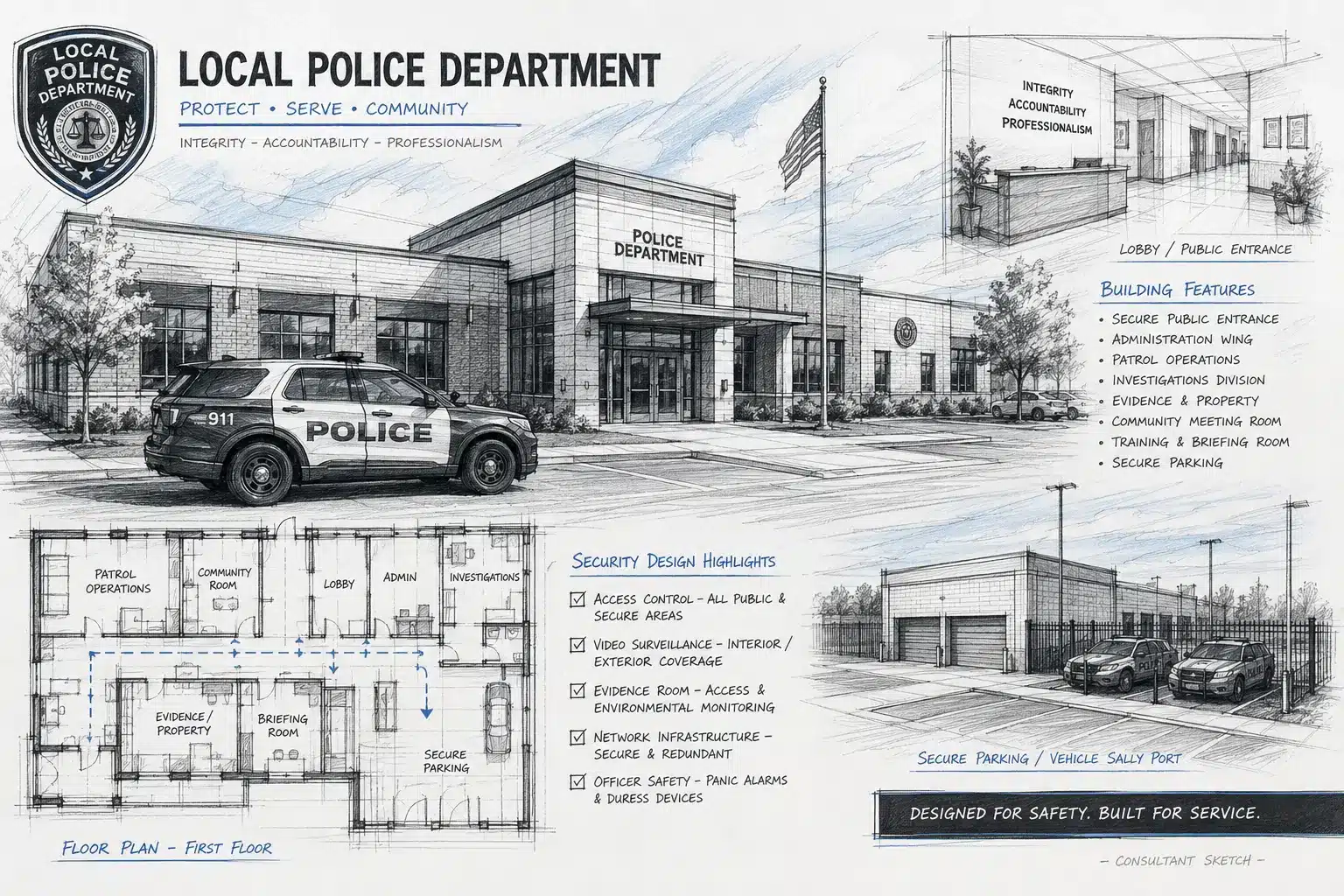
Police facility workflows
Wilmington shows clearer video, controlled access, and installation continuity for a working police facility.
Inherited system recovery
Kane County shows how a public-sector system can move from a failed upgrade toward a long-term modernization path.
Forensic search and storage
McHenry shows open-platform video, better search, high-resolution cameras, and future storage planning.
Multi-facility municipal upgrade
Lisle Township shows video, access control, alarms, and intercom-enabled entry points across public-facing facilities.
Public safety engineering at scale
CTA-scale founder experience reinforces the planning discipline behind complex public-sector video systems.
Wilmington Police Department
Wilmington Police Department was operating with an aging camera and access-control system. Cameras were unreliable, image quality was poor, video downloading and retention were difficult, and multiple door-access points were creating problems.
Umbrella helped modernize the department’s video surveillance and access-control environment with clearer video, improved coverage, controlled access for sensitive spaces, and a transition approach that kept existing systems active while the new system came online.
— Adam Zink, Chief of Police, Wilmington Police Department
- Clearer video and improved coverage
- Controlled access for sensitive spaces
- Installation continuity during the upgrade
- Stronger foundation for incident review
Lisle Township Video Case Study
Multi-facility security upgrade across public-facing spaces with video, access control, alarms, and intercom-enabled entry points.
Read Lisle project details
Kane County Judicial Center
From a failed prior upgrade to a phased, long-term video modernization strategy focused on evidence review and better ownership.
Read Kane County testimonial
City of McHenry
Forensic search, open-platform video management, high-resolution cameras, and storage planning for future growth.
Read McHenry testimonial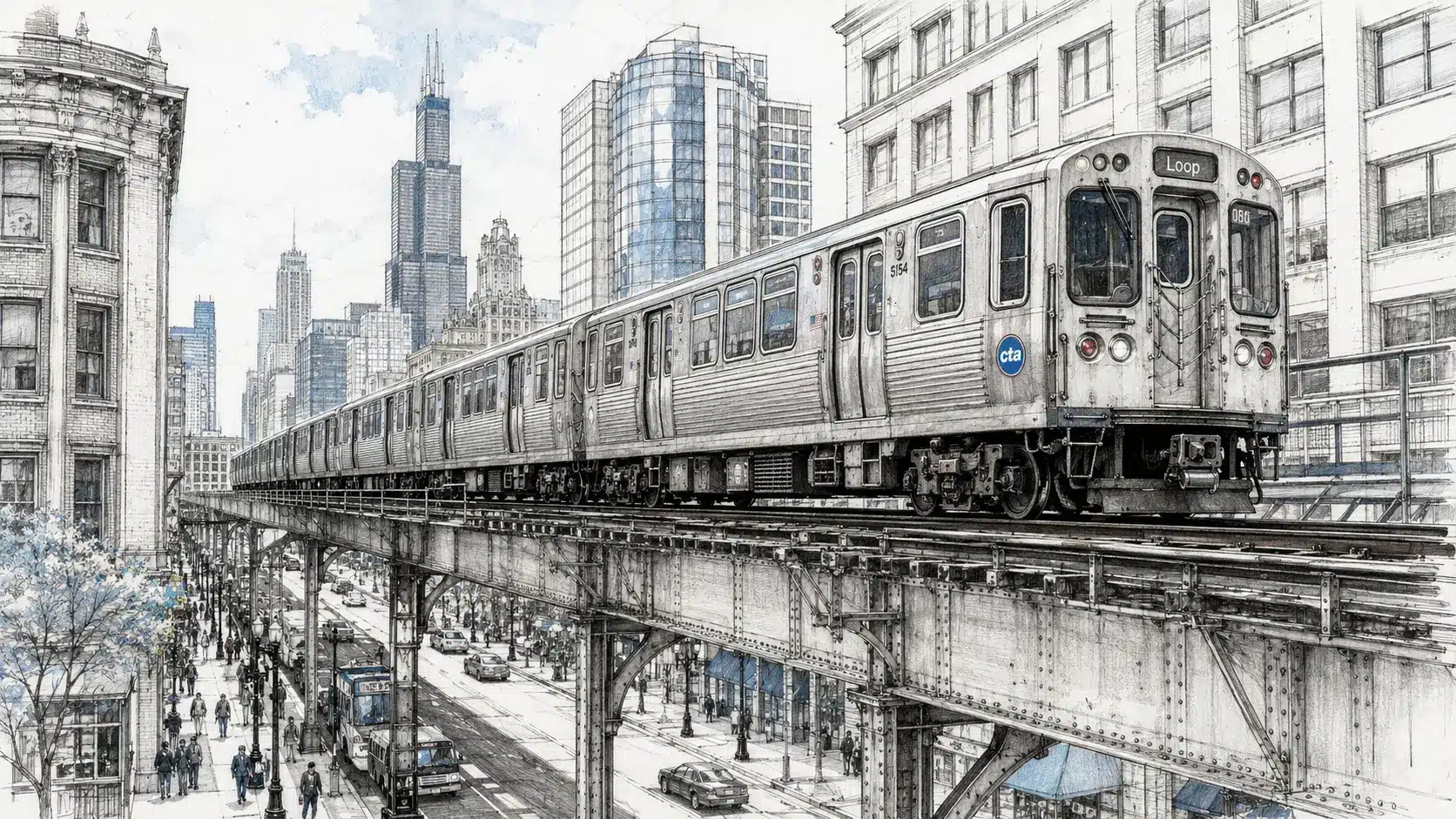
Transit-Scale Engineering
Founder-led public safety camera experience connected to CTA-scale 360-degree transit video deployment.
View transit-scale experiencePublic-Sector Project Write-Ups & Testimonials
The project cards above link here for deeper context, client comments, and practical takeaways behind each public-sector example.
Wilmington Police Department
The Problem
Wilmington Police Department was working with an aging camera and access-control system. Cameras were unreliable, image quality was poor, video downloading and retention were difficult, and multiple door-access points were creating problems.
What Umbrella Helped Improve
Umbrella helped modernize the department’s video surveillance and access-control environment with clearer video, improved coverage, controlled access for sensitive spaces, and a transition approach that kept existing systems active while the new system came online.
What Changed
The department gained better coverage, clearer video, improved access control, and a stronger foundation for reviewing incidents and managing sensitive areas.
— Adam Zink, Chief of Police, Wilmington Police Department
— Justin Dole, Deputy Chief, Wilmington Police Department
What this means for your agency: For police departments, downtime is not just inconvenient. It can create operational risk. A strong upgrade plan should account for coverage, evidence retrieval, access permissions, sensitive spaces, and how the facility will remain protected while work is underway.
Before
- Aging camera and access-control system
- Poor image quality and unreliable cameras
- Difficult downloading and retention
- Door-access issues
- Risk during system transition
After
- Clearer video and improved coverage
- Modernized access-control foundation
- Better review/export foundation
- Controlled access for sensitive spaces
- Old system remained active while new system came online
Kane County Judicial Center
The Problem
Kane County had a video surveillance system that had evolved over roughly 15 years. A previous upgrade was supposed to improve storage and functionality, but the system did not perform as intended.
What Umbrella Helped Improve
Umbrella reviewed the environment, validated the concerns, helped create a long-term strategy, and began moving the facility toward a more useful video surveillance platform.
“After we began working with Umbrella they created a long-term strategy to work within our budget while establishing a video surveillance platform which not only gave us a much more robust evidence search review but installed High Definition cameras on our exterior which was a night and day quality from what we had previously.”
— Eddie Jackson, Director of Court Security, Kane County Sheriff’s Office
What this means for your agency: Do not judge a security upgrade by the equipment list alone. If an upgrade does not improve evidence search, image quality, usability, serviceability, and future expansion, it may only move the problem forward.
Before
- Analog system evolved over roughly 15 years
- Prior upgrade failed to perform as intended
- Poor evidence search and review
- Exterior camera quality concerns
- Major investment did not solve the problem
After
- Long-term modernization strategy
- System concerns validated and addressed
- More useful evidence review path
- High-definition exterior camera upgrades
- Budget-aware phased improvement plan
- Existing system review
- Long-term modernization strategy
- Better evidence search and review
- High-definition exterior camera upgrades
- Budget-aware upgrade planning
City of McHenry
The Problem
The City of McHenry had trouble investigating surveillance footage because of slow processing, proprietary video management software, limited search functionality, ineffective cameras, and prior installation problems.
What Umbrella Helped Improve
Umbrella helped transform the system with high-resolution panoramic and fixed cameras, an open-platform management system, quality forensic search capability, and storage planning for future growth.
“We are now actively working with Umbrella Security Systems who I was referred to by other local Municipal IT managers and we have transformed our system to integrate high-resolution panoramic and fixed cameras, along with a new open-platform management system that allows us to conduct quality forensic searches.”
— Ed Larson, IT Manager, City of McHenry
What this means for your agency: Video surveillance should not trap a municipality inside a platform that makes searching, expanding, or supporting the system harder. The right architecture should improve evidence review today while giving the agency a better path for tomorrow.
Before
- Slow processing and proprietary software
- No advanced search functionality
- Ineffective cameras
- Poor prior installation
- Storage uncertainty
After
- Open-platform video management
- Better forensic search capability
- High-resolution panoramic and fixed cameras
- Improved technical planning
- Storage array planned for future growth
- Improved forensic search capability
- Open-platform video management
- High-resolution panoramic and fixed cameras
- Better storage planning for future growth
Lisle Township
Umbrella partnered with Lisle Township, Illinois to deliver a comprehensive government security system upgrade across multiple public-facing facilities.
The project replaced outdated technology with an integrated solution featuring HD video surveillance, modern access control, alarm systems, and intercom-enabled entry points.
Designed to support high foot traffic and diverse operational needs, the upgrade improved visibility, access governance, and public-facing facility security planning.
Systems Involved
- HD video surveillance
- Modern access control
- Alarm systems
- Intercom-enabled entry points
- Multi-facility security planning
- Public-facing facility support
What this means for your agency: Municipal security upgrades should not only solve today’s equipment problems. They should create a more manageable foundation for future expansion, better visibility, and stronger access governance across public facilities.
Before
- Outdated technology
- Multiple public-facing facilities
- Entry-point challenges
- Access-control modernization need
- Visibility gaps
After
- Integrated municipal security upgrade
- Multi-facility planning
- Intercom-enabled entry points
- Modern access control
- HD video surveillance
Working Through an Aging or Underperforming System?
Many public agencies are not starting from scratch. Umbrella can help your team review what is working, what is creating risk, and what a practical next step could look like.
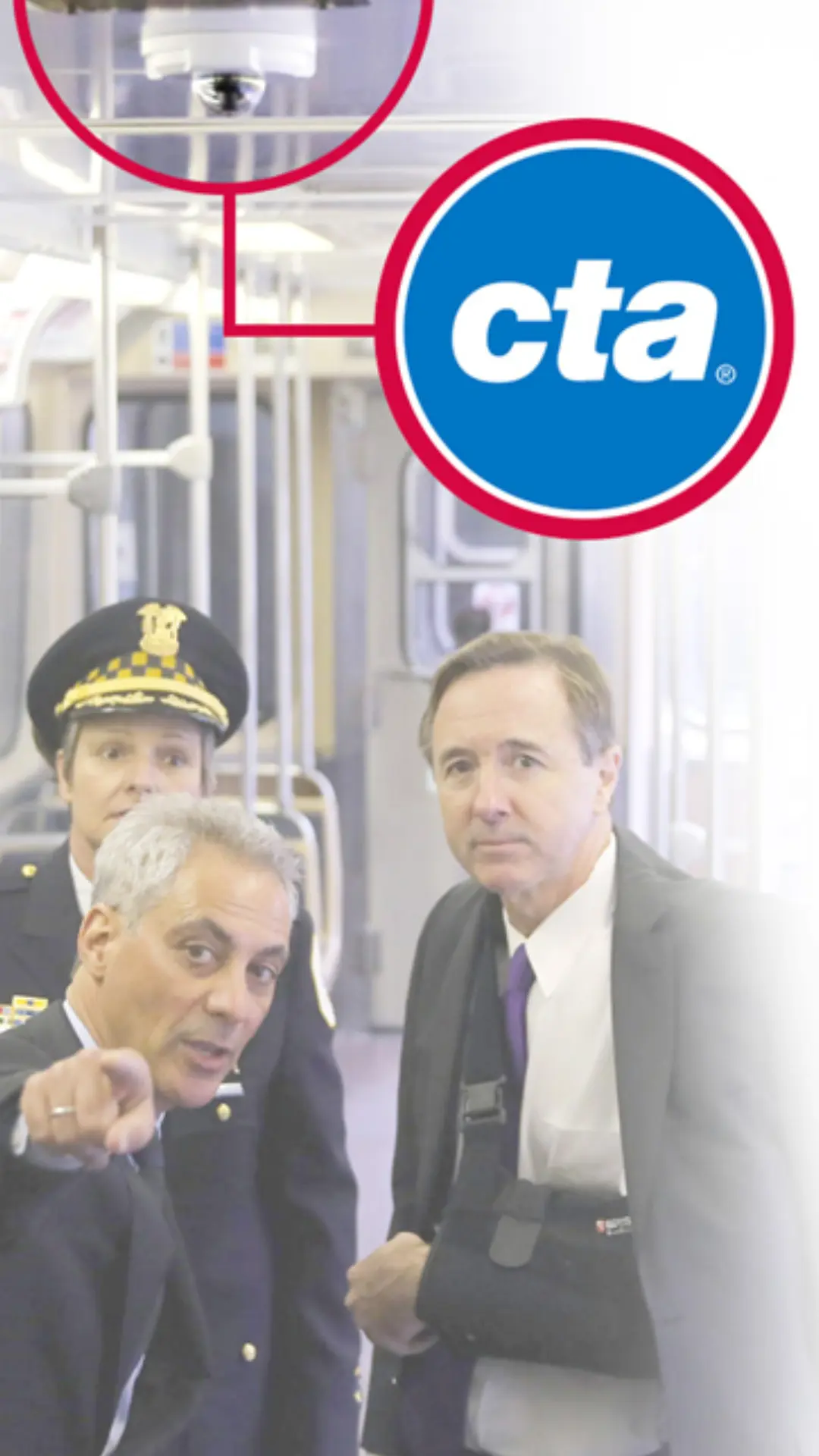
Founder-Led Public Safety Engineering Experience at Transit Scale
Municipal security projects require disciplined planning, evidence-quality design, reliable infrastructure, and systems that public agencies can operate with confidence every day.
Before founding Umbrella Security Systems, Tom Carnevale founded Sentry360, the camera technology company publicly associated with CTA’s large-scale 360-degree rail-car camera deployment.
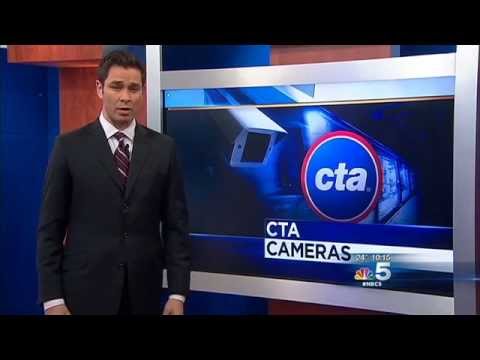
Facility-Specific Security Planning
Different public facilities have different risks. A police department, city hall, public works yard, township office, court-adjacent facility, and school district building should not all receive the same security plan.
Police Departments
Cameras, access control, evidence areas, booking/custody workflows, restricted spaces, and video export.
City Halls & Municipal Offices
Public entrances, staff-only areas, council rooms, records areas, visitor flow, and after-hours access.
Public Works & Utility Sites
Yards, gates, vehicles, equipment, garages, fuel areas, storage buildings, and remote facilities.
Townships & Public-Service Facilities
Public counters, multi-use rooms, staff workflows, vendors, visitors, and phased upgrades.
Courts & Judicial Facilities
Evidence review, secure areas, public access, exterior cameras, and long-term system strategy.
Schools & District Buildings
Visitor entry, controlled access, emergency communication, cameras, and staff workflows.
Municipal Video Surveillance Designed for Useful Review
A camera system is not successful because it has the most cameras. It is successful when the right cameras are placed in the right locations, the image quality is usable, footage can be found quickly, and the system can be supported over time.
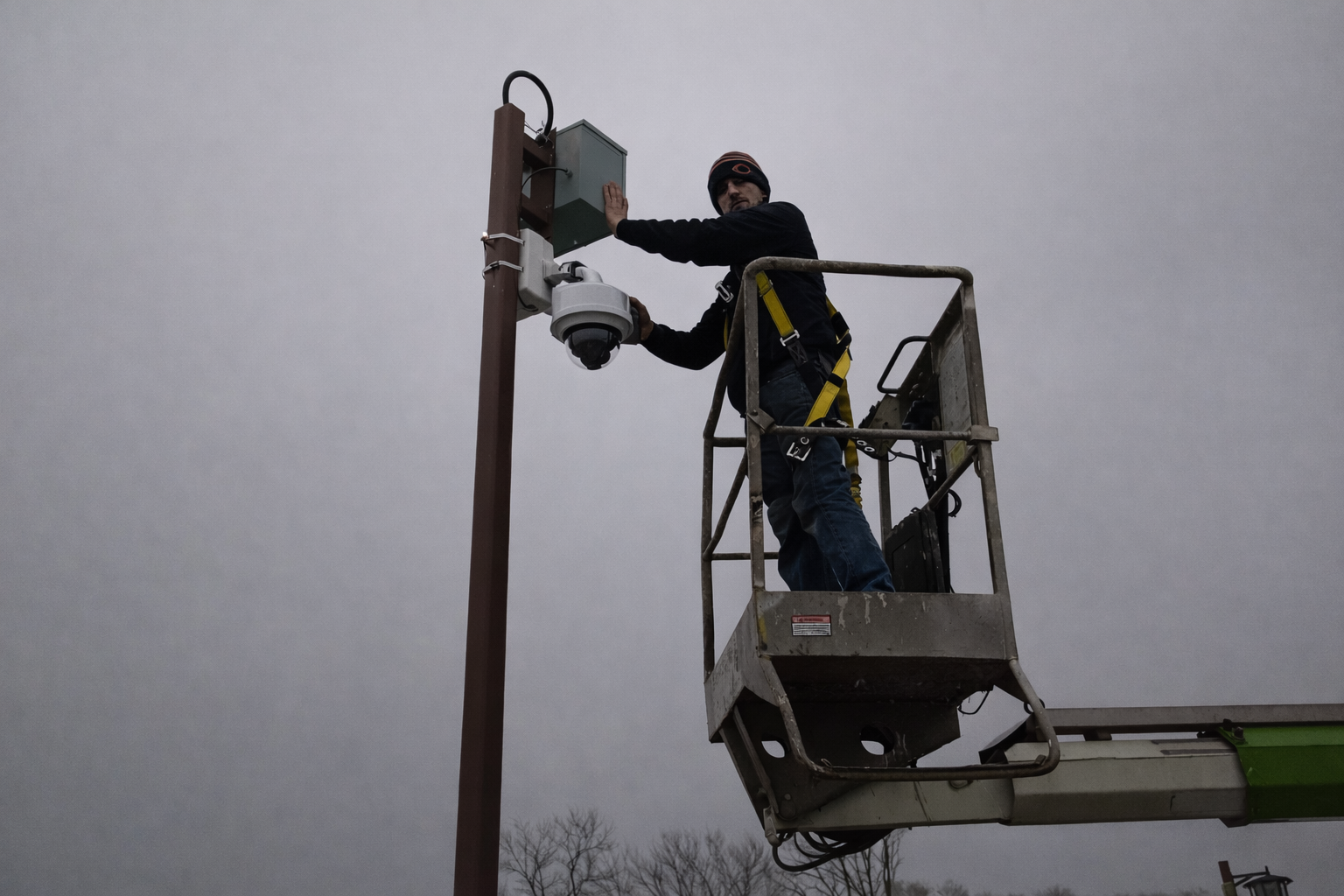
Installed for Real Municipal Conditions
Public-sector camera systems have to work on exterior poles, parking lots, entrances, lobbies, public counters, restricted areas, public works yards, and multi-building properties.
Umbrella plans camera placement, mounting, cabling, network paths, coverage zones, and service access before installation begins.
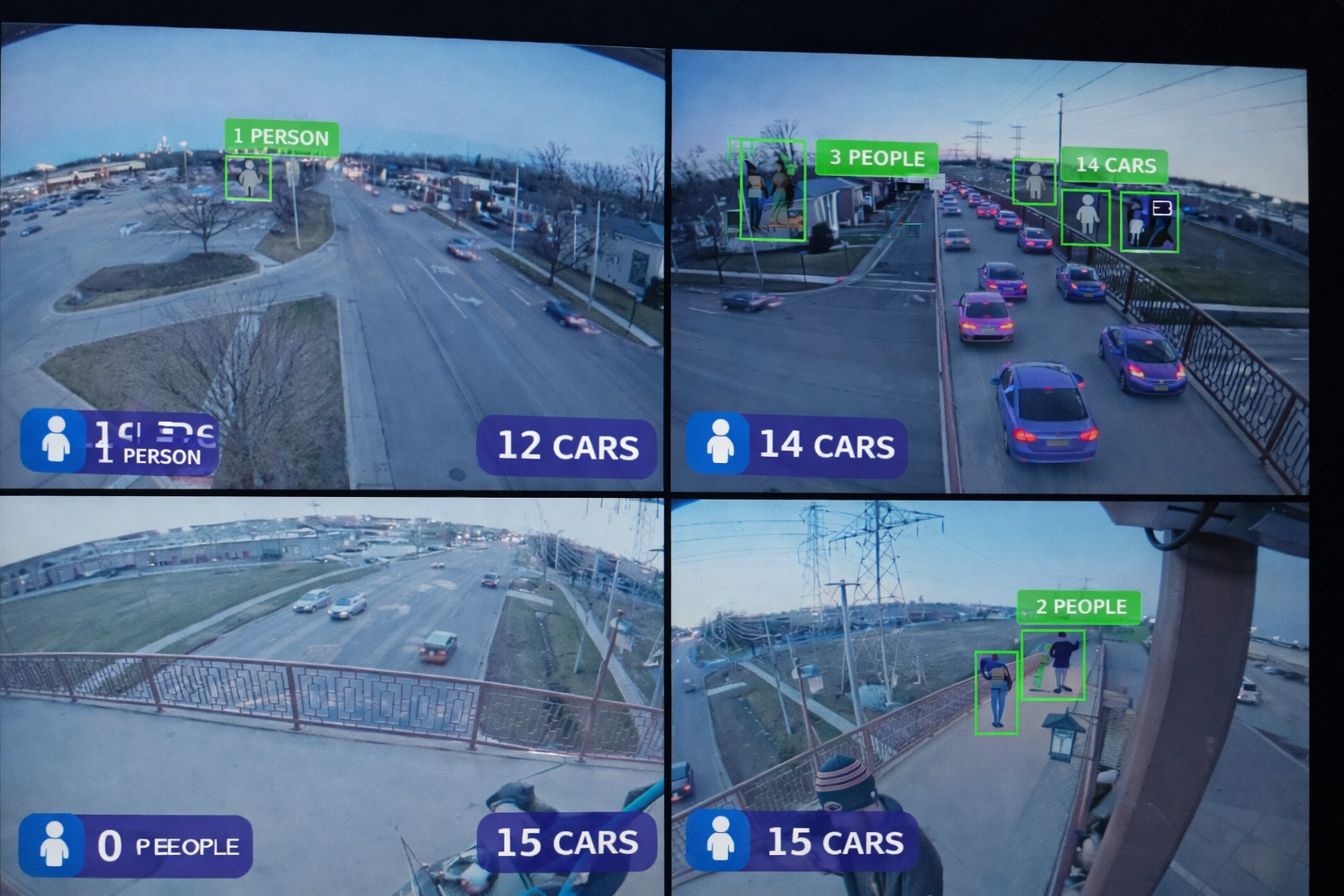
Designed for Incident Review
Video is most valuable after something happens. The system should help staff find the right footage, verify what occurred, and export video when it is needed for administrative, legal, operational, or public-safety review.
Government Building Security Cameras: Coverage Before Camera Count
For government buildings, the right camera plan starts with what the agency needs to see and review after an incident.
City halls, police departments, townships, public works buildings, court-adjacent facilities, and public-service counters all need different views. Some areas require identification-quality video. Others require wide-area visibility, parking lot coverage, entry verification, or after-hours review.
Umbrella designs government building camera systems around coverage zones, image quality, retention, search, export, network capacity, and long-term support — not camera count alone.
AI Video Search for Public-Sector Facilities
AI video should help public-sector teams find useful information faster, not create more noise. The strongest use cases are practical: faster search, faster review, and better post-incident investigation.
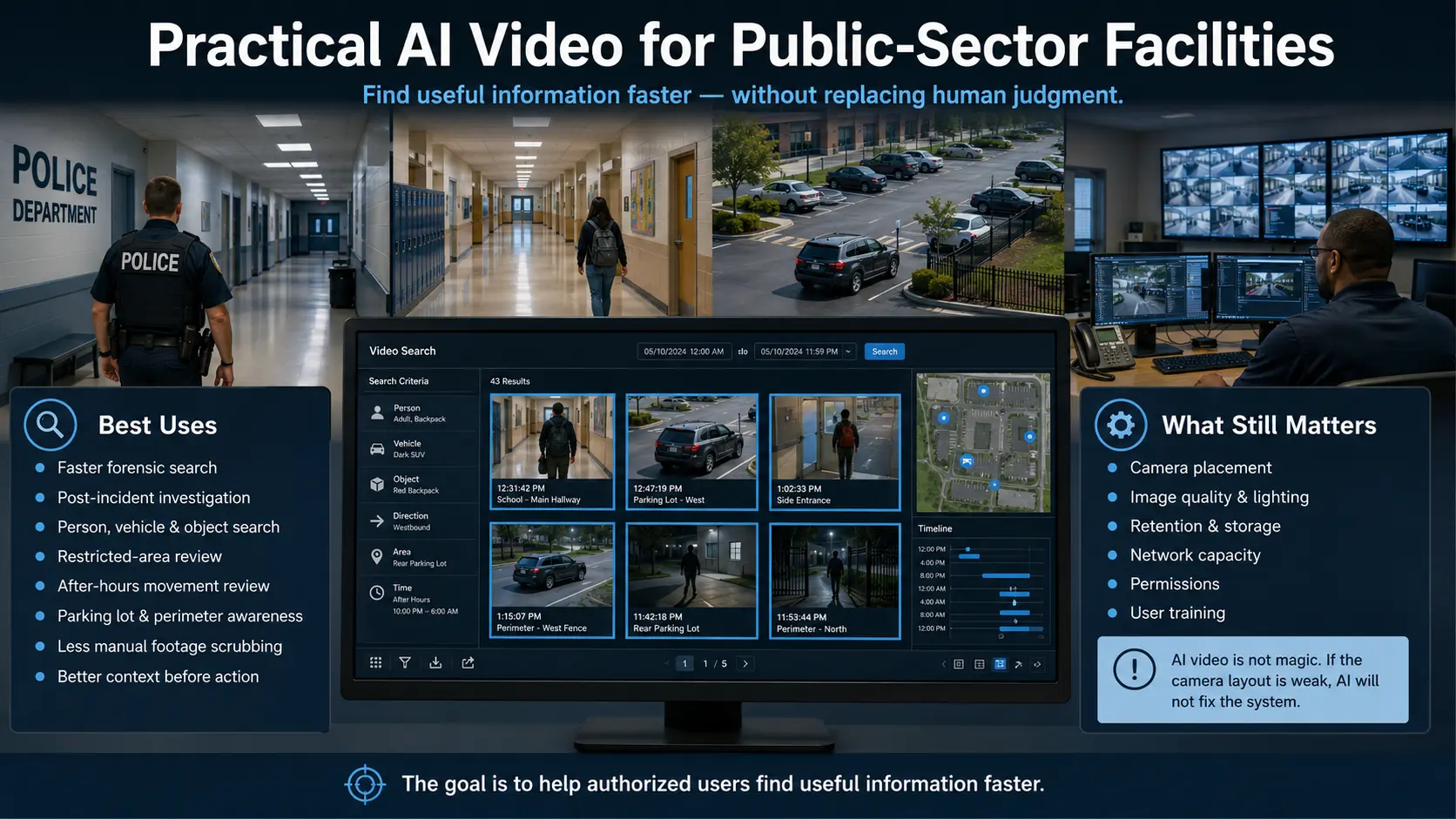
Practical AI Video
Authorized users can use AI-assisted search tools to narrow footage by person, vehicle, motion, direction, object, or event pattern. AI works best when camera placement, image quality, lighting, retention, permissions, storage, and user training are planned correctly.
- Faster post-incident search
- More efficient forensic review
- Restricted-area activity review
- Reduced manual footage scrubbing
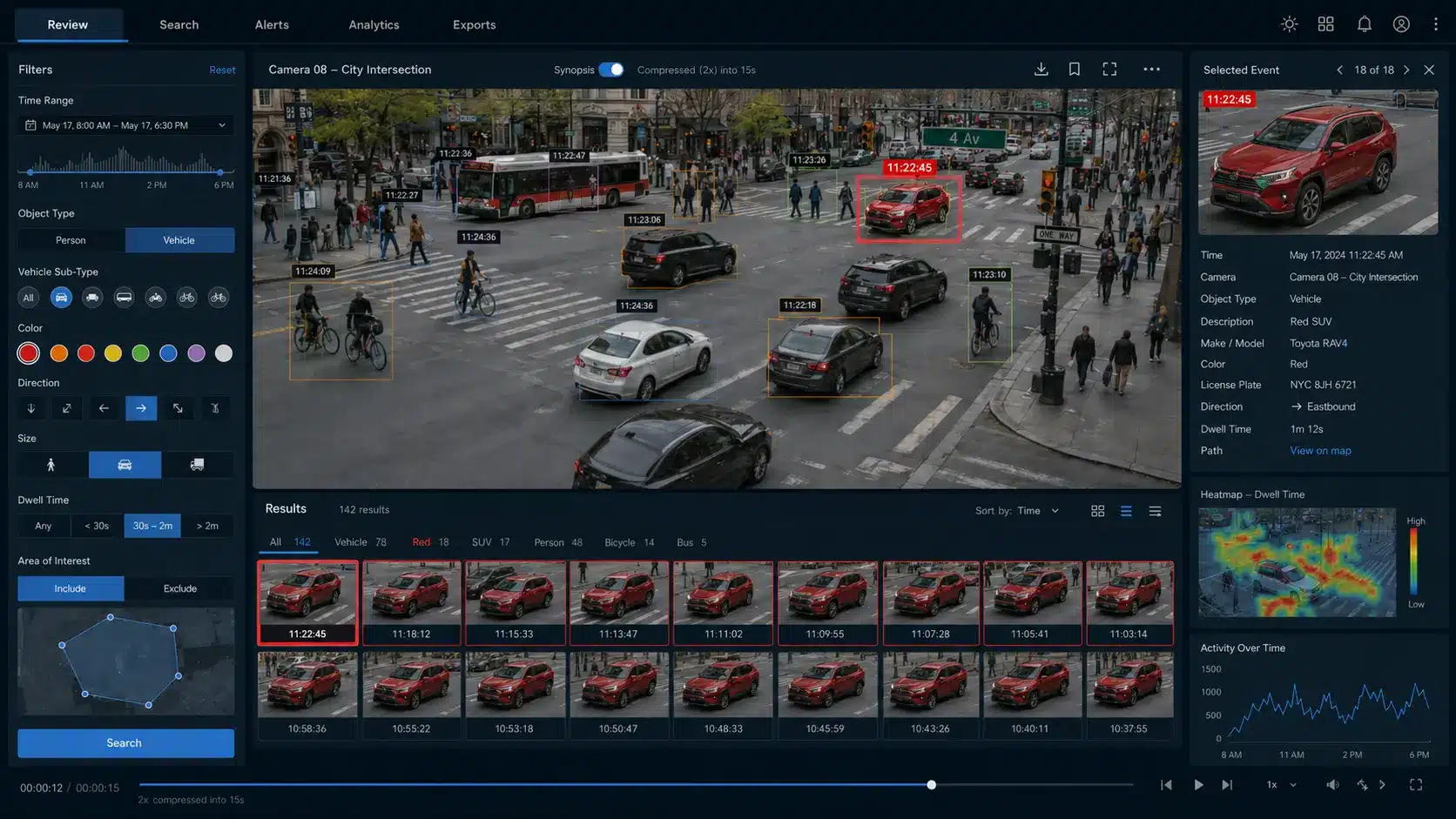
Faster Search, Better Context
The goal is not to replace judgment. The goal is to help authorized users find useful information faster and respond with better context.
Access Control, Electronic Locks & Secure Entry
Access control affects staff workflows, public access, secure areas, records rooms, evidence rooms, utility spaces, employee entrances, vendor access, and after-hours protection.
- Role-based permissions
- Sensitive-area restrictions
- Staff, vendor, visitor, and public access separation
- Audit trails and door schedules
- Integration with video and alarms

Why OSDP Matters for Government Access Control
For public agencies, access control is not just about unlocking doors. It is about knowing which doors matter, who should have access, whether devices are online, and whether the system can be maintained over time.
What Government Security Systems Illinois Agencies Should Define Before Installation
The best plan is not always the largest system. It is the plan that defines what your team needs to see, control, document, support, and expand before equipment is selected.
Coverage & Evidence
Which areas need identification-quality footage, overview coverage, retention, search, and export workflows?
Access & Accountability
Which doors, rooms, gates, and sensitive spaces need controlled access, audit trails, and role-based permissions?
Infrastructure & Support
What network, storage, power, labeling, documentation, training, and service planning will keep the system usable long term?
Intercom, Alarm & Emergency Communication Systems
Cameras and access control often need supporting systems to handle public entrances, after-hours events, restricted areas, and emergency workflows.
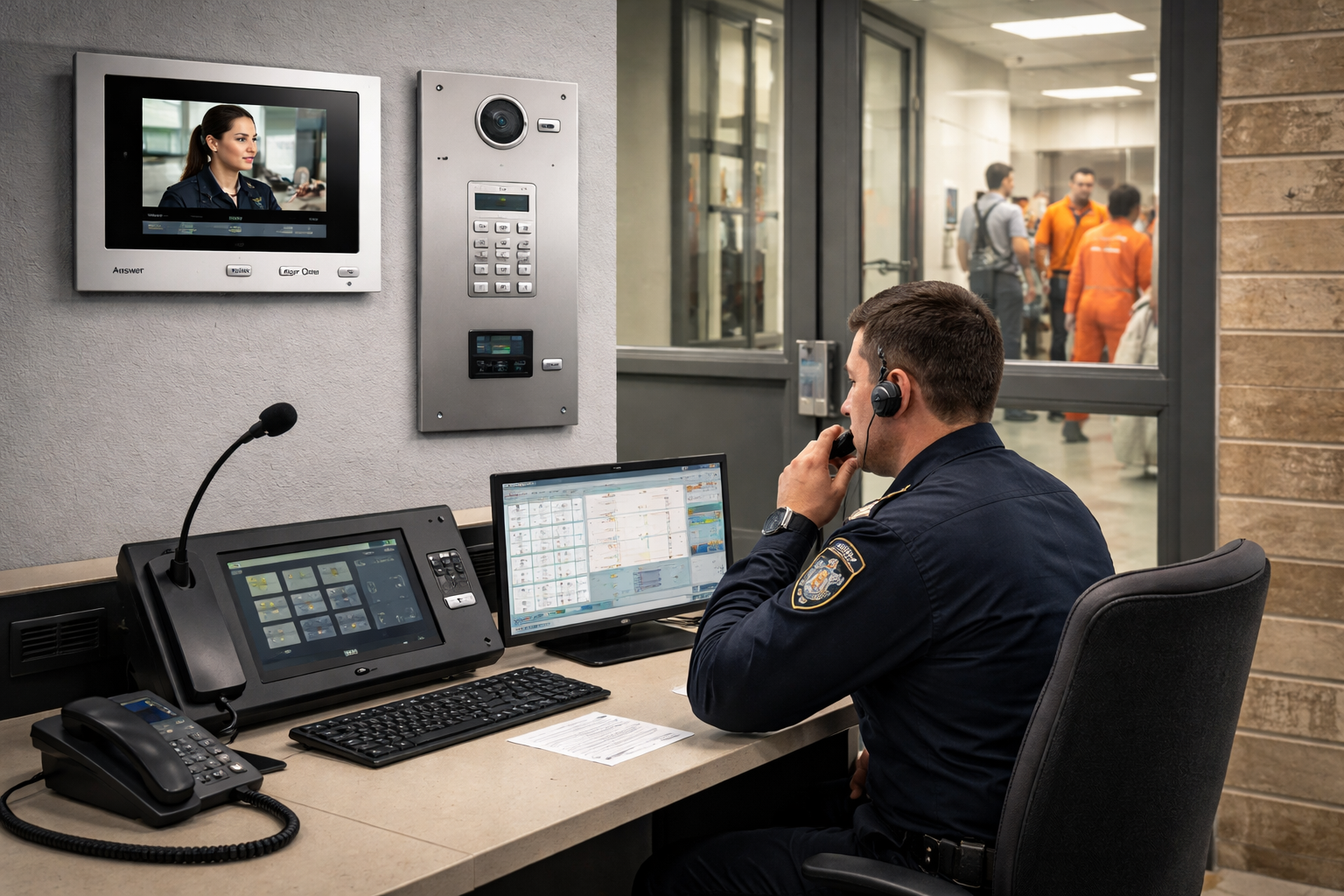
Intercom & Visitor Entry
Public-facing doors need communication, visual verification, and secure release workflows.
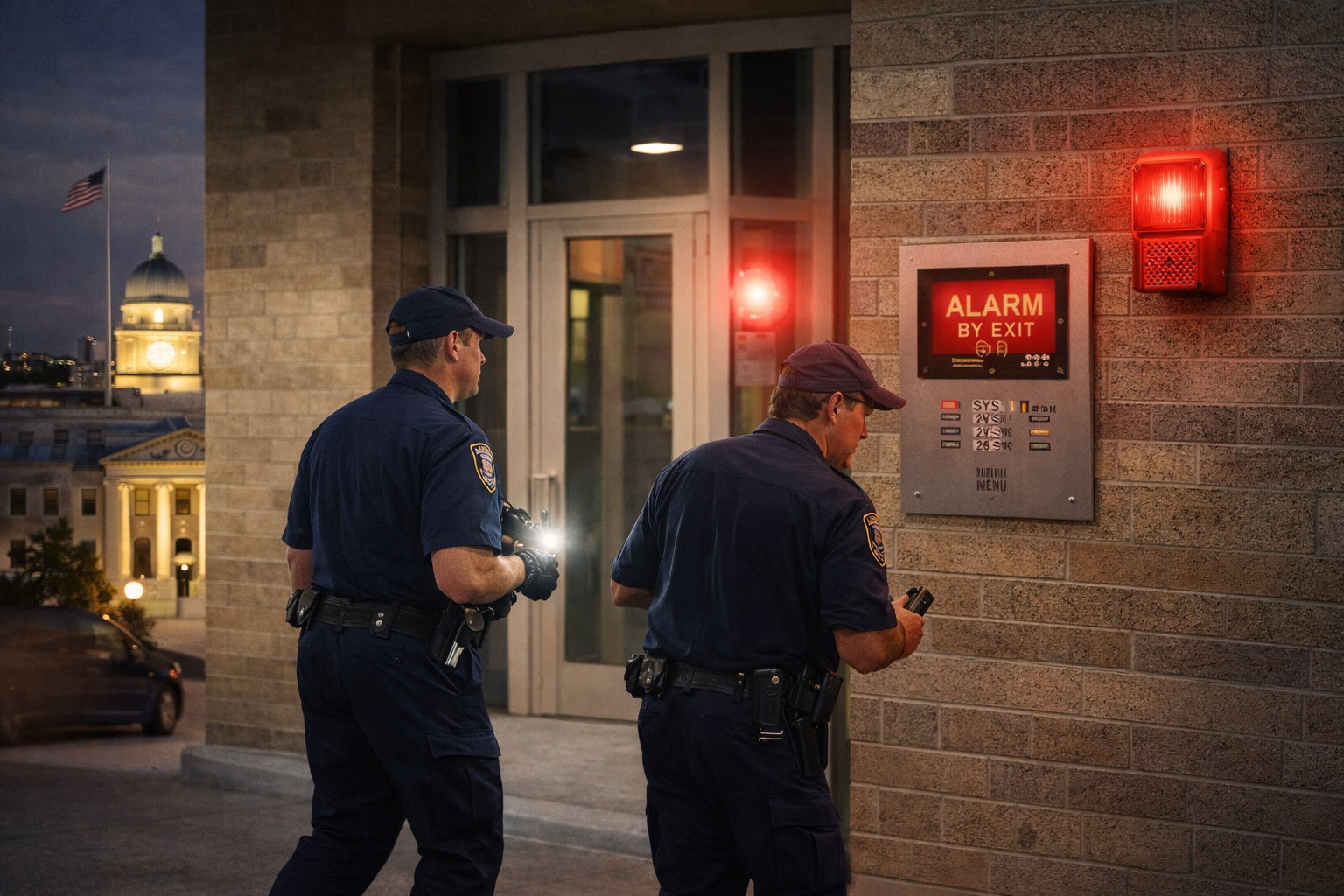
Alarm & Intrusion Detection
After-hours events, restricted areas, and remote buildings need reliable detection and clear escalation.

Emergency Communication
Public agencies may need panic, duress, lockdown, or mass-notification workflows depending on facility type.
Citywide Camera & Access Planning
Some municipalities need more than one building upgraded. They need a phased standard across city hall, police, public works, parks, utilities, storage facilities, and public-facing service locations.
Plan the standard before buying the parts
Umbrella helps agencies evaluate existing infrastructure, plan camera and access-control standards, review network and storage requirements, and create a practical upgrade path that can support multiple departments over time.
A citywide plan should define what belongs at each site, how systems will be managed, how footage will be retained, who controls access, and how future phases can build on the same foundation.
What a Citywide Security Standard Should Define
A practical standard gives administrators, IT, facilities, and department leaders a shared path for each building and future phase.
Cameras
Approved camera types, coverage expectations, retention, and video management platform.
Access Control
Door standards, credentials, schedules, permissions, and administration rules.
Intercoms
Public entrance workflows, remote release, visual verification, and visitor handling.
Network
Switching, bandwidth, VLANs, fiber, wireless links, cybersecurity-aware planning, and support.
Storage
Retention by site, growth planning, redundancy, and review/export needs.
Administration
Who manages users, video access, exports, credentials, service requests, and permissions.
Documentation
As-builts, labels, credentials, warranty information, training, and service records.
Phasing
What gets upgraded first, how future sites connect, and how the standard stays maintainable.
Public Works, Utility & Fleet Facility Security
Public works facilities often have different security needs than city halls or police departments. They may include vehicle yards, equipment storage, fuel areas, garages, gates, utility spaces, remote buildings, and after-hours activity.
What Public Works Sites Need to Protect
Public works and utility sites often include assets that are difficult to protect with a standard office-building security plan.
What Matters Most at Public Works Facilities
- Knowing who entered
- Seeing what happened after hours
- Protecting vehicles, equipment, and fuel areas
- Reviewing gate activity
- Managing staff/vendor access
- Supporting remote or multi-building infrastructure
For public works and utility environments, the goal is practical visibility: know who entered, what happened, where equipment moved, and whether the system can support review after an incident.
How to Avoid Unnecessary Vendor Lock-In
Choosing between open-platform and closed systems can significantly affect municipal operations over time. Umbrella helps municipalities compare those options without forcing a manufacturer-first answer.
More future options
Open-platform planning can improve vendor flexibility, service options, integrations, and expansion paths.
Better lifecycle control
Public agencies should understand licensing, maintenance, support, compatibility, and replacement cycles before committing.
Cleaner system ownership
The right answer depends on policies, budget, existing technology, IT requirements, and long-term goals.
Procurement, Grants & Long-Term Value
Public-sector security projects may involve grants, procurement requirements, technology restrictions, documentation expectations, board approval, and long-term service needs.
Where procurement-sensitive technology requirements apply, Umbrella can help public agencies review camera, access control, and platform choices carefully. No security provider should casually claim that equipment alone makes a facility compliant.
Lifecycle Cost & Long-Term Value
True cost is not just purchase price. Municipalities should evaluate capital cost, licensing, maintenance, expansion, documentation quality, and service response.
Helping Your Team Explain the Project Internally
Many public-sector security projects need to be explained to more than one audience. Umbrella helps organize the security plan so those concerns are addressed clearly before the project moves forward.
Police / Public Safety Leadership
Evidence review, controlled access, response workflows, sensitive spaces, and continuity during upgrade.
IT
Network load, storage, permissions, cybersecurity-aware planning, administration, and platform options.
Facilities
Installation, documentation, serviceability, maintenance access, and reducing disruption.
Administrators / Boards
Scope, lifecycle cost, public accountability, long-term value, and defensible project planning.
Local Support Matters After Installation
National providers can bring scale. Local public agencies often need something else too: a team that understands the site, shows up, communicates clearly, documents the work, and stays involved after installation.
Local support matters most after installation, when a department needs a user changed, a camera reviewed, a door checked, footage exported, documentation updated, or a future phase planned.
Umbrella’s advantage is not just being local. It is being close enough to stay accountable after the system goes live.
Service After Handoff
Support should continue after installation, not disappear after closeout.
Documentation & Training
Public agencies need clear records, credentials, training, and system handoff.
Future Phase Planning
Municipal systems often grow over budget cycles. The plan should support that.
Inherited System Support
Many agencies need help making sense of systems installed by multiple vendors over time.
Plan the Right Part of Your Security System
This page covers the larger government security systems Illinois decision. If your team is focused on one specific part of the system, these resources can help you go deeper.
Public-sector security planning resources
These external references can help municipal teams think through procurement, grant, compliance, and public-safety technology questions before selecting a final system scope.
Frequently Asked Questions
These answers are meant to help public-sector teams start planning. Funding, compliance, and procurement requirements should always be reviewed with the appropriate agency, legal, or procurement advisor.
Can your systems integrate with our existing infrastructure?
Yes. Umbrella designs with integration in mind. The right approach depends on your existing cameras, access control, alarms, intercoms, network infrastructure, software platforms, and long-term goals.
What deployment models are available?
Depending on your policies and requirements, public-sector systems may use on-premise, cloud, or hybrid architectures. Umbrella helps evaluate which model best fits your operational, budget, IT, and lifecycle needs.
How do you help avoid vendor lock-in?
Umbrella prioritizes open platforms and interoperable architecture where appropriate. The goal is to give your agency more long-term control over expansion, support, and system ownership.
What should a municipality consider before upgrading a security system?
Start with the facility’s risks and workflows. Identify where visibility is weak, which doors or areas need controlled access, how video is reviewed, how long footage should be retained, what systems already exist, and what future expansion may be needed.
Do police departments need different security planning than standard commercial buildings?
Yes. Police facilities often have sensitive areas, evidence rooms, detainee or custody workflows, records areas, public-facing spaces, staff-only zones, and higher documentation expectations.
Can public-sector upgrades happen without taking the whole system offline?
In many cases, upgrades can be sequenced to reduce disruption. Wilmington Police Department is an example where existing cameras and access control remained active while the new system came online.
Planning a Municipal Security Upgrade?
Start with a practical review of your current government security systems Illinois needs, facility risks, and long-term goals.
Umbrella Security Systems helps Illinois public agencies identify government security systems Illinois coverage gaps, access-control issues, infrastructure constraints, documentation needs, and realistic upgrade options.
Talk Through Your Government Security Project
Use the form below to share what your agency is trying to improve. Umbrella can help review your current system, facility needs, timeline, and practical next steps.
- Camera coverage, video quality, search, and retention
- Access control, credentials, secure spaces, and door schedules
- Citywide planning, public works facilities, grants, and procurement support
Contact Us
"*" indicates required fields