
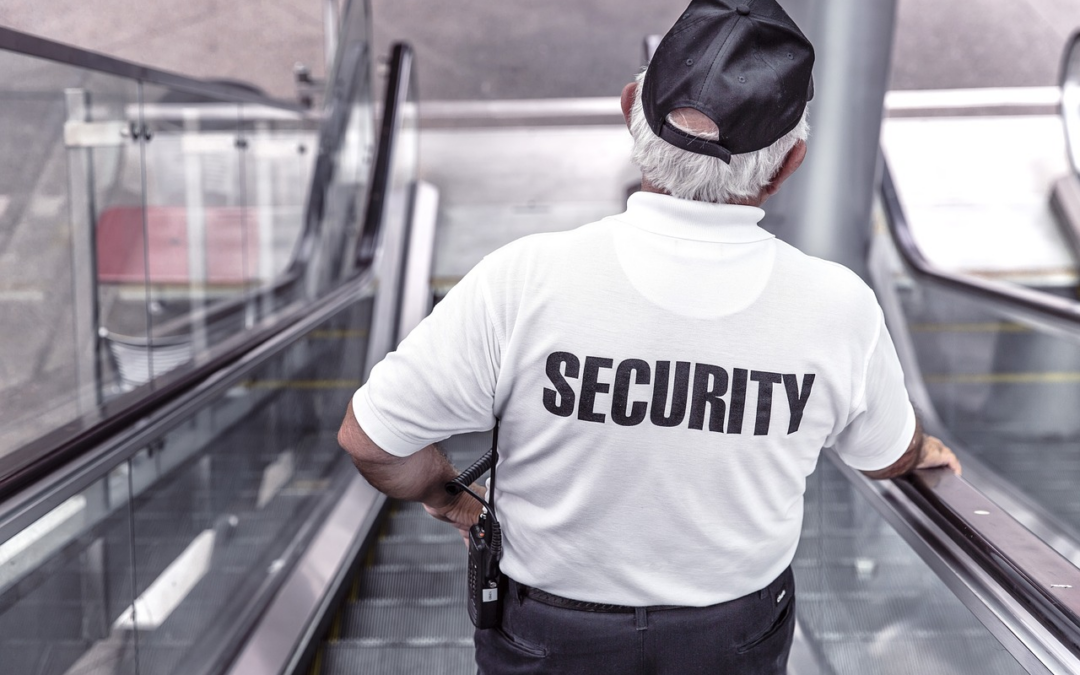
Strong commercial security operations aren’t built from a single system or a one-time installation. They’re built from the consistent, deliberate management of multiple layers — physical infrastructure, technology, policies, and people — working together. Most security failures happen not because a business lacks cameras or access control, but because those systems aren’t configured, maintained, or supported by the operational practices that make them effective.
This guide covers the practical steps for stronger commercial security operations — what to implement, how to manage it, and where most businesses leave significant gaps.
1. Build a Layered Physical Security Infrastructure for Stronger Security Operations
Commercial access control systems are the foundation of a secure infrastructure — but the goal is a layered defense where multiple independent controls must be defeated for a breach to succeed. A layered approach combines:
- Perimeter control: Fencing, gates, vehicle barriers, and exterior lighting that establish the outer boundary and deter opportunistic intrusion before anyone reaches the building
- Building entry control: Electronic access control on all exterior doors with role-based permissions — staff access the areas their job requires, nothing more
- Interior zone control: Restricted access on server rooms, pharmaceutical storage, cash handling areas, and any space containing high-value assets or sensitive data
- Detection layer: Motion sensors and alarm systems that catch intrusions the access control layer didn’t prevent
- Documentation layer: Camera systems that record what happens at every layer, creating the audit trail needed for investigations and insurance claims
Each layer should be designed to catch what the layer above it misses. A professional security assessment maps your specific facility against this framework and identifies where gaps exist between layers.
2. Use Lighting Strategically, Not Just for Visibility
Exterior lighting is a security control, not just a utility. Done correctly, it deters crime, supports camera performance, and reduces liability. Done poorly, it creates glare that blinds cameras and shadows that create hiding spots. Strategic lighting for commercial security means:
- Coverage without shadows: Light placement should eliminate dark zones at entry points, loading docks, parking areas, and perimeter fencing — the areas where crimes of opportunity most commonly occur
- Camera-optimized placement: Lights should illuminate subjects in front of cameras, not behind them. Backlit subjects appear as silhouettes — useless for identification
- Motion-activated supplemental lighting: Motion-triggered floodlights in low-traffic areas conserve energy while providing a deterrent response to after-hours activity
- Consistent illumination levels: Wide variance between brightly lit and dark areas causes cameras to either overexpose lit areas or underexpose dark ones — consistent illumination levels across coverage zones produces better footage quality
- LED technology: LED fixtures provide consistent color temperature across their lifespan, maintain brightness in cold temperatures, and have significantly lower maintenance requirements than older lighting technologies — important for Chicago operations where winter maintenance access can be limited
3. Optimize Your Video Surveillance for Better Security Operations
The most common video surveillance failure isn’t hardware — it’s placement and configuration. A commercial security camera system is only as effective as its coverage design. Stronger surveillance operations require:
- Strategic placement over quantity: A well-placed camera covering an entire entry point is more valuable than three cameras with overlapping coverage of a low-risk area. Start with a coverage map that identifies every access point, high-value zone, and blind spot.
- Resolution matched to purpose: Cameras used for identification need higher resolution (4MP minimum) than cameras used only for detecting presence. Specify resolution by coverage purpose, not by what’s cheapest.
- Regular coverage audits: Cameras drift, vegetation grows, equipment moves. A coverage audit every 6 months verifies that camera fields of view still match the original design — and identifies what’s changed since installation.
- Retention matched to risk: High-value areas warrant longer retention periods. Standard 30-day retention is insufficient if an inventory discrepancy isn’t discovered for 45 days. Map retention requirements to the actual investigation timelines for each coverage zone.
- Integration with access control: Camera systems integrated with access control automatically pull up footage for access events — pairing every door entry with corresponding video without requiring manual correlation.
4. Manage Access Credentials as a Security Operation
Access control hardware is only as secure as its credential management. Many organizations install access control systems and then allow credential hygiene to degrade over time — accumulating unused credentials, never auditing permissions, and failing to revoke access when employees leave. Stronger access control operations require:
- Role-based permission design: Permissions are assigned based on job function, not individual requests. New hires receive the permissions their role requires — not whatever the last person in that role accumulated over time.
- Immediate deprovisioning: Employee departures trigger immediate access revocation — the same day, not after the next credential audit. Integration with HR systems automates this.
- Periodic access reviews: Quarterly or semi-annual reviews of who has access to what, with justification required for any access that doesn’t match current job function.
- Audit log reviews: Access logs aren’t just for post-incident investigation. Regular review of after-hours access, failed attempts, and unusual patterns surfaces security issues before they become incidents.
- Contractor and visitor management: Temporary credentials issued through a visitor management system expire automatically — no manual revocation required when the visit or contract ends.
5. Integrate Your Security Systems for Coordinated Response
Individual security components have value in isolation. But the real operational capability comes from integration — systems that communicate with each other to create a coordinated response rather than independent alerts. In an integrated system:
- A door forced open after hours simultaneously triggers the nearest camera to record, sends an alert to the on-call contact, and activates the alarm — automatically, without anyone manually connecting the dots
- A motion detection event in a restricted area after hours triggers a camera recording and a notification — not just a log entry nobody reviews
- An emergency notification triggers a facility lockdown through the access control system simultaneously — one action, coordinated response
Integration requires a qualified security systems integrator who designs the system as a unified platform rather than installing independent products from multiple vendors.
6. Train Employees as Active Security Participants
Technology controls address external threats and unknown individuals. The most common security failures involve known individuals — employees, contractors, and visitors who have legitimate access but misuse it, or employees who inadvertently create vulnerabilities through careless behavior. Training should cover:
- Tailgating awareness: Employees who hold doors open for anyone behind them defeat access control entirely. Training on why tailgating matters and how to handle it professionally (challenge unknown individuals, direct them to reception) is essential.
- Credential responsibility: Lost access cards must be reported immediately — not “when I get around to it.” The window between loss and report is the window of vulnerability.
- Suspicious behavior recognition: What warrants a report versus a 911 call, and how to report without escalating. Employees should know the difference between a suspicious person who warrants a call to security and an active threat that warrants immediate evacuation.
- Incident reporting: The most valuable security information often comes from employees who noticed something but didn’t think it warranted a report. Low reporting thresholds produce better security intelligence than high ones.
- Social engineering awareness: Phishing, pretexting, and tailgating are all social engineering attacks that technology controls don’t prevent. Staff who recognize and respond correctly to these attempts close a significant vulnerability gap.
According to CISA’s physical security guidance, human factors account for a significant portion of security incidents at commercial facilities — making employee training one of the highest-ROI security investments available.
7. Conduct Regular Assessments to Strengthen Security Operations
Security operations that were adequate when designed degrade over time. Threats evolve, facilities change, staff turns over, and systems that weren’t maintained properly develop gaps. A regular security assessment — annually at minimum, and after any significant facility or organizational change — identifies:
- Camera coverage gaps created by facility changes or equipment drift
- Access control permissions that no longer match current org structure
- Alarm systems that haven’t been tested or maintained
- Physical vulnerabilities created by construction, renovation, or new equipment
- Policy gaps where procedures don’t match actual practice
Umbrella Security Systems provides commercial security assessments for facilities throughout the Chicago area — covering physical infrastructure, system integration, credential management, and operational practices. Contact us to schedule an assessment.
Frequently Asked Questions
What are the most important elements of commercial security operations?
The most impactful elements are layered physical controls (access control, cameras, alarms), consistent credential management, camera coverage that’s been designed and maintained rather than just installed, integration between systems for coordinated response, and employee training on security responsibilities. Most security failures can be traced to a gap in one of these areas — often credential management or camera coverage that’s degraded since installation.
How often should a business review its security operations?
Formal security assessments should happen annually at minimum, and immediately following significant changes — new locations, major renovations, significant staff changes, or after any security incident. Operational practices like credential audits and camera coverage reviews should happen more frequently — quarterly for credential reviews and semi-annually for coverage audits. Alarm system testing should be done at least annually per most monitoring service contracts.
What is the biggest security gap most businesses have?
Credential management is the most consistently overlooked security gap. Organizations invest in access control hardware and then allow credential hygiene to degrade — accumulated unused credentials, no regular access reviews, and delayed or missed deprovisioning when employees leave. A compromised or misused credential from a former employee is one of the most common vectors for insider security incidents. Regular access reviews and immediate deprovisioning are the fix — and neither requires additional hardware investment.
How does employee training improve commercial security?
Employee training closes the gap between technology controls and human behavior. Access control doesn’t prevent tailgating — trained employees do. Cameras document incidents after the fact, but trained employees who recognize and report suspicious behavior can prevent them. Phishing and social engineering attacks that bypass IT controls entirely are stopped by employees who recognize and respond correctly. Training’s ROI is difficult to measure precisely, but it consistently addresses the vulnerabilities that technology controls can’t.