
Securing the Future of Education
The State of the Nation: School Surveillance Infrastructure Upgrades in 2026
Explore the latest advancements in school security while seperating fact from fiction with Umbrella’s Outlook.
Why School Districts Must Rethink Their Security Technology Strategy
Across the United States, school districts are facing a difficult reality: much of the surveillance infrastructure protecting students and staff was designed for a different era of technology. Many districts still rely on legacy camera systems, outdated video management software, or proprietary surveillance ecosystems that limit flexibility and increase long-term costs.
At the same time, school surveillance infrastructure upgrades, threats to safety have evolved, budgets remain tight, and expectations for transparency and accountability have never been higher. As a result, K‑12 administrators are increasingly searching for modern school security cameras, enterprise video management systems, and scalable integrated school security systems.
What are the advancements in School Surveillance Systems?
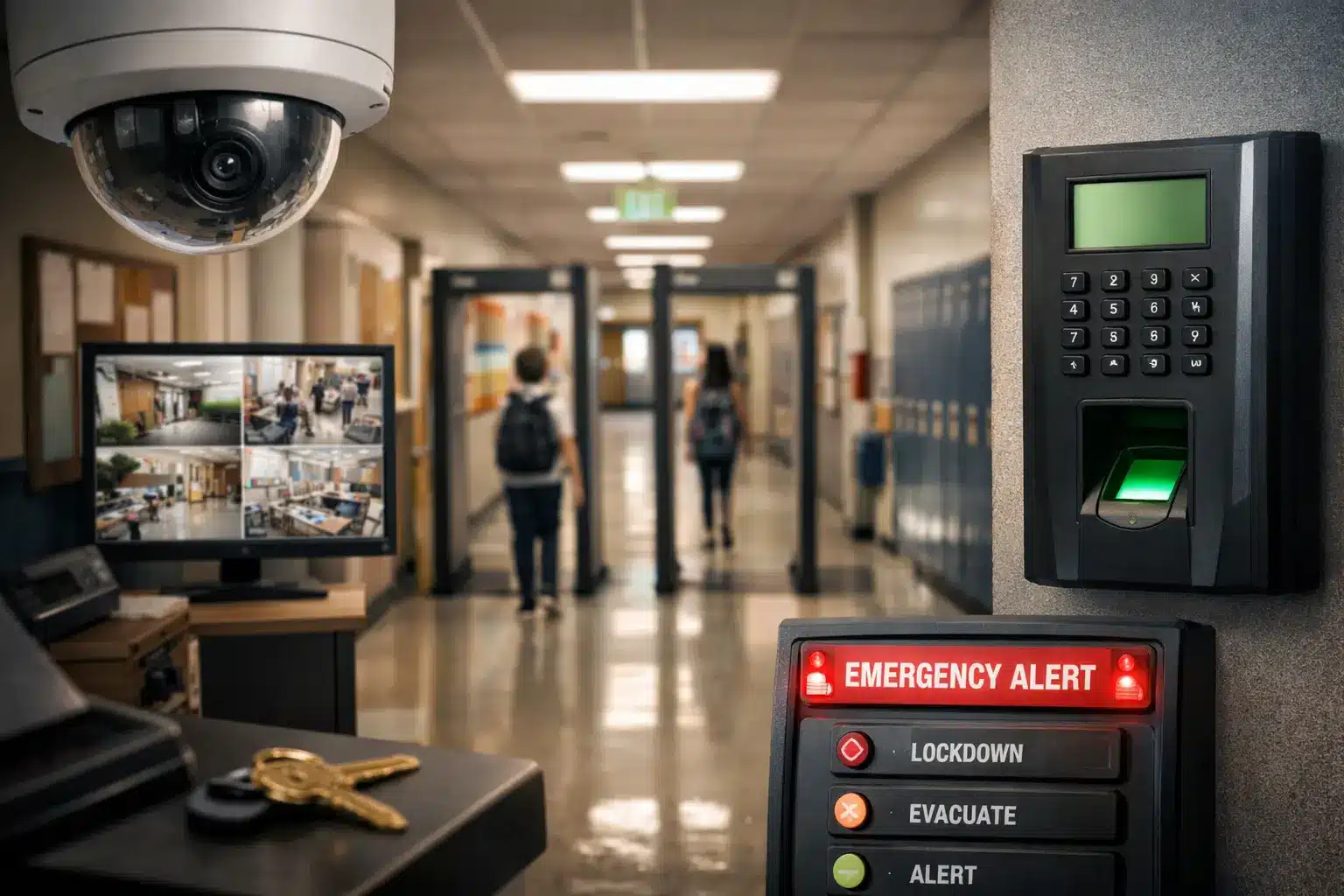
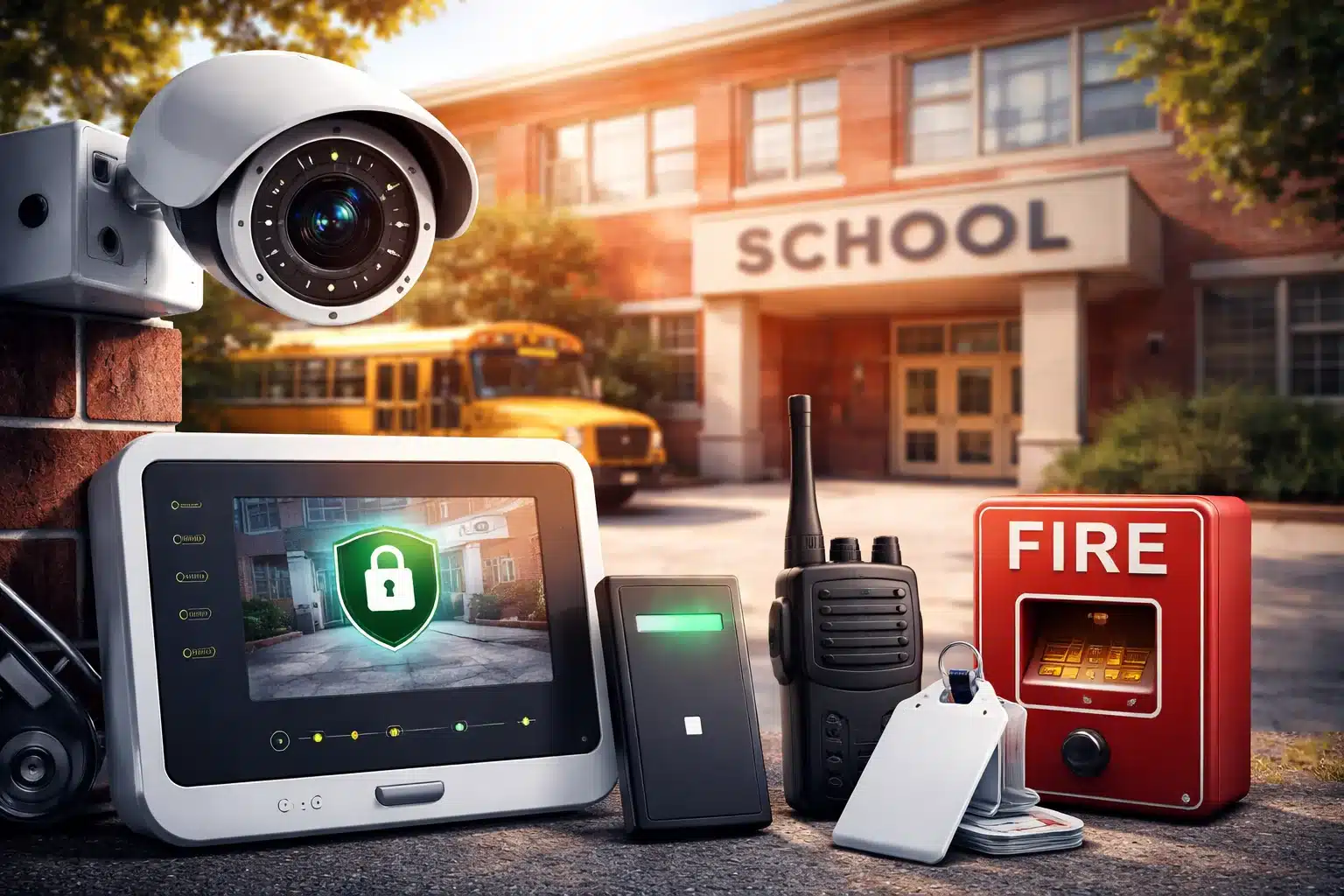
The latest advancements in school surveillance systems go far beyond higher-resolution cameras. Today’s platforms are becoming more intelligent, more integrated, and far more useful in day-to-day school security operations. Modern school security systems are no longer limited to recording video for later review. They are increasingly designed to detect activity, surface relevant events, and support faster response across the entire campus.
One of the biggest changes is the shift from passive recording to proactive video surveillance for schools. With AI-powered analytics and edge-based detection, schools can identify patterns and events that would have been easy to miss in older systems. Instead of relying on staff to manually review hours of footage, advanced systems can help flag perimeter intrusion, loitering, time-in-area events, vandalism, and suspicious after-hours activity. That makes video surveillance for schools more operationally useful and improves how schools investigate incidents, verify concerns, and respond in real time.
That broader approach matters in education because the system is no longer just observing. It is classifying activity, correlating signals across multiple technologies, and helping trigger action. Common school use cases now include perimeter intrusion, loitering, vandalism detection, visitor management through license plate recognition, and lockdown workflows tied into third-party applications. This is also where commercial air quality sensors can support a stronger campus security strategy by adding privacy-conscious awareness in areas where camera coverage is limited or inappropriate.
Why this matters for schools
- Faster review of real events instead of wasting time on hours of passive footage.
- Better coordination between cameras, alerts, sensors, and response workflows.
- Improved visibility in hallways, entries, parking areas, and privacy-sensitive zones.
- More flexible architecture for districts that need open integration across legacy and newer systems.
Durability Matters: Cameras Must Survive the Real World
For school districts located in regions like the Midwest, camera durability is not theoretical. Surveillance cameras are exposed to Chicago winters, summer heat, wind, rain, and years of continuous operation. Hardware reliability must therefore be the foundation of any K‑12 surveillance system.
A surveillance platform is only as strong as the cameras capturing the video. Low‑cost hardware may appear attractive initially, but districts frequently discover that inexpensive cameras degrade quickly or produce unusable footage during critical incidents.



Professional Design & Installation
✅ Local Service & Support
✅ Customized Solutions for your Application
✅ 5 Year Hardware Warranty
Axis Cameras: The Industry Standard for School Security Cameras
When evaluating camera manufacturers for large school deployments, Axis Communications remains the industry benchmark. Axis cameras are widely recognized for durability, strong low‑light performance, and long operational life. For districts searching for the best surveillance cameras for schools, Axis often represents the safest long‑term investment.
Axis also maintains an open architecture philosophy, meaning their cameras integrate with nearly every enterprise video management system on the market.
Unmatched Durability
Our cameras are built to withstand extreme weather conditions, ensuring consistent performance year-round.
Seamless Integration
Open architecture allows our systems to integrate with existing infrastructure, providing flexibility and cost savings.
AI-Powered Analytics
Leverage artificial intelligence to enhance real-time monitoring and streamline investigations with intuitive search capabilities.
Enterprise-Grade Management
Centralized control and advanced analytics empower districts to manage extensive camera networks efficiently.

Open Platform Surveillance vs Closed Ecosystems
One of the most important strategic decisions districts must make is whether to adopt an open architecture video surveillance system or a proprietary ecosystem.
Historically, IP surveillance was built on open standards. Cameras, servers, and video management software could interoperate across vendors. Closed cloud systems have begun reversing this model, creating proprietary environments where hardware and software must come from the same vendor.
For school districts, open platform surveillance systems provide flexibility and long‑term cost control.
AI‑Driven Investigations in Modern K‑12 Surveillance Systems
Artificial intelligence is transforming how school surveillance systems are used. Modern platforms allow security operators to perform natural language searches across camera footage.
For example, an operator could search for: ‘Show me the woman with the pink hoodie and a bun in her hair.’ The system can analyze camera footage across multiple buildings and automatically generate a timeline of where that individual appeared.
Enterprise Video Management Systems for School Districts
Large districts managing hundreds or thousands of cameras require enterprise‑grade video management systems (VMS). Platforms such as Genetec are widely recognized for large‑scale deployments across cities, airports, and universities.
Enterprise VMS platforms allow districts to centralize monitoring across multiple schools while integrating additional technologies such as access control, license plate recognition, and advanced analytics.
Surveillance System Design
We specialize in crafting tailored surveillance solutions that meet the unique needs of each school district, ensuring optimal coverage and security.
Enterprise Video Management
Our advanced video management systems allow for seamless integration and centralized monitoring across multiple school locations.
AI-Driven Security Enhancements
Utilizing cutting-edge AI technology, we enhance surveillance capabilities with intelligent analytics for proactive threat detection and response.
The Future of School Security Infrastructure
Over the next decade, school surveillance infrastructure will continue evolving rapidly. AI analytics, hybrid cloud architectures, and edge computing cameras will allow districts to improve investigations, reduce infrastructure costs, and enhance real‑time incident response.
Umbrella Security specializes in the design, assessment, and deployment of enterprise security infrastructure for school districts, municipalities, and enterprise organizations.
Free School Security Audit & Gap Analysis
Umbrella Security provides a comprehensive, no-cost school security audit for K-12 districts. In a single-day on-site review, we:
-
Assess existing surveillance, access control, and alarm systems
-
Evaluate system integration and network performance
-
Identify vulnerabilities and operational gaps
-
Deliver a clear, actionable security gap analysis
We help districts move from the appearance of safety to verified, measurable protection.
Frequently Asked Questions
School surveillance infrastructure upgrades refer to modernizing outdated camera systems, video management software, and related security technologies so districts can improve reliability, flexibility, investigations, and long-term cost control.
Many school districts still rely on legacy camera systems, outdated video management software, or proprietary ecosystems that limit flexibility and increase long-term costs. Upgrades help improve transparency, accountability, and overall security performance across the campus.
Camera durability matters because school security cameras often operate year-round in harsh conditions, including heat, rain, wind, and freezing temperatures. Reliable hardware is critical for capturing usable footage during real incidents and reducing replacement costs over time.
Axis cameras are known for durability, strong low-light performance, long operational life, and open architecture integration. For large school deployments, that combination can support long-term flexibility and compatibility with enterprise video management systems.
Open platform surveillance systems allow cameras, servers, and video management software to interoperate across multiple vendors. Closed ecosystems usually require hardware and software from the same provider, which can reduce flexibility and make future changes more expensive.
AI is used to improve investigations, support faster searches across video footage, and help operators identify relevant events more efficiently. Modern systems can reduce manual review time and improve how districts respond to incidents.
An enterprise video management system helps school districts centralize monitoring across multiple schools and large camera networks. These platforms can also integrate access control, license plate recognition, and advanced analytics for district-wide visibility.
Yes. A school security audit can help assess existing surveillance, access control, and alarm systems, evaluate integration and network performance, identify vulnerabilities, and produce a clear gap analysis to guide future upgrades.