
 Chicago + Illinois Security Solutions
Weapons Detection Systems for Chicago and Illinois Facilities
Weapons detection systems help schools, hospitals, commercial properties, industrial facilities, and government buildings identify threats before they move deeper into the environment. In Chicago and Illinois, organizations are evaluating weapons detection systems that go beyond traditional checkpoint metal detectors and support better entry flow, stronger situational awareness, and more coordinated response planning.
Umbrella Security helps commercial and public-sector clients assess weapons detection systems based on traffic flow, staffing, facility type, operational priorities, and how the technology fits into the larger security ecosystem.
What Are Weapons Detection Systems?
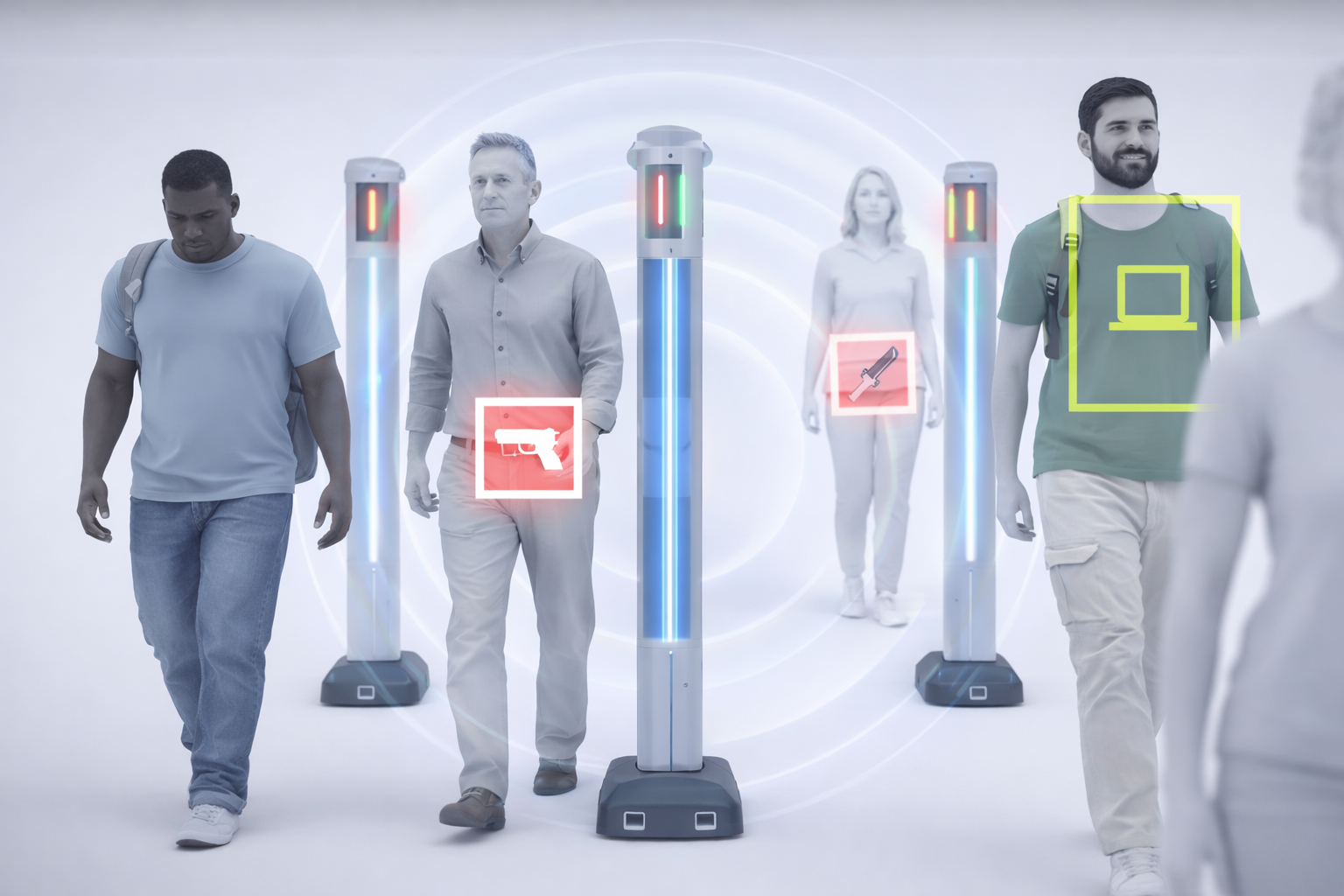
Weapons detection systems are technologies used to help identify firearms, knives, and other threats at entry points and within monitored environments. Today’s weapons detection systems include more than one screening model, and the right fit depends on how the facility operates, how people enter, and how security teams need to respond.

More than traditional checkpoints
In some environments, walk-through metal detectors still make sense. In others, organizations may need higher-throughput screening, open-gate detection, software-supported alert workflows, or layered monitoring tied to the rest of the security environment.
Different systems serve different objectives
Some technologies are designed to screen people at controlled entry points. Others help security teams identify visible threats through monitored video environments. Those are related capabilities, but they are not the same security function.
The right answer is operational, not just technical
The strongest weapons detection strategy fits the building, the pace of entry, the staffing model, the carried-item profile, and the response expectations of the organization.
Types of Weapons Detection Systems
Organizations evaluating weapons detection systems should understand how the major technology categories differ. The right weapons detection systems approach depends on the type of entrance, the required throughput, the level of screening visibility, and how staff will verify and respond when a threat is detected.

Traditional Walk-Through Metal Detectors
Traditional checkpoint screening remains relevant in environments where slower, more deliberate entry control is acceptable and staff are available to manage alarms, secondary screening, and item resolution.

High-Throughput Screening Systems
High-throughput screening systems are designed for facilities that want stronger entry screening without creating the same level of bottleneck often associated with older checkpoint-only approaches.
Open-Gate Detection Systems
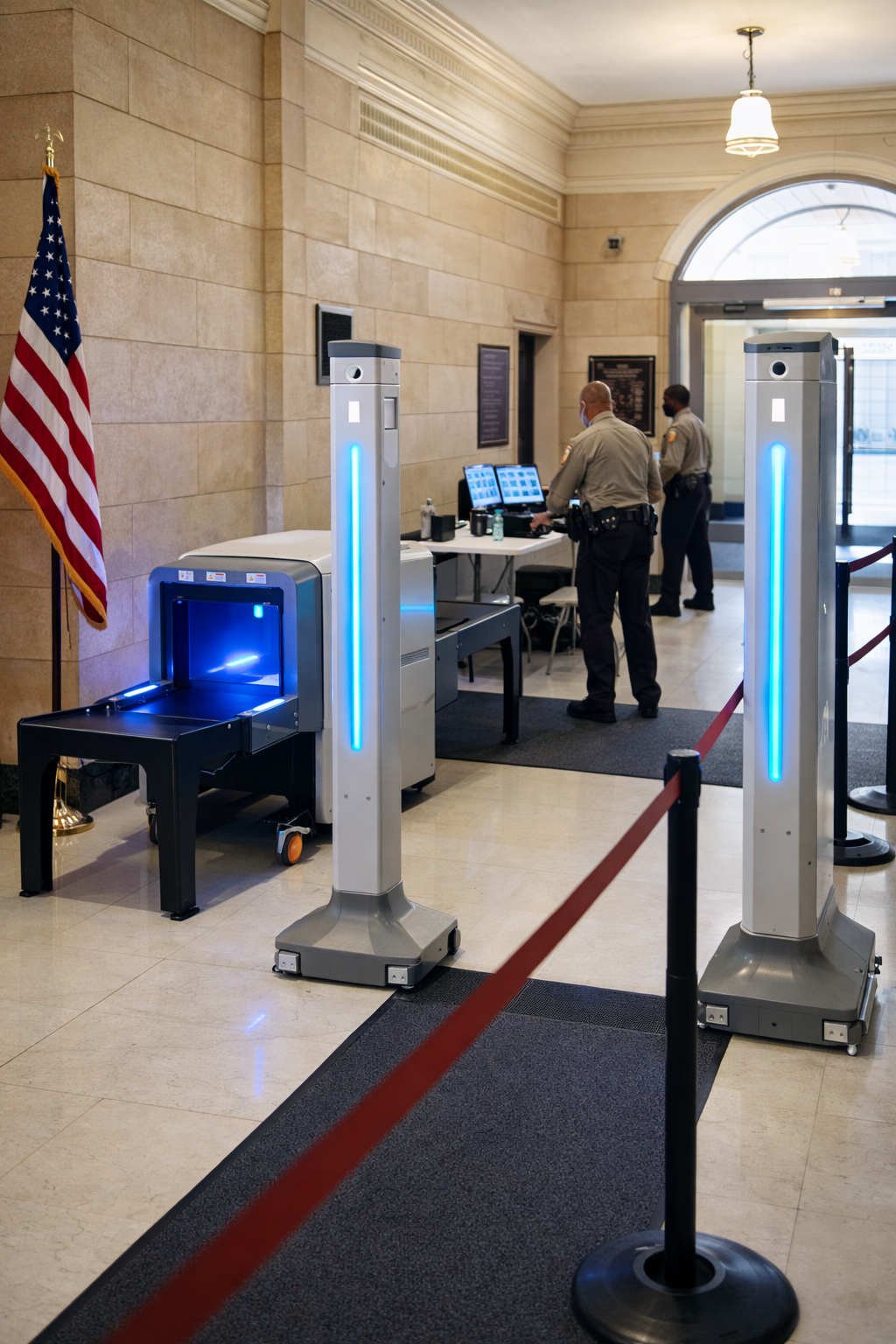
Open-gate systems are often evaluated when organizations need faster movement through an entrance while still maintaining a visible and structured weapons detection process.

Video-Based Weapon Detection
Video-based weapon detection uses monitored camera environments and analytics to help identify visible threats as individuals approach or move through a property. This is different from physical checkpoint screening.
Where Weapons Detection Systems Fit Best
No screening model is right for every environment. The best technology choice depends on the facility’s traffic patterns, staffing model, public-facing expectations, and the broader security strategy around the entry point.
Schools and Campuses
Safety, speed, supervision, visitor control, and ease of movement all matter, especially during arrival, dismissal, and event traffic periods.
Healthcare and Hospitals
Emergency department access, visitor flow, public access concerns, and patient experience all shape weapons detection planning.
Commercial Offices
Lobby design, visitor handling, tenant expectations, and executive protection needs often influence the right screening approach.
Industrial and Manufacturing
Shift changes, contractor access, employee entrances, and large site footprints call for practical screening strategies that fit operations.
Government Buildings
Public access, procedural consistency, and predictable entry experiences must be balanced with the level of protection required.


Weapons Detection Systems Management and Analytics Software
Weapons detection is not only about the device at the entry point. In many environments, the software layer helps security teams monitor activity, review events, manage alerts, and coordinate response more effectively across entrances, screening lanes, and related workflows.
In many environments, the value of weapons detection systems also depends on how quickly alerts reach the right people. Mobile notifications, event review tools, and guided escalation workflows can help security personnel verify activity faster, coordinate response, and reduce delays between detection and action.
Mobile alerting and escalation
Security teams often need notifications delivered beyond a fixed workstation. Mobile alert workflows can support faster awareness, cleaner handoff, and more coordinated incident response when weapons detection systems identify a potential threat.
What to Evaluate Before Choosing Weapons Detection Systems
Before selecting a solution, organizations should evaluate how weapons detection systems will perform in the real conditions of the building and the people using it every day.
- Entry volume and peak traffic periods
- Whether the facility can tolerate lines or bottlenecks
- Staffing availability for screening and response
- The types of items people commonly carry into the building
- The desired public-facing experience and ease of entry
- How secondary screening will be handled
- Whether the system must support visitors, students, employees, contractors, or patients
- How the technology will integrate with cameras, access control, visitor management, and notifications
- Retrofit constraints versus new construction planning
- How the organization will respond when a threat is identified
Why Weapons Detection Systems Work Best as Part of a Larger Security Ecosystem
A screening technology may look strong on paper, but if it does not fit the building layout, staffing model, or response process, the result can be delay, friction, and inconsistent use. The strongest strategies connect detection with the systems that help staff verify, communicate, and act.
- Coordinate weapons detection with access control systems to manage entry permissions and restricted areas.
- Use commercial security camera systems to improve visibility, verification, and incident awareness around entrances.
- Connect visitor management systems to front-of-house screening, credentialing, and check-in workflows.
- Support communication and response with commercial intercom systems and emergency notification systems.

Why Organizations Choose Umbrella Security
Umbrella Security helps clients evaluate, design, and integrate weapons detection strategies based on real facility conditions, operational priorities, and long-term usability.
We approach weapons detection as part of a larger planning process that considers entry design, user flow, staffing requirements, technology fit, integration opportunities, and response readiness.
Security Planning Built Around Real Operations
For commercial, education, healthcare, industrial, and government environments, that means helping clients make informed decisions about what type of weapons detection system belongs where, how it should work within the larger security ecosystem, and what it will take to deploy it successfully.
Frequently Asked Questions About Weapons Detection Systems
These are some of the most common questions organizations ask when evaluating a weapons detection strategy for commercial and public-facing environments.
What is a weapons detection system?
A weapons detection system is a technology used to help identify firearms, knives, or other threats at an entry point or within a monitored environment. The category can include more than one type of solution depending on the application.
Are weapons detection systems the same as metal detectors?
Not always. Traditional metal detectors are one type of screening tool, but the broader category may also include higher-throughput screening technologies, open-gate systems, video-based detection tools, and layered approaches tied to other security systems.
What types of facilities use weapons detection systems?
Schools, hospitals, commercial buildings, industrial sites, government facilities, and other public-facing environments may all evaluate weapons detection systems based on risk profile, traffic conditions, and operational needs.
Can weapons detection systems integrate with other security technologies?
Yes. In many deployments, weapons detection is most effective when coordinated with video surveillance, access control, visitor management, intercoms, emergency notification, and related response workflows.
Are high-throughput screening systems right for every facility?
No. The right solution depends on entry conditions, staffing model, traffic flow, desired user experience, and how screening fits into the broader security plan.
What should organizations evaluate before deployment?
Facilities should evaluate throughput, staffing, false-alarm tolerance, entrance design, carried items, integration needs, and response procedures before selecting a weapons detection strategy.
Related Security Resources
Weapons detection should be evaluated as part of a broader planning conversation, especially when the organization is also reviewing facility access, visitor workflows, camera coverage, emergency communications, and industry-specific security requirements.
Plan the Right Weapons Detection Strategy for Your Facility
Whether you are evaluating weapons detection systems for a school, hospital, commercial property, industrial site, or government building, the right solution starts with a clear understanding of your environment, your entry conditions, and your operational priorities.
Umbrella Security helps organizations across Chicago and Illinois assess available technologies, define the right screening approach, and build an integrated security strategy that supports both protection and daily operations.
