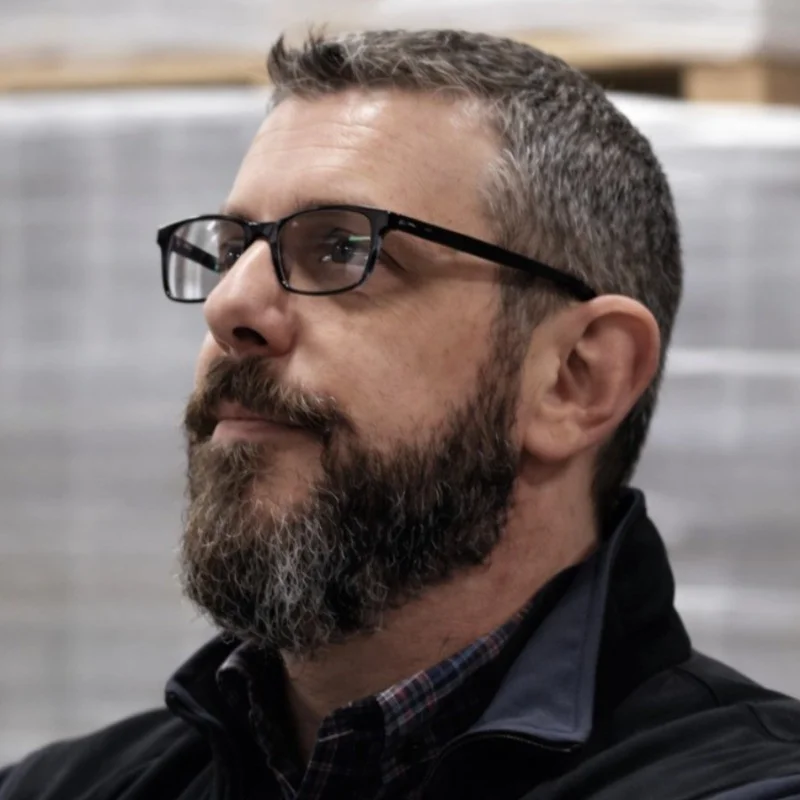
Thomas Carnevale
I build security technology, challenge weak assumptions, and help leaders decide what will actually work in the field. For more than 25 years, I have worked across software, panoramic video, public infrastructure, and integrated physical security.
Invite me to speak about the future of security—or engage me to examine a system, a vendor decision, or a difficult operational problem. My starting point is the same in both settings: the reality of good, not the appearance of it.
Conference and media inquiries · School and government advisory · Physical security technology strategy
I can speak to what happens after the product demo.
I have written the software, led a camera manufacturer, seen panoramic technology deployed in transit, and helped schools, public agencies, and businesses deal with the consequences of their security decisions. That range is useful when a room needs an informed point of view or a leadership team needs an independent, technically grounded assessment.
A speaker with firsthand work to draw on
Topics include open architecture, video evidence, access control, AI analytics, cloud dependency, school safety, and public-sector security. I can make the engineering accessible without erasing the tradeoffs.
Request speaking availability →A second set of eyes on consequential decisions
Bring me in to examine a physical security architecture, challenge a vendor proposal, plan modernization, or test whether systems and people will work together during an incident.
Describe your consulting need →Selected evidence: Founder of Sentry360 · Panoramic video deployed in Chicago Transit Authority rail cars · Speaker at ISC West, ISC East, Intersec Dubai, and ISCEX · Security commentary on WGN, NBC, and ABC affiliates. Follow the interviews, deployment reports, and product history below.
Security in a minute
Swipe through short videos on planning, camera placement, schools, and open systems. Tap a card to watch here.


Videos from the Umbrella Security Systems Shorts channel. Opening a video loads YouTube; each card also links to the original Short.
Explore my speaking, consulting, and technical work
Start with speaking or consulting. The other tabs hold the product history, project evidence, diagrams, and research behind those services.
Speaking, interviews, and the questions worth asking
I speak to industry audiences, school and government leaders, executives, and newsrooms about the gap between security promises and operational performance. A useful talk should leave an audience with questions they can take back to a site or procurement meeting. My own material draws on developing panoramic video software, leading a manufacturer, real deployments, and independent evaluation of products in the field.
My topics can be shaped for a technical conference, executive briefing, school safety event, public-sector panel, webinar, or newsroom deadline. I can address how systems are designed and governed without pretending that one product or manufacturer solves every problem.

I have spoken at industry events including ISC West, ISC East, Intersec Dubai, and ISCEX. A conference appearance is a chance to explain what worked, where deployment gets complicated, and what the buyer should verify. If you are planning a panel, interview, or technical conversation, send the topic and timing.
From cameras to usable evidence
Where panoramic capture, pixel density, dewarping, retention, and VMS integration meet the needs of an investigator. A camera's view is a starting point; the ability to retrieve a defensible answer is the test.
Open systems and the cost of lock-in
How to evaluate architecture, service rights, interoperability, credentials, exports, and long-term control before a closed platform becomes an expensive operating constraint.
School and municipal security that works
What access control, video, emergency communication, staff roles, and response workflows must do together. Visible technology and real preparedness are different things.
AI analytics and cloud risk without hype
False positives, human verification, evidence governance, vendor dependence, service outages, and the danger of treating automated alerts as decisions.
These are sample talk directions. Share your audience and the decision they face, and we can shape the content accordingly.

What I told WGN
Buying cameras, alarms, and card readers is only the start. We need to know whether the pieces work together, whether staff know how to respond, and whether the result makes the facility safer. The interview gives a more direct version of that argument in my own words.
Those questions change how I evaluate a proposal: who receives an alert, who can confirm what happened, and what action can they take next? A product demo rarely answers all three.
In the interview, I explain how disconnected systems leave gaps (around 0:51), how a physical key differs from role-based access (around 1:06), and why a serious assessment looks beyond device placement into the operation (around 2:05). Later, I discuss why commercial facilities need a different plan from a home: more people, roles, and possible consequences. Those examples remain useful questions for a site walk today.
Schools need a usable plan
In this school-security conversation, I discuss assessments and the practical relationship between access control, cameras, and the way a campus operates. There is no universal device list. A useful plan reflects entrances, staff roles, visitor flow, and emergency procedures.
Media conversations also include NBC coverage of CTA camera deployment and WJLA's report on facial recognition and public safety. In each setting, the question was how the technology would actually help people investigate and respond.

Additional recordings include a technical discussion of surveillance frame rates and an ABC segment on regulated-facility security. Each addresses a different part of the field, from image performance to the way security must fit a facility's obligations.
For editors and event organizers: I can discuss camera placement, access control, school security operations, open versus closed systems, public-sector deployments, and how to test a security claim. Please include your outlet or event, deadline, and the specific question you want to explore.
Send the audience, format, date, location, and subject. For a media deadline, include the outlet and response window.
Invite Thomas to speakConsulting when the decision is bigger than the equipment
A school, municipality, manufacturer, or multi-site business may have a room full of products and still lack a coherent security operation. I can help leadership examine the assumptions in a plan: what risks matter, where the current system fails, how staff would respond, what the organization truly owns, and which tradeoffs have been hidden by a glossy proposal.
My background spans software development, camera manufacturing, open VMS integration, public transit deployment, access control, alarms, emergency communication, and hands-on security system work. That breadth makes it easier to see where a decision made by one team becomes a burden for another.
Independent system review
Examine coverage, image usefulness, doors and credentials, alert routing, evidence retrieval, resilience, maintenance, and how people actually use the system. The objective is a clear picture of failure modes and priorities—not a camera count.
Modernization and vendor strategy
Test an architecture or proposed replacement against integration requirements, serviceability, ownership, lifecycle risk, and procurement constraints. Ask what happens if the vendor changes pricing, support, or platform access.
School and public-sector advisory
Connect facility operations to access governance, visitor flow, emergency communication, video review, role permissions, data retention, and staff response. A school or city needs a usable operating model as much as hardware.
Technology and product evaluation
Evaluate claims about panoramic coverage, AI analytics, cloud access control, interoperability, and real performance. Define a fair field test: representative lighting and traffic, failure conditions, false alerts, exports, and operator workflow.
What a useful engagement looks like
We first define the decision you need to make, the people affected, your existing environment, and what evidence is available. Depending on the assignment, the work can include a site or system review, interviews with operators, a vendor comparison, a technical briefing for leadership, and a prioritized set of decisions. The scope should fit the problem; I will not imply a full audit when a focused review is enough.
Typical contacts include superintendents, school operations leaders, municipal administrators, IT directors, facility managers, security directors, and executives responsible for a high-stakes technology investment. If you are trying to choose a vendor, recover from a poor installation, or understand whether an AI or cloud platform solves your problem, tell me the decision and its deadline.
Independence in practice: I have strong technical opinions, but the recommendation has to survive your site conditions, staff needs, support model, and budget. If a proposed tool is not fit for purpose, I will say why and what test would change my view.
Share the facility type, current systems, the decision ahead, and your timing. We can define the right scope for a consulting conversation.
Discuss consultingBuilding panoramic video that operators could use
I started Sentry360 because conventional camera coverage left blind spots, while the early 360-degree systems often made operators work too hard to see a usable view. High resolution was only part of the answer. A panoramic image needed software that could dewarp it into familiar views, make the footage searchable, and connect it to the video management system a customer already used.
In a 2013 Security Today profile, I discussed building the company from a modest start and pushing the camera platform toward practical use. That history matters to me because it showed how much of a product's value lives beyond its spec sheet: integration, operator training, support, and the ability to review an incident later.


At the time, the security industry was moving from analog and fixed-view cameras toward megapixel IP video. A panoramic camera could capture the whole scene from a single position, then let an investigator look back and navigate the recorded view later. That retrospective PTZ capability was useful in a lobby or rail car where an event did not wait for someone to point a camera in the right direction. It also raised practical questions about pixel density, storage, lighting, and whether fewer cameras truly met the customer's evidence needs.
Making 360-degree video usable
Dewarping turns the curved view from a panoramic lens into perspectives an operator can navigate. The important questions are practical: can a person follow movement, see a face where necessary, and export the right evidence without learning a separate, closed workflow? Our dewarping SDK was designed to help connect panoramic video to established software. Industry coverage of the Sentry360 SDK documents that integration work.


I personally worked on the fisheye dewarping software and integration approach. Building that software changed how I talk to a customer about open architecture. The test is whether the camera, video management software, and operator workflow can work together under real conditions. Ask for a demonstration in the platform you intend to own, with sample footage from a scene like yours.
What made the SDK technically different
Contemporary industry reporting from 2009 described the SDK as a way for third-party systems to work with Sentry360 panoramic video across high- and low-level APIs. The report discussed C/C++, ActiveX, .NET, Windows, Linux, and raw-image flexibility. Those details matter because open architecture was a software and integration problem, not just a phrase on a product box.
One integration illustration on this page shows dewarped and panoramic views inside a video management environment. To me, that is the actual engineering test: can a customer's operators use the wide view in the platform they already rely on, live and after an incident?
The lesson I carried forward: if an installer cannot integrate a system, maintain it, and help the customer retrieve evidence, even impressive camera hardware underdelivers. That is why at Umbrella I look at the whole workflow before recommending equipment.
Where the technology met public infrastructure
Real projects expose the distance between a technology demonstration and something staff can rely on. Sentry360's panoramic cameras were used in Chicago Transit Authority rail cars, where coverage, storage, maintenance, and evidence review have to work in a moving public environment. Read the published CTA deployment coverage; watch NBC's transit report.

Industry awards brought welcome attention to the engineering, but my most useful feedback came from seeing how an operator used the system. Recognition is a signal of technical ambition; it does not replace a site's own performance test.


Another published application involved panoramic cameras for Microsoft retail locations. The industry report on that deployment describes the technology and setting. That manufacturer-side experience informs how I evaluate current systems for Umbrella customers.
Early Sentry360 opportunities also included W Hotels, Des Plaines Public Works, and the Chicago Housing Authority, as described in the Security Today founder profile. The environments varied, but the same question came up repeatedly: who would use the video and what decision would it help them make?
From manufacturer to systems advisor
My focus now is the customer's whole security environment: cameras, access control, intrusion detection, emergency communication, software, network requirements, and the people who operate them. Umbrella designs, installs, and supports projects for schools, municipalities, and businesses in Chicago and Northern Illinois. We start by walking the site and asking what staff must see, control, and retrieve on an ordinary day and during an incident. Then we compare equipment against those tasks and the organization's ability to maintain it.
My advisory work benefits from seeing the same problem from the developer, manufacturer, integrator, and customer sides. The CTA deployment and retail applications are specific examples of work; they are not a substitute for examining a new client's setting.
For a school, that can mean testing how a door decision reaches the people who need it. For a municipal facility, it can mean making evidence retrieval and ownership clear. For a business, it can mean recognizing that a camera aimed at the wrong approach creates a record without an answer. See current Umbrella case studies for project details.
Research and views grounded in field evidence
Technology changes. The basic obligation does not: a system should help people understand what is happening and act in time. When I review a design, I ask where an incident would start, what evidence staff could see, what they could control, and who maintains the system after installation.
Coverage is a question, not a camera count
We look at entrances, approach paths, lighting, image detail, retention, and the specific event the customer needs to resolve. More cameras can still leave a blind spot or an unusable view.
Integration changes the response
A camera, access credential, and alert are most useful when they give staff a clear sequence: detect, verify, decide, and act. We test that sequence at the site.
Ownership has a long horizon
Before accepting a closed platform or subscription, ask who can service it, export data, replace a component, and keep it working when budgets change. Open interfaces can preserve choices.
Cloud decisions need failure planning
Remote access and managed services can be valuable. We also ask what happens to doors, recording, and response when internet connectivity or a vendor service is unavailable.
That last question is the subject of one of my short videos on cloud resilience. Watch the video directly, or use the Shorts carousel above.
AI should sharpen decisions, not bury people in alerts
Analytics for license plates, faces, weapons, or unusual activity need more than a compelling demo. Before using them in a school or public facility, I want to see how often they miss the event, how often they interrupt staff with a false alert, who verifies the output, and how the evidence is retained and accessed. A useful alert has an owner and a response path. Without those, automated detection can simply create a bigger queue of uncertainty.
For government and other public-sector systems, I also ask who can see the data, how long it is kept, how an export is logged, and whether a vendor can leave without taking the customer's records and workflows with it. Governance is part of the system design.
Field testing and honest recommendations
I want customers to hear the tradeoffs before they buy: what the equipment does well, what conditions make it underperform, what it costs to support, and where we would choose another approach. Umbrella's manufacturer reviews reflect field experience and product testing. They are a starting point for evaluation, not a promise that one manufacturer fits every site.
For advisory work, I start with the organization's risks, people, existing systems, and operating constraints. The useful answer may be a different design, a narrower upgrade, or a change in how a system is governed—not another product purchase.
How I evaluate a product: manufacturer claims are the hypothesis. Installation effort, support quality, user adoption, failure behavior, integrations, export rights, lifecycle cost, and a representative field test are the evidence. My manufacturer reviews apply that lens to specific systems.
Follow the source material
My experience is most useful when you can examine the work for yourself: the contemporary articles, deployments, interviews, and field reviews behind the ideas.
Product development
Security Today's account of Sentry360's origin and the published coverage of our open panoramic video SDK.
Read the founder profilePublic infrastructure
Independent coverage of panoramic video deployed inside Chicago Transit Authority rail cars.
Read CTA coverageCurrent research
Our field perspective on security manufacturers, integration, support, ownership, and buyer fit.
Explore manufacturer reviewsBring the right problem to the table.
Speaking: tell me the event, audience, location or virtual format, date, and the question you want your audience to leave ready to answer.
Consulting: describe the organization, current systems or decision, the stakeholders, and your timeline. For a newsroom inquiry, include your outlet and deadline.
This form reaches Umbrella Security Systems for routing. You can also call (630) 270-3313 or email our team with your brief.
Speaking, consulting, or media inquiry
Tell us the type of request and your preferred timing in the message field.
"*" indicates required fields