
Multifamily Entry Systems
Apartment Building Intercom Systems
What they cost, the four architectures you will be quoted, and what actually fails in the field. Written by a commercial security integrator with 25 years in the Chicago market.
Updated August 2026
This page helps you decide
- Which of the four intercom architectures fits your building, and what each one really costs to own
- Whether to reuse existing wiring or rewire, and what that decision does to the budget
- Whether a cloud subscription is worth the recurring cost at your opening count
- What to require from every bidder in writing before you sign
- Whether you need an integrator at all, or whether a packaged system will serve you
What this guide covers
This is a buyer's guide to apartment building intercom systems, written by someone who installs them.
It covers the four system architectures you will actually be quoted, what each one costs to install and to keep running, what fails in the field, and the questions that separate a good proposal from an expensive one.
It is written for property managers, condo boards, HOA boards, and owners of multi-tenant buildings in the Chicago area. If you manage one building or forty, the decisions are the same. Only the scale changes.
Two things this guide will not do. It will not tell you there is one best brand. And it will not pretend the cheapest option is always wrong, because sometimes it is exactly right.
- What an apartment building intercom system actually does
- The four architectures you will be quoted
- What an apartment intercom system costs
- Replacing an aging or failed system
- Gate and garage entry
- Key fobs, codes, and credentials
- Video intercom for apartments
- What actually goes wrong in the field
- Code, safety, and compliance
- Questions to ask before you sign
- When to buy off the shelf, and when to call an integrator
- How we approach multifamily projects
- Frequently asked questions
What an apartment building intercom system actually does
An intercom system answers one question: who is at the door, and do I let them in?
Everything else is how that question gets answered. Audio only. Audio and video. A handset in every unit, or an app on every phone. A directory panel at the lobby, a keypad at the garage gate, a fob reader at the side entrance.
The system is doing three jobs at once, and buyers usually only think about the first one.
| THE JOB | WHAT IT LOOKS LIKE IN PRACTICE |
|---|---|
| Visitor entry | A guest calls a unit, the resident answers, the door releases |
| Resident entry | Fob, code, card, or phone credential at every controlled opening |
| Deliveries and service access | Couriers, contractors, cleaners, and inspectors who need in without a resident present |
The third job is where most older systems break down. A building that was designed in 1998 for guests and residents now has packages arriving six days a week and a rotating cast of service vendors. If your intercom cannot handle that, your staff becomes the intercom.
The four architectures you will be quoted
Nearly every proposal you receive will be one of these four. The differences matter more than the brand names printed on them.
Wired audio or video intercom
A physical entry panel connected by cable to a station inside each unit. Durable, independent of the internet, and free of subscription cost. It is also the most expensive to retrofit, because a station in every unit means a cable to every unit.
In a new build or a gut rehab this is often the right answer. In an occupied 1970s courtyard building with plaster walls, the cable path is the entire project.
New construction, gut rehab, buildings that want zero recurring cost
Retrofit cable paths drive the budget, not the hardware
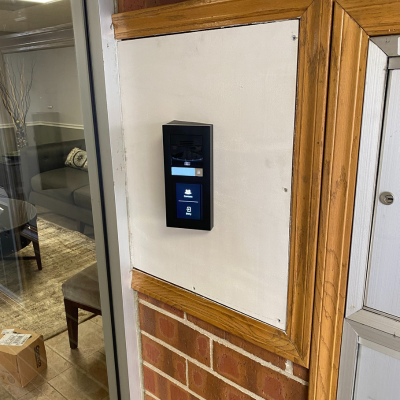
Cloud and app-based intercom
A panel at the door, no hardware inside any unit, and a smartphone app for every resident. Installation is dramatically cheaper because nothing runs into the units, residents can buzz someone in from anywhere, and managers add or remove people without a site visit.
The tradeoffs are real and recurring. You are buying a subscription, not just a panel. Residents who will not install an app still need a way in. If the platform goes offline, so does your front door workflow.
Tech-comfortable residents and active property management
Per-opening subscription, app adoption, platform dependency

Wireless and hybrid systems
An entry panel that reaches in-unit devices over the building network rather than dedicated wire. Hybrid systems keep a wired backbone to the entry points and go wireless for the last leg.
They exist because retrofit wiring is expensive, and they live or die on the quality of the building network. A hybrid system on a consumer router in a utility closet is a service call waiting to happen.
Occupied retrofits where wiring every unit is impractical
Only as reliable as the network behind it

Telephone entry
The panel dials a resident phone. They press a key. The door opens. It is the simplest system that still works, needs no in-unit hardware and no app, and is genuinely well suited to buildings with older residents or high turnover.
There is no video, and call quality depends on the phone line or cellular module behind it.
Small to mid buildings, older resident base, tight budgets
No video, and the dial path is a single point of failure

| ARCHITECTURE | BEST FIT | WATCH OUT FOR |
|---|---|---|
| Wired audio or video | New construction, gut rehab, buildings that want zero recurring cost | Retrofit cable paths drive the budget |
| Wireless or hybrid | Occupied retrofits where wiring every unit is impractical | Only as reliable as the building network behind it |
| Cloud and app-based | Buildings with tech-comfortable residents and active property management | Per-door subscription, app adoption, platform dependency |
| Telephone entry | Small to mid buildings, older resident base, tight budgets | No video, and the dial path is a single point of failure |
What an apartment intercom system costs
Every honest answer to this question starts with a question back: how many entry points, and how many units?
Cost scales on openings first and units second. A 24-unit building with one lobby door is a very different project from a 24-unit building with a lobby, a garage gate, a rear service door, and a pool gate.
These are typical Chicago-market ranges for commercial multifamily work. They are ranges, not quotes.
| LINE ITEM | TYPICAL RANGE | WHAT MOVES IT |
|---|---|---|
| Entry panel, video, per opening | $1,800 to $5,000 installed | Vandal rating, flush vs surface mount, directory size |
| Entry panel, audio or telephone entry | $900 to $2,800 installed | Cellular module vs POTS line, enclosure |
| In-unit station, wired video | $300 to $800 per unit installed | Cable path is usually the largest variable |
| Cloud or app platform subscription | $15 to $50 per opening per month | Door count, feature tier, contract length |
| Retrofit cable and pathway | $250 to $1,500 per unit | Conduit availability, wall construction, occupied vs vacant |
| Gate or garage entry integration | $1,500 to $7,500 per gate | Existing operator condition, loop detectors, safety devices |
Two cost realities that do not appear on most proposals.
The first is the cable. In an occupied building, running new wire to every unit means scheduling access to every unit, patching walls, and often working around asbestos-era construction. That labor is frequently larger than the hardware line.
The second is the subscription. Cloud platforms price per controlled opening, not per unit, so the number is easy to underestimate. A building with six controlled openings at $40 per opening per month is $2,880 a year, and $28,800 over ten years before a single price increase. That may still be the right decision. It should be a decision you made on purpose.
If you want the same arithmetic applied to camera systems, we published a detailed breakdown at commercial security camera installation cost.
Have a proposal in hand?
Send it over. We will tell you what is missing from it, what the ten-year cost actually looks like, and which line items are negotiable.
We walk the building, evaluate the doors and gates along with the electronics, and put the numbers in writing. No obligation.
Request a proposal review
Two minutes. Typical response within one business day.
Or call (630) 270-3313.
Replacing an aging or failed system
Most of the calls we get are not new buildings. They are replacements.
The pattern is consistent. The original system was installed decades ago, the manufacturer stopped making parts, a board fails, and suddenly nobody can buzz anyone in. The building limps along with propped doors and a lockbox until it gets fixed properly.
Here is what actually matters in a condo intercom replacement.

Test the wire before anyone quotes a rewire
Existing home-run cable to each unit is an asset. Several manufacturers make replacement systems designed to run on legacy wiring, which can cut a retrofit budget in half.
Evaluate the door, not just the panel
A new intercom on a door with a failing strike, a misaligned closer, or a frame that has shifted will produce complaints in month two. The intercom gets blamed. The door was the problem.
Sequence the cutover
A building cannot be without entry control overnight. The replacement needs temporary access, a panel swap, unit-by-unit commissioning, credential reissue, and a firm date when the old fobs stop working.
Reissue credentials against real occupancy
Plan the credential count against who actually lives there, not what the lease says. Every unaccounted door opening becomes a propped door.
Gate and garage entry
Vehicle entry is where intercom projects quietly get complicated.
A gate entry system for an apartment property has to do everything the front door does, outdoors, in Chicago weather, alongside a mechanical gate operator that has its own safety requirements.
| COMPONENT | WHY IT MATTERS |
|---|---|
| Operator condition | New electronics on a worn operator inherit the operator's failure rate |
| Safety devices | Photo eyes and edge sensors are code requirements, not accessories |
| Free exit method | Loop detector, wireless exit wand, or push button, each with different failure behavior |
| Credential at the vehicle | Long-range reader, phone credential, or keypad, chosen by how residents actually arrive |
| Enclosure and heat | Cold-weather ratings and heaters are not optional in this climate |
One scope note, because it causes budget surprises. The range above covers the security integration at the gate. If the project also needs a new operator, trenching, power work, or safety-device replacement, total gate cost frequently lands between $10,000 and $20,000. Ask which of those the quote includes.

The most common mistake we see is a beautiful new call box on a gate operator that was already failing. Have the operator evaluated before you buy the electronics.
Key fobs, codes, and credentials
A key fob system for an apartment building is only as good as the process for issuing and revoking fobs.
The technology question is straightforward. The operational question is the one that costs money.
What credential type to use
Legacy 125 kHz proximity fobs are cheap and easy to clone. Encrypted smart credentials cost more per fob and are dramatically harder to duplicate. Phone credentials remove the fob entirely, at the cost of requiring resident participation.
For a building with real turnover, we usually recommend encrypted credentials or phone-based access, because clonable fobs mean your resident list and your access list stop matching within a year.
What happens at move-out
This is the question that separates systems in practice. When a tenant leaves, how fast can their access be revoked, who does it, and does it require a site visit?
A system where the property manager can revoke a credential in thirty seconds from a laptop is worth more than one with a slightly better panel.
How many credentials per unit
Two per unit is the common starting point, and it is usually wrong. Households have more than two people, and every unaccounted door opening becomes a propped door.
Plan the credential count against the real occupancy, not the lease.
Video intercom for apartments
Video changes what the system is for.
Audio answers who is at the door. Video answers who is really at the door, and it creates a record. For buildings dealing with package theft, unauthorized entry, or disputes about who let someone in, that record is often the reason the project gets funded.
Three things to specify carefully.
Camera performance at night and against backlight. A lobby door with afternoon sun behind it will silhouette every visitor on a cheap camera.
Whether entry events are recorded, where that video lives, and for how long. A video intercom that shows live video but stores nothing does not settle disputes.
Whether it integrates with your camera system, or becomes a second system your staff has to check separately. If you are already running or planning cameras, this is worth coordinating from the start. We cover that side in commercial security camera systems.
What actually goes wrong in the field
Twenty-five years of service calls produces a short list. These are the failures we see repeatedly, in roughly the order of how often they happen.
| FAILURE | ROOT CAUSE | PREVENTION |
|---|---|---|
| Door propped open | Not enough credentials issued, or entry is inconvenient | Right credential count and a fast issuance process |
| Strike or closer failure | Door hardware never evaluated during the intercom project | Include door hardware in the site walk |
| App non-adoption | Residents who will not or cannot install an app | Keep a fob or code path alongside phone credentials |
| Directory out of date | No owner of the tenant list, or updates require a vendor call | Property-manager-level access to the directory |
| Network outage takes the door down | Cloud panel with no local fallback | Specify offline behavior before purchase |
| Gate down after a freeze | Unheated enclosure or an operator past its service life | Cold-rated hardware and an operator assessment |
Most intercom complaints trace back to doors, processes, and people. A vendor who only wants to talk about the panel is solving a fraction of the problem.
Code, safety, and compliance
Entry systems intersect with life safety, and that is not a place to improvise.
Any door in a required means of egress has to allow free exit without special knowledge or a key. Access control on those doors has to release on fire alarm where the code requires it. Accessible entrances have to remain usable, which affects panel mounting height, button force, and how long a door stays unlocked after a call.
Chicago-area buildings also deal with local amendments and inspection expectations that vary by municipality. This is one of the practical reasons to use an integrator who works in your jurisdictions regularly rather than shipping in a panel and finding an electrician.
Questions to ask before you sign
Give these to every bidder. The answers will differentiate the proposals faster than the price line will.
What happens to the doors if your platform or our internet goes down?
A specific description of offline behavior, not a reassurance
What is the total recurring cost per door per year, and how has it changed in the last three years?
A number and a pricing history
Who owns the resident data, and how do we export it if we leave?
A named export path in writing
Can we buy replacement hardware from more than one source?
Yes, with proof, or an honest no
Who evaluates the existing door hardware and gate operators?
They do, before the quote is final
What is the cutover plan for an occupied building?
A sequence with dates, not a promise
Who trains our staff, and what does support cost after year one?
Named training and a written support rate
Ask every bidder to answer in writing. The ones who will not are telling you something.
When to buy off the shelf, and when to call an integrator
Not every building needs us, and it is worth saying so plainly.
A small building with one door, a simple resident list, and no gate can often be served by a packaged system installed by a competent electrician. If that describes your property, you should probably do that.
A packaged system is probably fine when
- You have one controlled door and no gate
- The resident list is short and stable
- You do not need it to work with cameras or access control
- Nobody is going to ask what the ten-year cost is
You need an integrator when
- You have multiple entry points, or a gate
- You have real turnover to manage
- The intercom has to work with cameras or existing access control
- A board or owner will ask for the ten-year number
- The building is occupied and the cutover has to be planned
At that point you are not buying a panel. You are buying a design, a wiring plan, a cutover sequence, and someone who answers the phone in year three.
Multifamily buildings we have done this work in
Condominium associations, apartment communities, and managed portfolios across Chicago and the collar suburbs.
"We asked Umbrella to come up with a cost effective solution to our Condo's Intercom, Access Control and Surveillance needs. We appreciated their timely proposal and solution, and their installation and support have been superb. I feel like we have a true integrated solution that provides owners peace of mind at a price point we could afford."
Patricia McCoyBoard of Directors, Nantucket Cove
"I manage a 650-unit condominium community in the northwest suburbs. The installation exceeded expectations. Execution was smooth, the equipment functions exactly as presented, and the system is easy to set up and operate. There were no surprises or delays. We have received no complaints, even from our most skeptical residents."
Lee FlanaganProperty Manager, Braeside Community Management
"I met Umbrella looking for multifamily security systems and asked them to conduct a walkthrough, then hired them after a bid process. Our security system has been a great value to our condo owners and we love the mobile access technology."
Niko BubarisBoard President, Riverwalk Condo Association
Property management companies we work with




How we approach multifamily projects
We are a commercial-only integrator. We do not do houses, and we do not sell a single platform.
A multifamily project starts with a site walk that covers every controlled opening, the door hardware at each one, the existing wire, the gate operators, and the network. It produces a design with the recurring costs stated up front, not discovered later.
We work across manufacturers because buildings differ. A 200-unit tower with an active management office and a 16-unit walk-up with a volunteer board should not get the same system, and they usually do not get the same answer from us.
If you are also evaluating broader building security, our multifamily security systems overview covers cameras, access control, and monitoring for residential properties. For commercial and mixed-use buildings, see commercial intercom systems, or compare brands in our guide to the best door intercom systems for business.

Twenty-five years designing and installing commercial security systems across Chicago and Northern Illinois, from offices in Naperville and Chicago. Umbrella is commercial-only and manufacturer-neutral. We do not sell a single platform, and we say so on the record when the cheaper option is the right one.
Illinois Private Alarm Contractor Agency, IDFPR License No. 127-001871 · BBB Accredited Business since 2017 · SAM.gov registered, UEI ER57FHACV634, CAGE 16U24
Frequently asked questions
How much does an apartment building intercom system cost?
For a typical Chicago-area building, expect $1,800 to $5,000 per entry point for a video panel installed, plus $300 to $800 per unit if you are installing wired in-unit stations. Cloud and app-based systems reduce the per-unit installation cost substantially but add $15 to $50 per controlled opening per month. Total project cost is driven by the number of controlled openings and by whether the building is occupied during the work.
Can we replace our intercom without rewiring the whole building?
Often yes. Several manufacturers make systems designed to run on existing legacy wiring, and cloud and app-based systems need no in-unit wiring at all. Have the existing cable tested before accepting a full-rewire quote.
What is the best intercom system for an apartment building?
There is no single best system. The right choice depends on how many entry points you control, whether the building is occupied during installation, how much recurring cost you are willing to carry, and whether your residents will adopt an app. A building with a gate, high turnover, and existing cameras needs a different answer than a 12-unit walk-up.
Do video intercoms record who comes and goes?
Some do and some do not, and the difference is rarely obvious in a proposal. Ask specifically whether entry events are recorded, where the footage is stored, how long it is retained, and who can retrieve it.
What happens if the internet goes out?
It depends entirely on the architecture. Wired systems keep working. Cloud systems vary widely, from full local fallback to a door that stops responding. This should be a written answer in the proposal, not a conversation after installation.
How do we handle package and delivery access?
Options include a delivery-specific credential or code, integration with carrier access programs, a package room on its own controlled opening, or remote unlock by a property manager. Decide this during design. Retrofitting a delivery workflow onto a finished system is how propped doors start.
How fast can we revoke access when a tenant moves out?
On a well-specified system, immediately and from a laptop. On legacy fob systems with clonable credentials, effectively never with certainty, which is why encrypted or phone-based credentials are worth the difference in buildings with real turnover.
Get a design for your building
If you are replacing a failed system, planning a rehab, or trying to make sense of three proposals that do not compare cleanly, we can help you sort it out.
(630) 270-3313 Naperville (773) 249-4400 Chicago
Request a multifamily intercom assessment
Tell us the building and we will scope it.
Contact Us
"*" indicates required fields