
Keep the investigative value. Put the system, rules and data under local control.
The Umbrella Open Source Safety Solution gives municipalities and law-enforcement teams a practical alternative to closed, nationally networked license-plate-reader ecosystems—without asking officers to surrender the workflows that help them investigate serious incidents. For communities evaluating a Flock camera alternative, the meaningful difference is local authority over architecture, data, policy and exit—not a different logo on the same risk model.
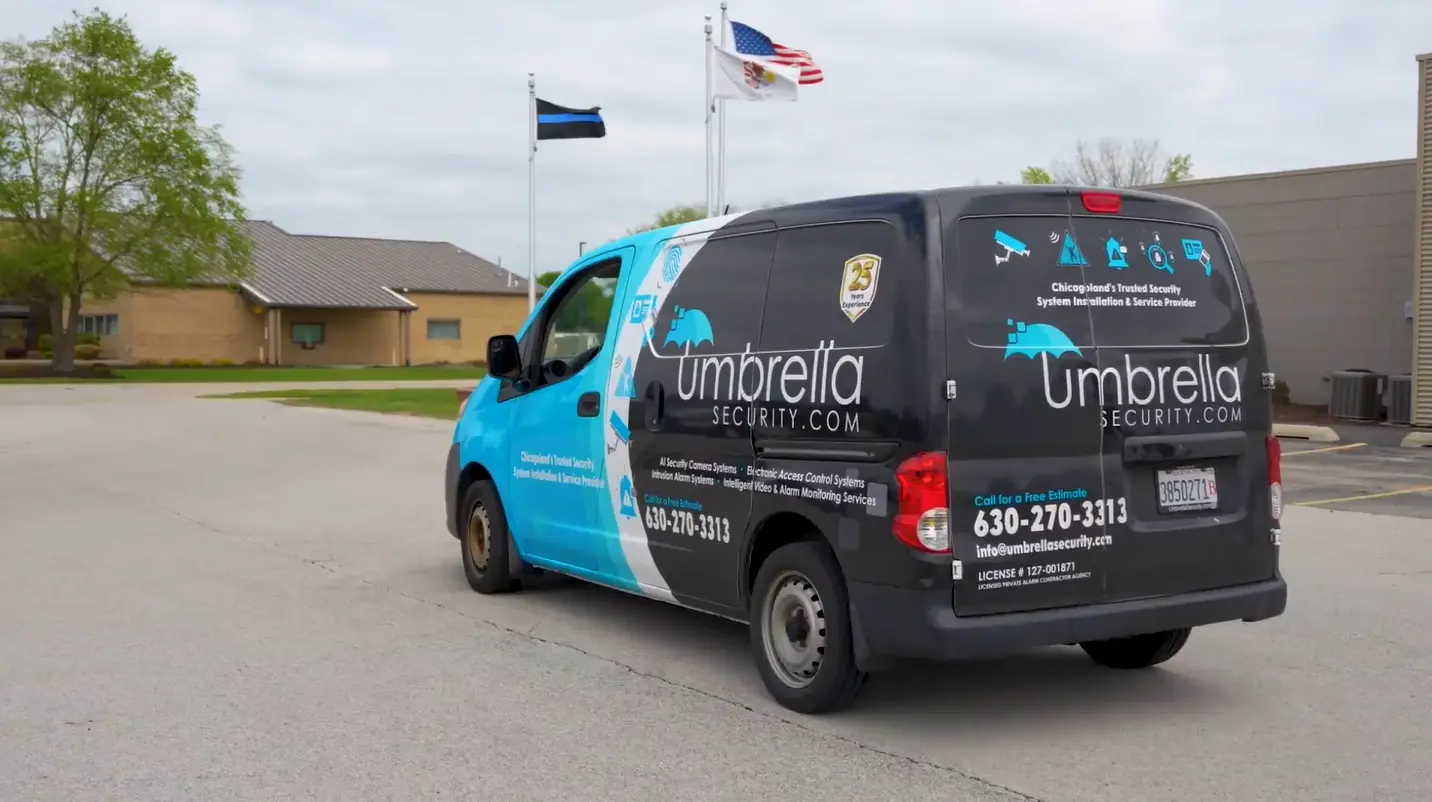
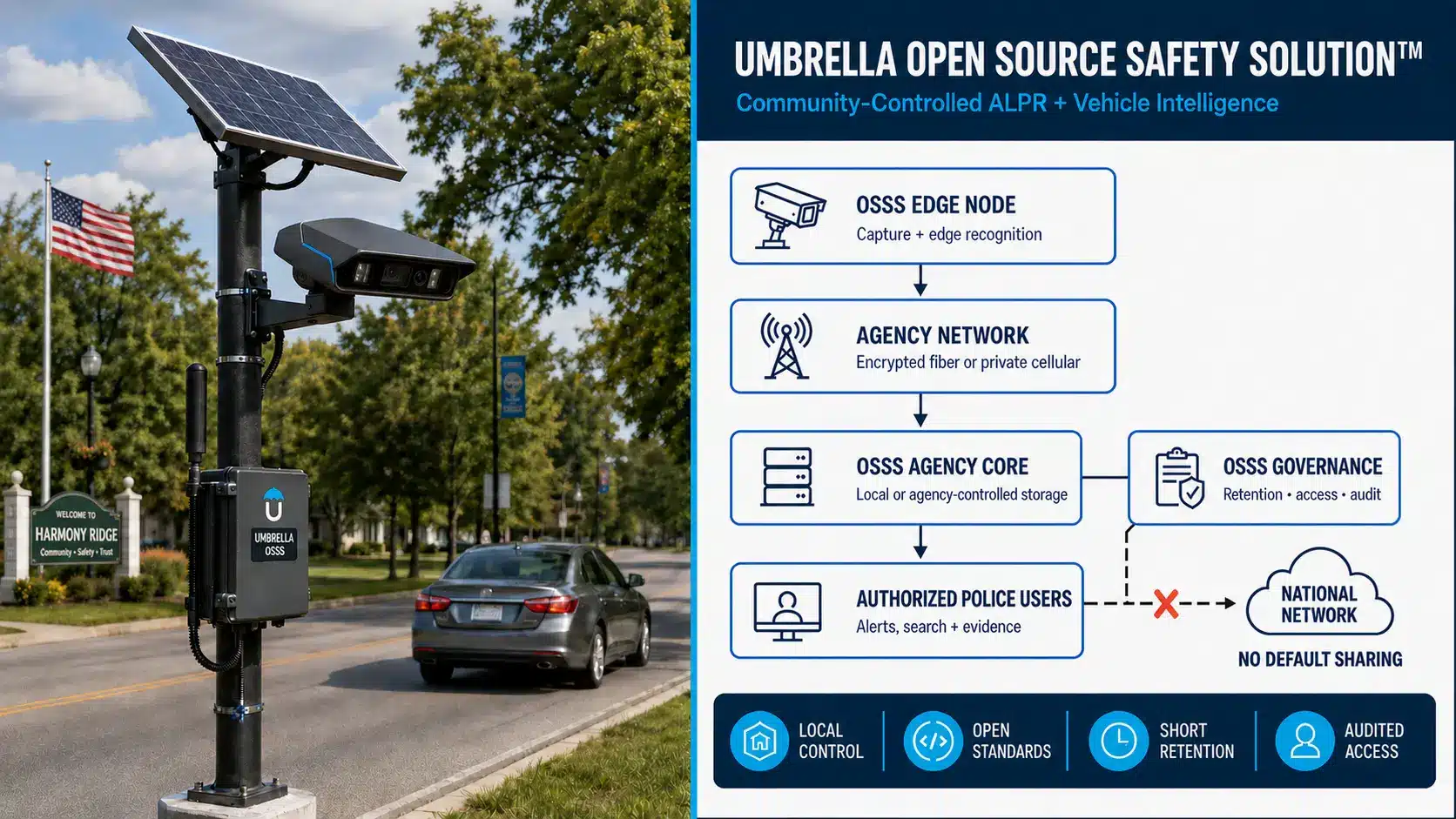
Here is the alternative
A purpose-built municipal ALPR system the community can actually govern.
Umbrella OSSS combines plate-focused roadside capture, edge-based recognition and an agency-controlled video and evidence environment. Law enforcement keeps the alerts and investigative search it needs. Municipal leaders retain authority over storage, sharing, retention, auditing and system exit.
Public-sector proven
The alternative is new. Umbrella’s municipal experience is not.
Umbrella has helped Illinois public agencies replace aging and proprietary security systems, improve evidence retrieval and modernize active municipal facilities without losing operational continuity.








Open-platform municipal video
City of McHenry
“We have transformed our system to integrate high-resolution cameras and a new open-platform management system that allows us to conduct quality forensic searches.”Read the City of McHenry testimonial
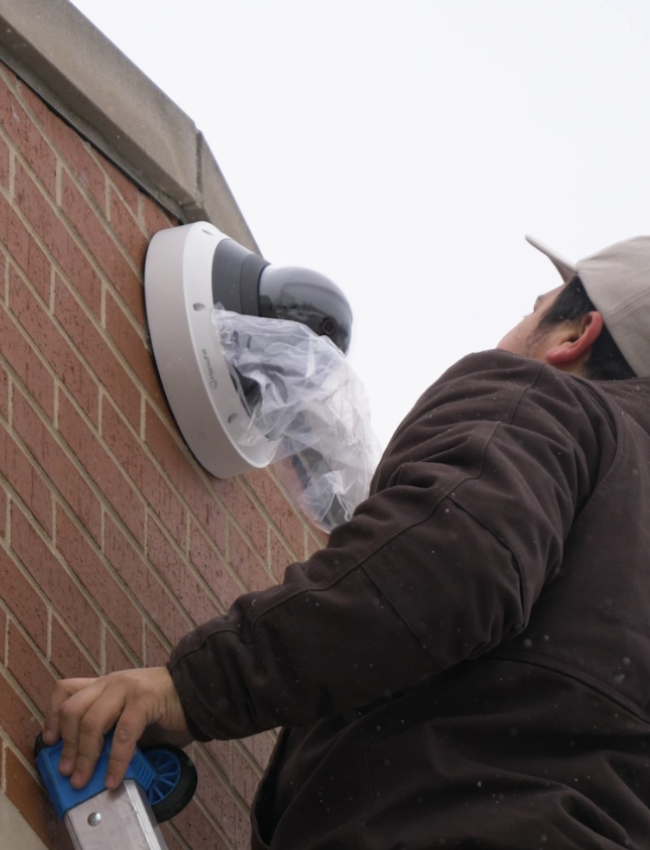
Public-sector video case study
Village of Lisle
See how better security infrastructure improved camera visibility and identification quality for a separate Illinois government customer.
Explore the Lisle government security projectPolice department and City Hall
City of Wilmington
“Everything has met exactly what we expected so far, or even better. I would 100% recommend Umbrella.”Watch and read the Wilmington case study
The real replacement question
A Flock camera alternative should not force communities to choose between privacy and public safety.
The problem is not that plate-recognition technology can help investigators. The problem is an architecture a community cannot fully govern: unclear outside access, broad data sharing, vendor-controlled retention and difficult exit rights.
A local policy cannot control a network the municipality does not own.
- Data may become useful far beyond the original local purpose.
- Default sharing can outrun council intent or public expectations.
- Audits may document misuse only after it has already occurred.
- Ending a subscription can mean losing hardware, history and leverage.
The agency keeps the workflow. The community keeps the authority.
- Agency-owned data in a locally selected hosting environment.
- No standing national or federal access configured by default.
- Retention, sharing and authorized uses follow local policy.
- Open export, documented deletion and practical migration rights.
Field-to-command architecture
Designed as municipal infrastructure—not a rented surveillance feed.
A Flock camera alternative must still deliver reliable results. Purpose-built plate-capture devices identify vehicle plates and selected vehicle characteristics at approved locations. Processing can occur at the edge, with events sent into an agency-controlled video and evidence environment.

Capture at approved locations
Plate-focused imaging, infrared illumination and configuration for real road speed, distance, angle and nighttime conditions.
Process close to the source
Edge analytics can convert plate imagery into searchable events without sending every decision through a public national network.
Store where the municipality decides
Local server, agency-controlled data center or approved private-cloud architecture—with retention controlled by local policy.
Operate through one usable workspace
Alerts, map search, event review, case association, evidence export, system health and user auditing in an operator-ready interface.
Built for actual police work
Privacy controls cannot make the system harder to use.
Officers and analysts still need fast, defensible answers. Umbrella designs governance into the workflow instead of adding paperwork around it.
Real-time alerts
Agency-approved hotlists can surface stolen vehicles, wanted vehicles and time-sensitive public-safety events.
Fast investigative search
Search by plate, time, location and authorized vehicle attributes with a documented purpose or case reference.
Map-based review
Review events geographically, correlate nearby cameras and understand movement without browsing unrestricted personal histories.
Human verification
Treat every alert as an investigative lead—not an automatic enforcement decision—and preserve the underlying image for confirmation.
Case-ready evidence
Export relevant events in open formats with timestamps, source information and documented chain-of-custody workflows.
System health
Monitor device status, connectivity and storage so an agency knows whether its coverage is working before an incident occurs.

Twelve decisions stay local
Governance is part of the system design—not a promise added after deployment.
Umbrella turns council policy into enforceable configuration, documented operating procedures and contract language. Municipal leaders can also compare local requirements with the U.S. Bureau of Justice Assistance license-plate-reader policy template.
Ownership & hosting
Who owns the data and where it physically resides.
Retention & deletion
How long routine events remain and when deletion is automatic.
Sharing boundaries
Which agencies can request access, for what purpose and for how long.
Search authorization
Required case numbers, purpose codes and supervisory rules.
Identity & access
Unique accounts, least-privilege roles and multifactor authentication.
Hotlist governance
Approved list sources, validation, expiration and alert handling.
Audit & anomaly review
Explainable logs, routine review and suspicious-use escalation.
Evidence handling
Preservation, export, chain of custody and disclosure workflows.
Cybersecurity
Encryption, patching, segmentation, resilience and incident response.
Physical placement
Permitting, right-of-way authority, roadside safety and removal duties.
Interoperability
Connections to existing video, dispatch and evidence workflows.
Exit & migration rights
Export, deletion certification, hardware ownership and a usable off-ramp.
Why Umbrella
A local integrator accountable for what happens after the council meeting.
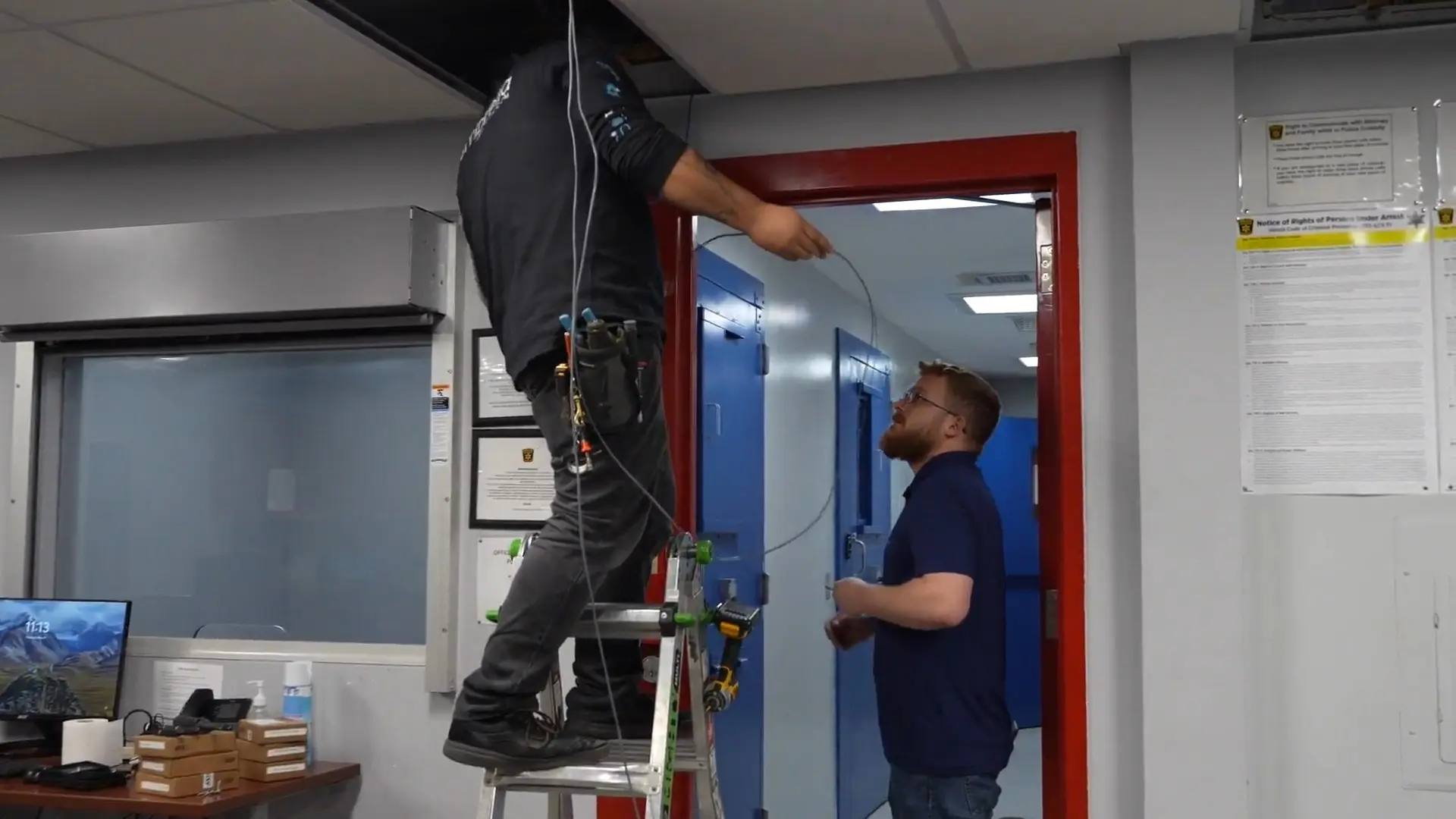
Umbrella Security Systems designs, installs and supports commercial and government security systems across Chicago and Northern Illinois. We are not trying to place a city inside our proprietary ecosystem. We design the system around the city’s policy, infrastructure and operating reality.
- Vendor-neutral, open-architecture system planning
- Illinois-licensed, in-house field execution
- Integration with existing municipal video and evidence systems
- Training for operators, supervisors and administrators
- Ongoing local service and lifecycle support
ALPR Governance Watch
Follow the decisions reshaping municipal license-plate recognition.
Material policy, privacy, procurement and replacement developments—verified against primary sources and separated from Umbrella’s assessment.
Illinois • Suspended • Aug. 31
Homer Glen suspends Flock ALPR use pending review
Privacy concerns and a protocol review paused local camera use.
Read the updateTexas • Use Ended • Sept. 4
Leander ends Flock camera use after council directive
Police stopped using 15 cameras and associated data after the council ended funding.
Read the updateUnited States • Inquiry Expanded • Sept. 3
Senate surveillance inquiry expands beyond Flock
Scrutiny now covers data practices and safeguards across four major providers.
Read the updateA controlled path forward
Deploy a Flock camera alternative without creating an investigative blackout.
Governance gap review
Map contracts, retention, sharing, users, audits, placement and current police workflows.
Replacement design
Define coverage, hosting, integration, policy controls and the operator experience.
Phased migration
Maintain priority coverage while testing reads, alerts, evidence and governance controls.
Public accountability
Document policy, training, audit cadence, transparency reporting and system ownership.
Questions communities ask
Umbrella OSSS FAQ
Is this simply another nationally networked ALPR service?
No. The architecture is designed around agency-controlled storage and locally approved sharing. Participation in a standing national data network is not required for the system to operate.
Does local control make investigations slower?
It should not. Alerts, map search, plate and vehicle-attribute search, event review and evidence export remain part of the operator workflow. Authorization requirements are incorporated into the interface and audit trail.
Can a municipality choose a seven-day retention policy?
Yes. Retention should be defined by local law and policy. Routine events can be automatically deleted after the approved period while evidence properly associated with an active case follows the agency’s evidence-retention rules.
Can the system work with existing municipal cameras and software?
Often, yes. Umbrella evaluates standards support, network design, current video management, evidence handling and dispatch workflows before defining the integration path.
Does “Open Source” mean every software component is publicly licensed source code?
No. In the Umbrella OSSS name, “Open Source” describes an open, standards-based architecture that preserves customer choice, ownership, interoperability and exit rights. It does not claim that every underlying component is distributed under an open-source software license.
What is the first step when evaluating a Flock camera alternative?
A credible Flock camera alternative begins with a governance and migration review. Umbrella will identify the current operational value, policy gaps, contractual constraints, placement requirements and the practical path to a locally controlled alternative.
A better decision than simply turning the cameras off
Keep the safety your community deserves. Remove the privacy risk it should never have to accept.
Request a confidential Flock camera alternative review of your current ALPR footprint, governance controls, contract, placement constraints and replacement path.
Illinois Private Alarm Contractor License #127-001871 • SAM.gov Registered • UEI ER57FHACV634 • CAGE 16U24